· 7 min read
Near Miss Reporting in Manufacturing: Get Reports, Close Them Out
By Michael Sidler, Founder, RISE
Operators report near misses when: 1. reporting takes less time than the walk to the break room, 2. when nobody gets written up for what they report, and 3. when they can see the last report changed something.
Miss any one of those and the reporting will dry up. The review side keeps the same promise: read every report within a day, decide what it is, give the fix one owner and a due date, check it at the machine before closing, and tell the reporter.
A near miss form in a drawer is a policy. A stack of reports with fixes attached is a program.
Why don't production workers report near misses?
Because the line is running and the report costs them something. A press operator who watches a coil slip on the uncoiler has a count to hit, a lead watching that count, and a form that lives somewhere else. OSHA's sample policy keeps its form "located in the main office." On second shift, the main office is dark.
Then there is the question nobody asks out loud: what happens to me? If the last person who reported a forklift close call got called into HR and asked why they were in the pedestrian aisle, everyone on that shift learned the lesson. It took one conversation. Undoing it takes months.
The third reason is the quiet one. Operators reported things before, and nothing changed. The guard is still zip-tied open. Nobody fills in a form to be ignored twice.
What should a near miss report ask?
Less than you think. Five things cover it: what happened, where (line, cell, machine number), what could have happened, a photo if there is one, and a name if they want to give it. Root cause, category and risk score belong to the reviewer. A form that asks a machine operator to pick a root cause from a dropdown gets abandoned due to perceived complexity.
Put the form where the work is. A QR code on the control panel of each line, a stack of cards at the time clock, a supervisor who writes it up when an operator mentions it at shift end. Take reports through every channel and sort them out afterward. Temps and contract maintenance crews see plenty, so give them a way in that does not need a company login.
Let people report without their name, and mean it. Once trust builds, most reports carry a name anyway. Anonymity is the on-ramp.
If you are rebuilding the form, our free hazard report form is a working starting point. It scores severity against probability and prints as a finished report you can hand to a supervisor.
How do you get operators to trust it?
Draw the discipline line before the first report comes in, and write it down. Most plants keep discipline for a short list: willful violations, impairment, violence, deliberately false reports. OSHA's sample policy takes the same approach, with a short set of serious offenses that fall outside its non-retaliation protection. Everything else gets thanked: the operator who noticed the e-stop did not latch, the material handler whose pallet tipped on a cracked floor plate.
The supervisor's first reaction matters more than the policy. If the first words are "why were you standing there?", reporting on that shift is finished. "Thanks, show me" works. Coach your supervisors on that sentiment and then watch whether they use it.
Watch your incentives too. Prizes for injury-free months teach people to keep quiet. If you reward anything, reward fixes: the cell whose reports closed the most hazards this quarter. And keep near miss counts off the department scorecard. A supervisor with a rising count is usually running the most honest area in the plant.
Want to know where you stand? Ask the floor. Our free crew survey sheet gives you ten questions to put to the people doing the work, with a printable sheet to hand out at the start of a shift. Flight departments fight the same silence from pilots, and the pilot version of this problem carries over to the plant floor better than you would expect.
Who reviews a near miss, and how fast?
One named person per area, within 24 hours, every time. In most small and mid-size plants that is the EHS manager working with the area supervisor, with a shift lead covering nights and weekends. The first read answers two questions: is the hazard still there right now, and what is this report really?
If the guard is still off, the machine gets locked out or the aisle gets coned off before anyone does anything else. Interim control today, permanent fix on a due date.
Then sort it. Some near misses are really hazards, like the cracked floor plate nobody has tripped on yet. Some are minor injuries reported as near misses to dodge the injury paperwork. Some are maintenance or quality problems with no safety angle at all. Decide what happens next: fix it directly, run a risk evaluation, or open an investigation.
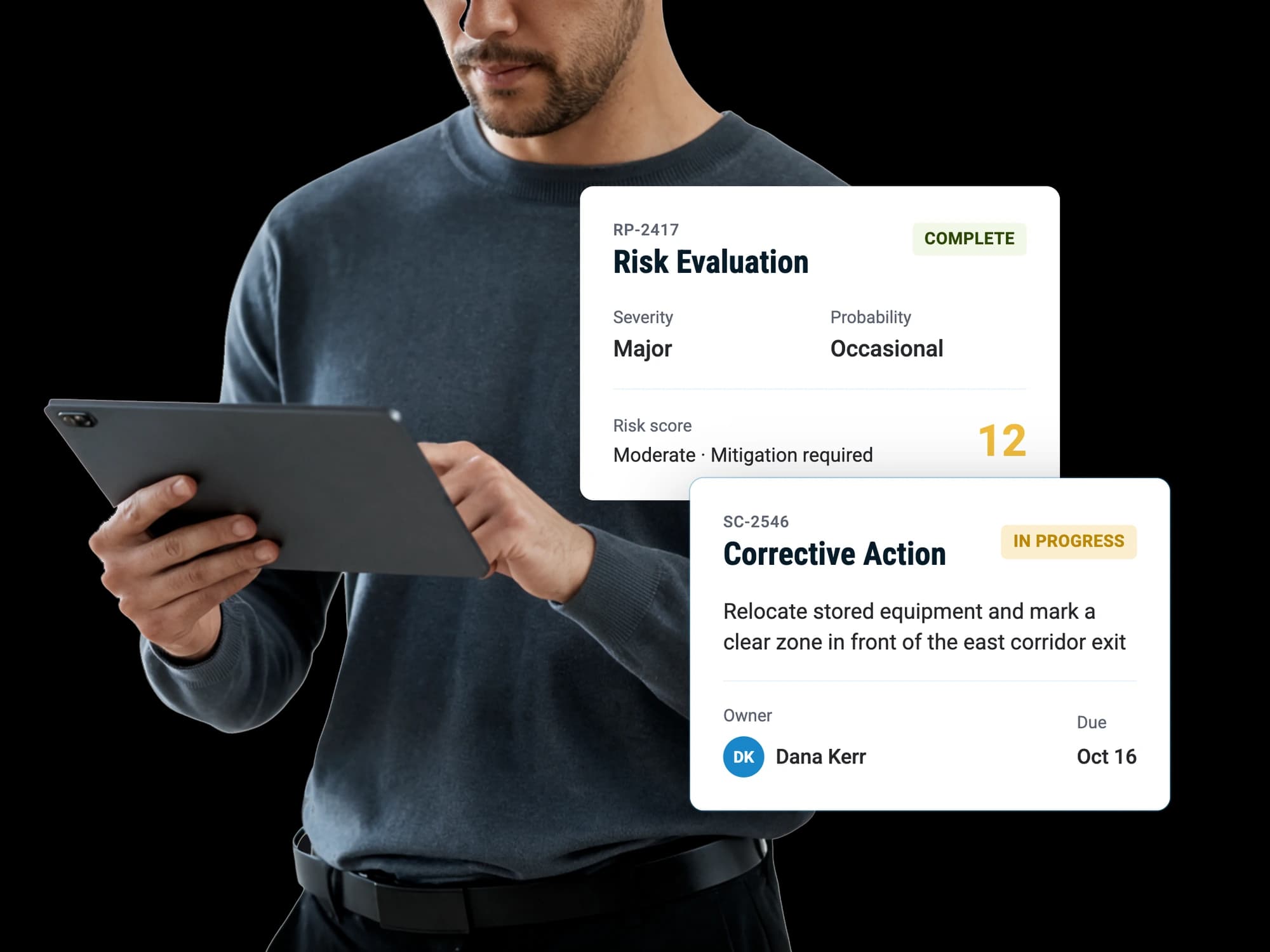
Rate severity on what could credibly have happened, not on what did. The pallet that fell into an empty aisle is a serious-injury event that happened to find nobody there. Give each fix one owner and a due date. A name is an owner. "Maintenance" is a department.
When is a near miss actually closed?
When someone has checked the fix at the machine. A closed work order tells you a ticket moved. It does not tell you the new guard is still on after the next changeover. Close-out means a verifier stands at the equipment, confirms the control is in place and working, and records who checked and when.
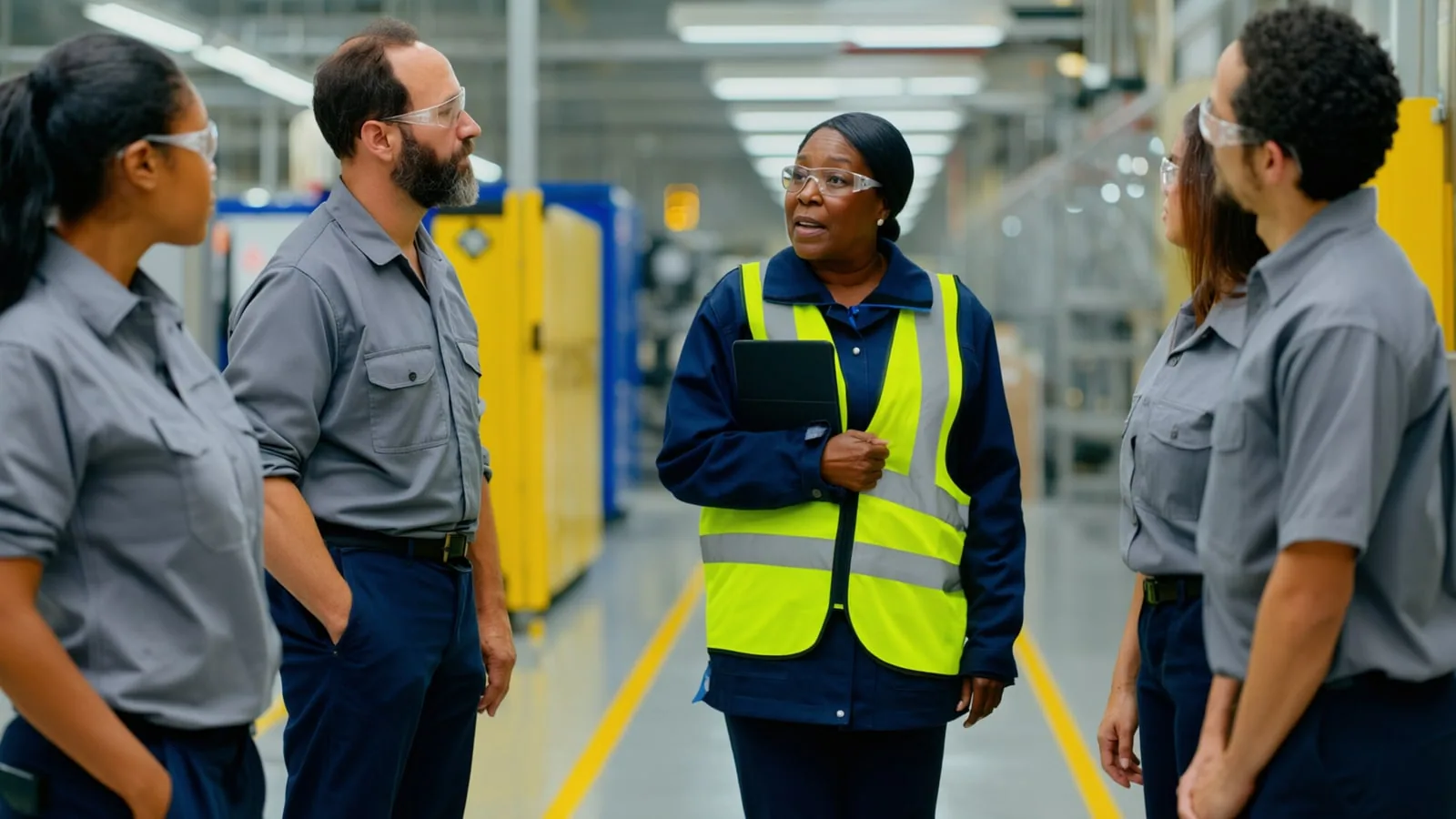
Then close the loop with the reporter, in person if you can. Tell the rest of the floor too: a comment at the start-of-shift huddle, a note on the board by the time clock, an item in the safety committee minutes. "Second shift reported the e-stop on Press 4. It has been rewired. Thank you." That sentence brings in the next ten reports.
Once a month, read across the pile. The same forklift intersection three times, the same mixer, the same step in a die change. A pattern across five near misses is a project, and it deserves a project owner.
Where to start this month
- Walk every line and make sure a way to report sits within a few steps of the work, on every shift.
- Write the discipline line on one page and have the plant manager say it out loud at each shift meeting.
- Name a reviewer for each area and shift, and agree that every report gets read within 24 hours.
- Pull every near miss report from the last six months. Close what is done, give owners and due dates to what is not, and tell each reporter what happened.
- Pick one fix that came from a report and announce it on every shift.
RISE records near miss reports from a phone browser or a QR code on the line, with no login needed on public forms and anonymity the reporter chooses. Depending on how your account is set up, reviewers triage each report, corrective actions get one owner and a due date, and a fix can require a verifier before it closes. If you want to see that on your own forms, book a demo.
Sources
Questions people ask
What counts as a near miss in a manufacturing plant?
A near miss is any event that could have hurt someone, damaged equipment or product, or released something, and did not. A coil that slips, a forklift that clips a rack, a guard that comes off mid-cycle all count. Unsafe conditions found before anything happens are usually logged as hazards, but they belong in the same review pile. Do not make operators argue about the label.
How many near miss reports should a plant expect?
Expect more than you are getting today, and expect the number to rise when reporting gets easier. A jump in reports after a push usually means trust went up, not that the floor got more dangerous. Skip quotas: a target number produces filler reports about wet floors that were mopped five minutes later. Watch whether reports lead to fixes instead.
Should near miss reports be anonymous?
Offer anonymity and let the reporter decide each time. The tradeoff is that the reviewer cannot ask a follow-up question, so make the description field do more work and attach a photo when possible. As trust grows, most operators start putting their names on reports because they want to hear what happened.
Does every near miss need a root cause investigation?
Most near misses need a quick fix and a verified close-out, not a full investigation. Save the investigation for reports where the credible outcome was a serious injury, and for repeats of the same event on the same equipment. A short five-whys at the machine with the operator often finds more than a meeting in the conference room.
How do you handle near miss reports across multiple shifts?
Name a reviewer for every shift, including weekends, so a report filed at night is read before the next shift starts. Have the overnight lead handle the interim control, like locking out a machine, and hand the permanent fix to day shift with a named owner. The reporter should hear back on their own shift, not through a rumor two days later.