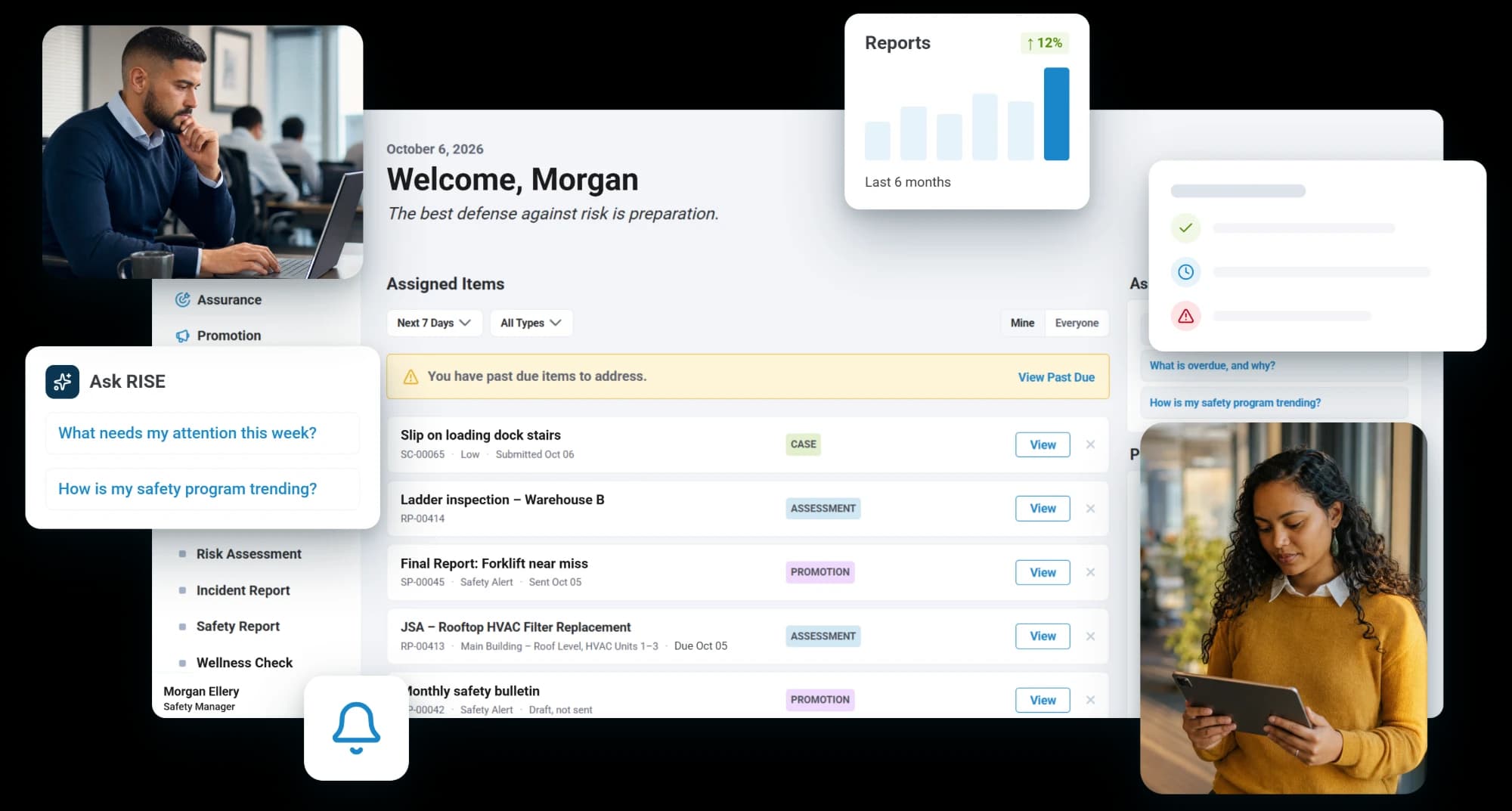
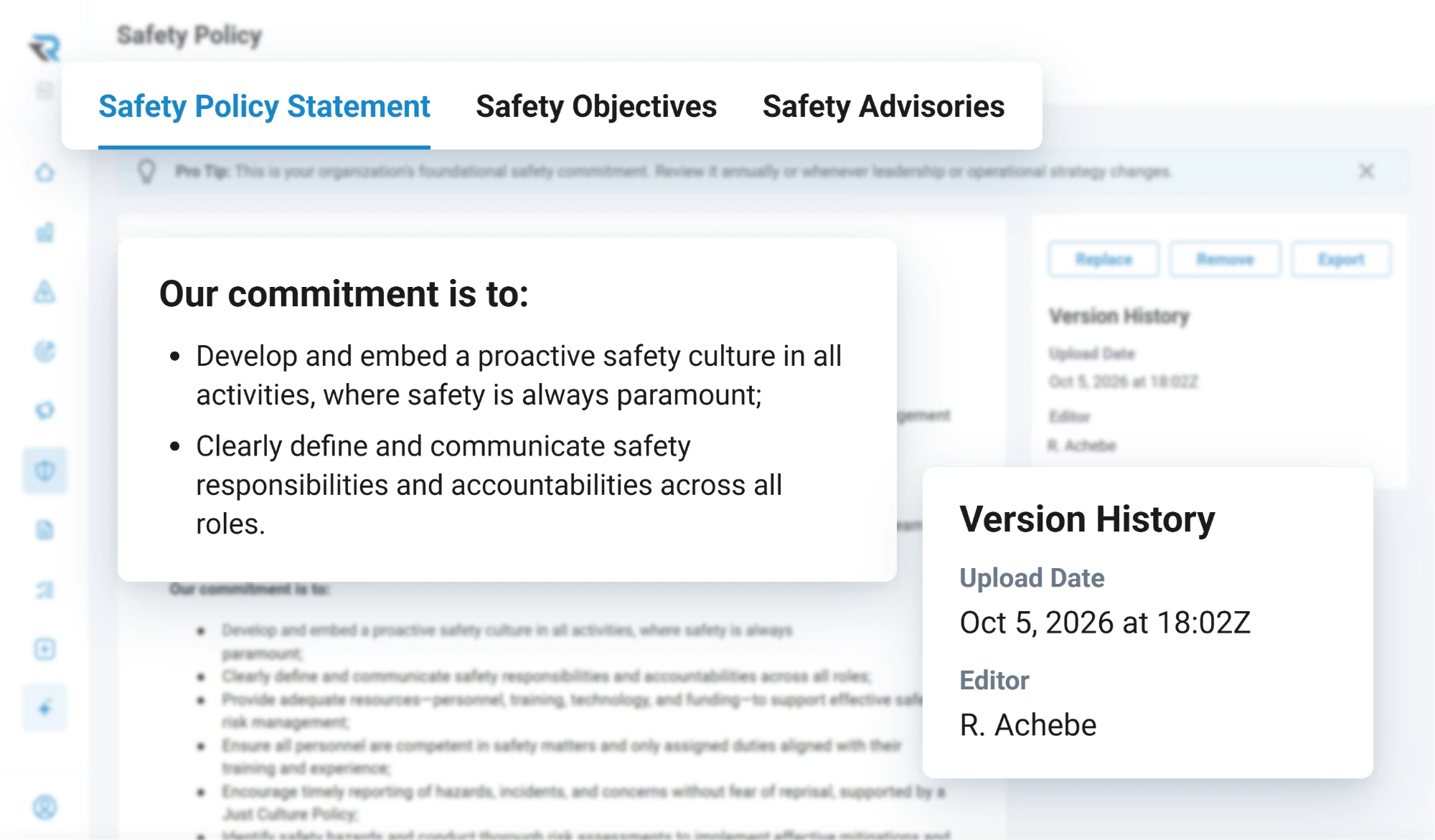
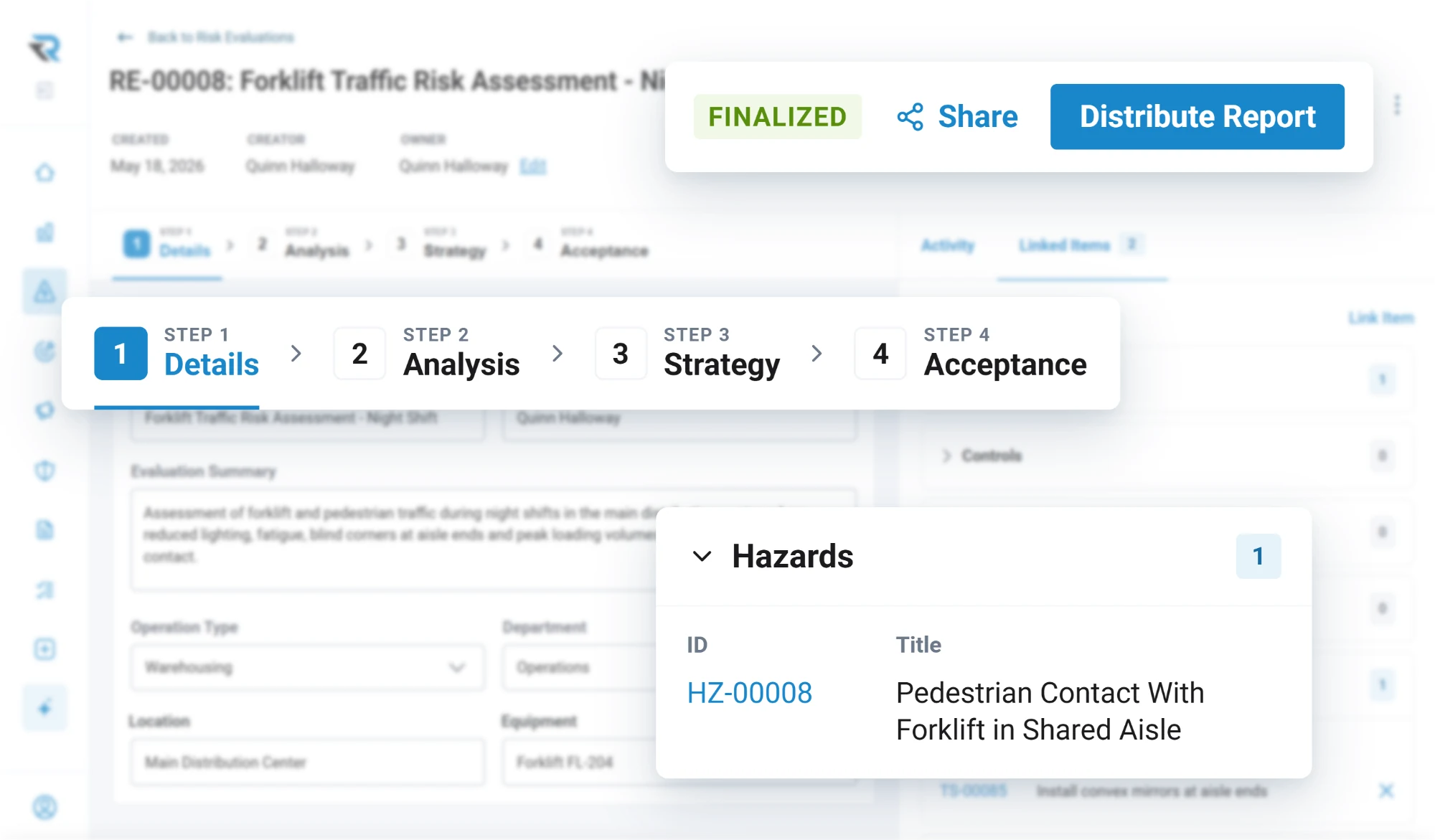
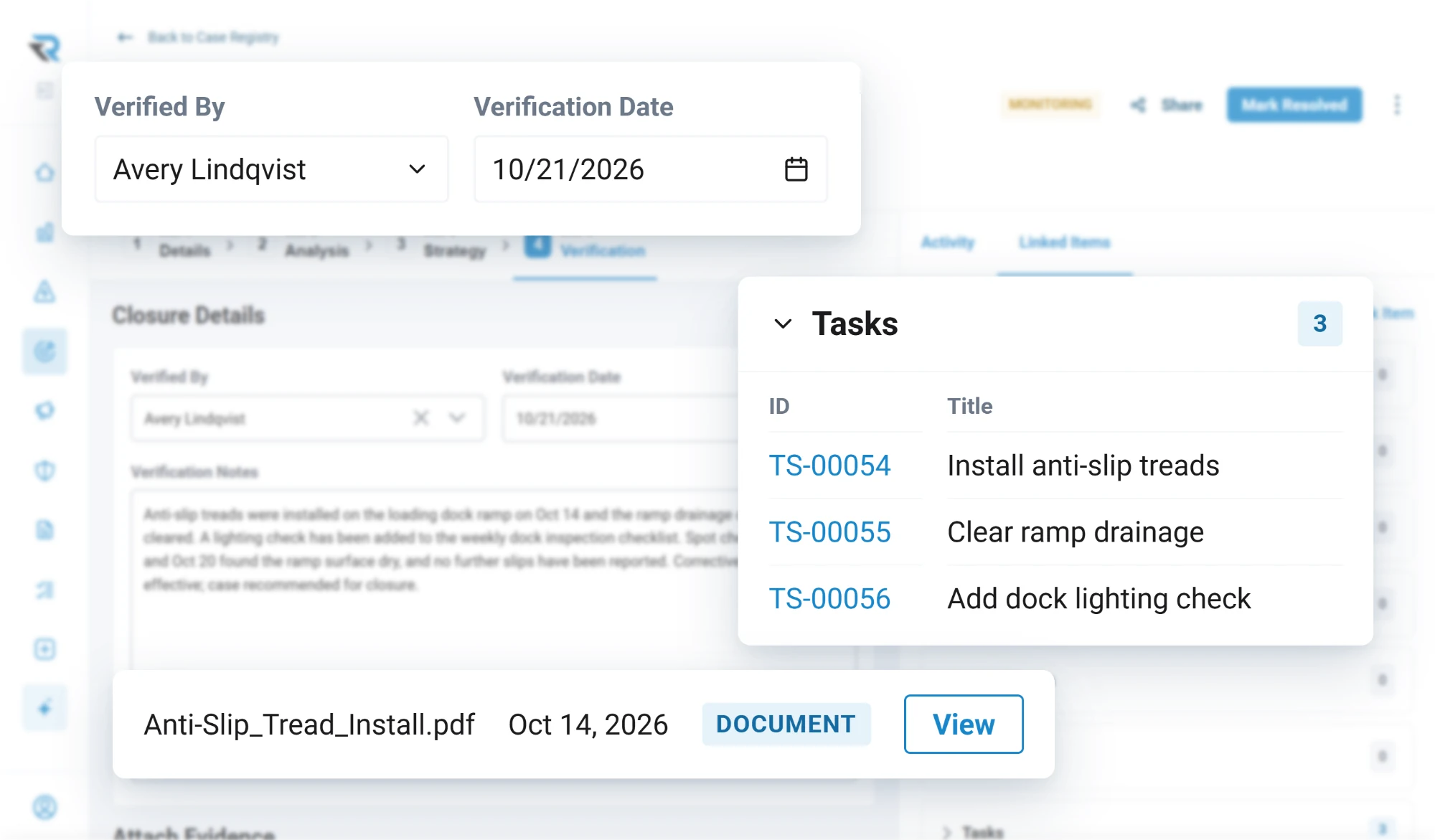
Policy, risk management, assurance and promotion, often called the four pillars. They are four jobs that feed each other, and most software does one of them well and leaves you to connect them, which is why so many programs are four tools and a person who remembers how they fit together.
Almost every operation can point at each of these happening somewhere. What is usually missing is that the hazard evaluated in March is the same record as the action closed in June and the trend reported in September. Carried by hand, that connection survives exactly as long as the person carrying it.
Policy
What the operation has committed to, who is accountable for what, and how anybody would know whether it is working.
Risk management
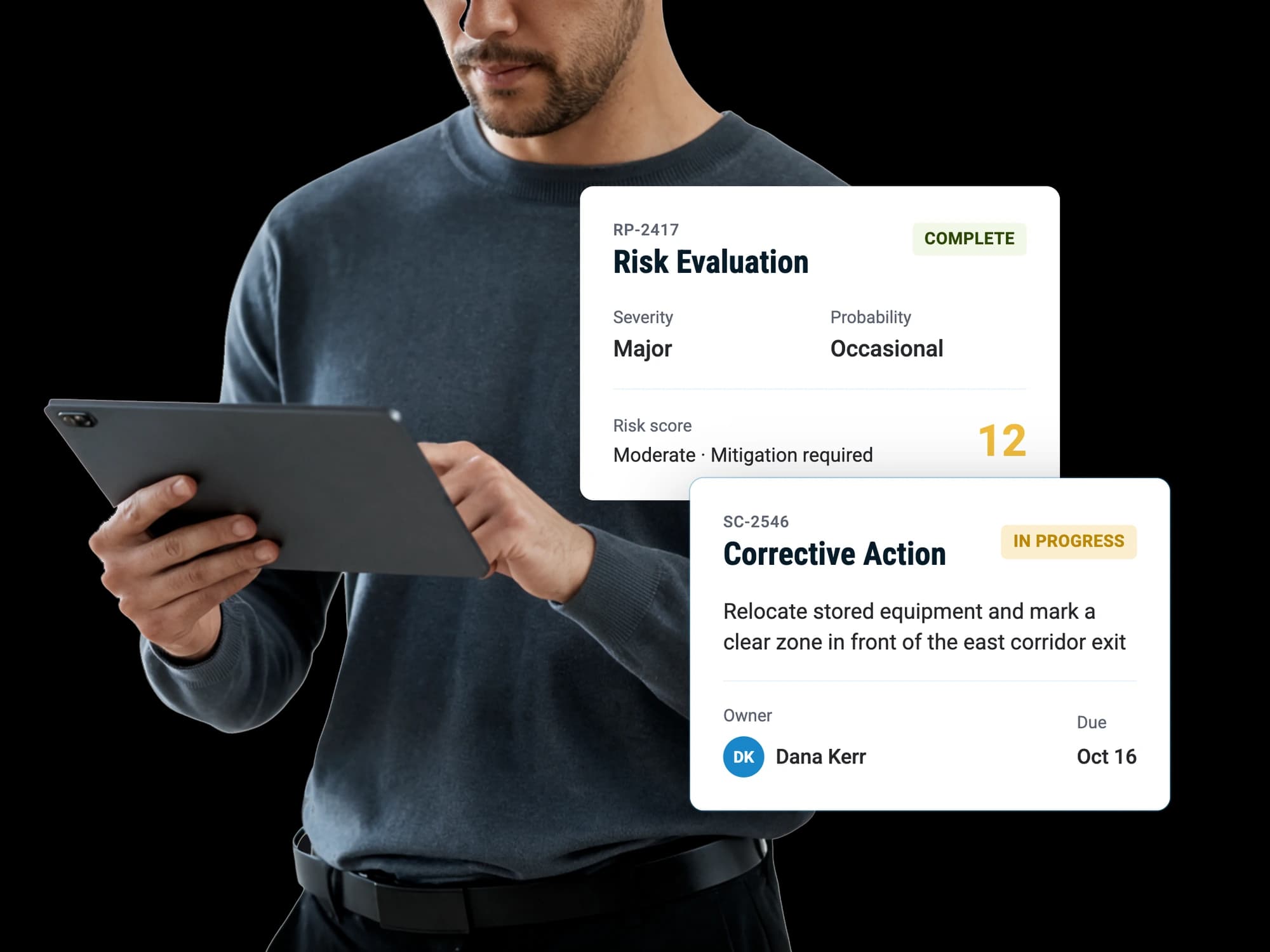
Finding out what can hurt somebody, judging how bad it could be, deciding what to do, and recording who accepted what is left.
Assurance
Checking that the controls are doing what they were supposed to, and that the fixes fixed something.
Promotion
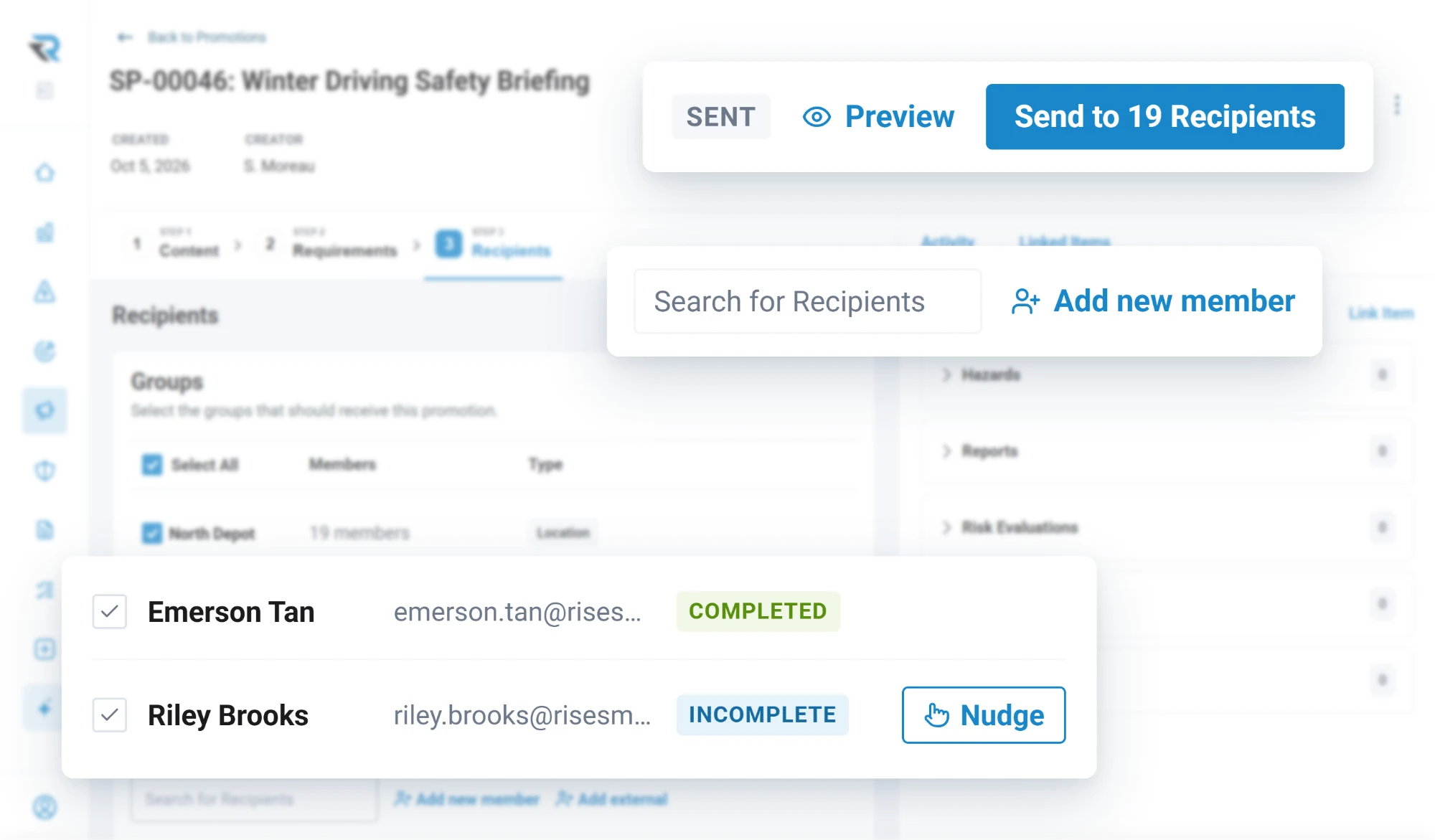
Making sure the people doing the work know what was found and what changed, and that they will tell you the next thing.
Policy
A commitment nobody measures is a poster
Policy is where an operation says what it is trying to achieve and who is accountable for achieving it. On its own that is a document, and a document is not a safety program.
What turns it into one is measurement: objectives with indicators under them, and indicators that read from the records the operation is already keeping rather than from a number somebody assembles the week before a review.
Risk management is a chain, not a step: something gets raised, it gets evaluated on a scale everybody shares, controls get applied, and what is left gets accepted by a person with the standing to accept it.
Break the chain anywhere and the rest stops meaning anything. An evaluation nobody accepted is an opinion. An acceptance with no record of the controls is a signature on nothing.
Assurance is the part that asks whether any of the above is true in practice. Audits and inspections test the controls. Safety cases take the failures through root cause and correction. Actions carry owners and dates.
The question at the end is not whether something was done. It is whether it worked, which is why verification is a separate act from completion and why the evidence has to be attached to the record rather than remembered.
Promotion is the part most often treated as a newsletter, and it is the part that decides whether any of the rest happens. People report when reporting visibly leads somewhere, and they stop when it does not.
So it runs both ways: what was found and what changed goes out, with a record of who read it; and the meeting where decisions get made produces actions in the same register as everything else, rather than in somebody's notebook.
The shape is not ours. It is how safety management is organized
Aviation, mining and general industry each write these four areas down in their own words, under their own regulator. The frameworks below are the originals, linked to the source, so you can read what yours says rather than our summary of it.
Links go to the primary source. Verify any requirement against the current text of the regulation or standard.
Free to read
The Safety Program That Lasts
Nine habits of a safety management system that holds up, whatever you operate. Written for any operation rather than for one industry, and there is no form in front of it.