Skip to content
RISE

Safety risk management

A structured evaluation for every hazard

A reported hazard gets evaluated, controls get applied, and any remaining risk gets considered and accepted by a person with the correct authority. Decision captured with a next review date scheduled.
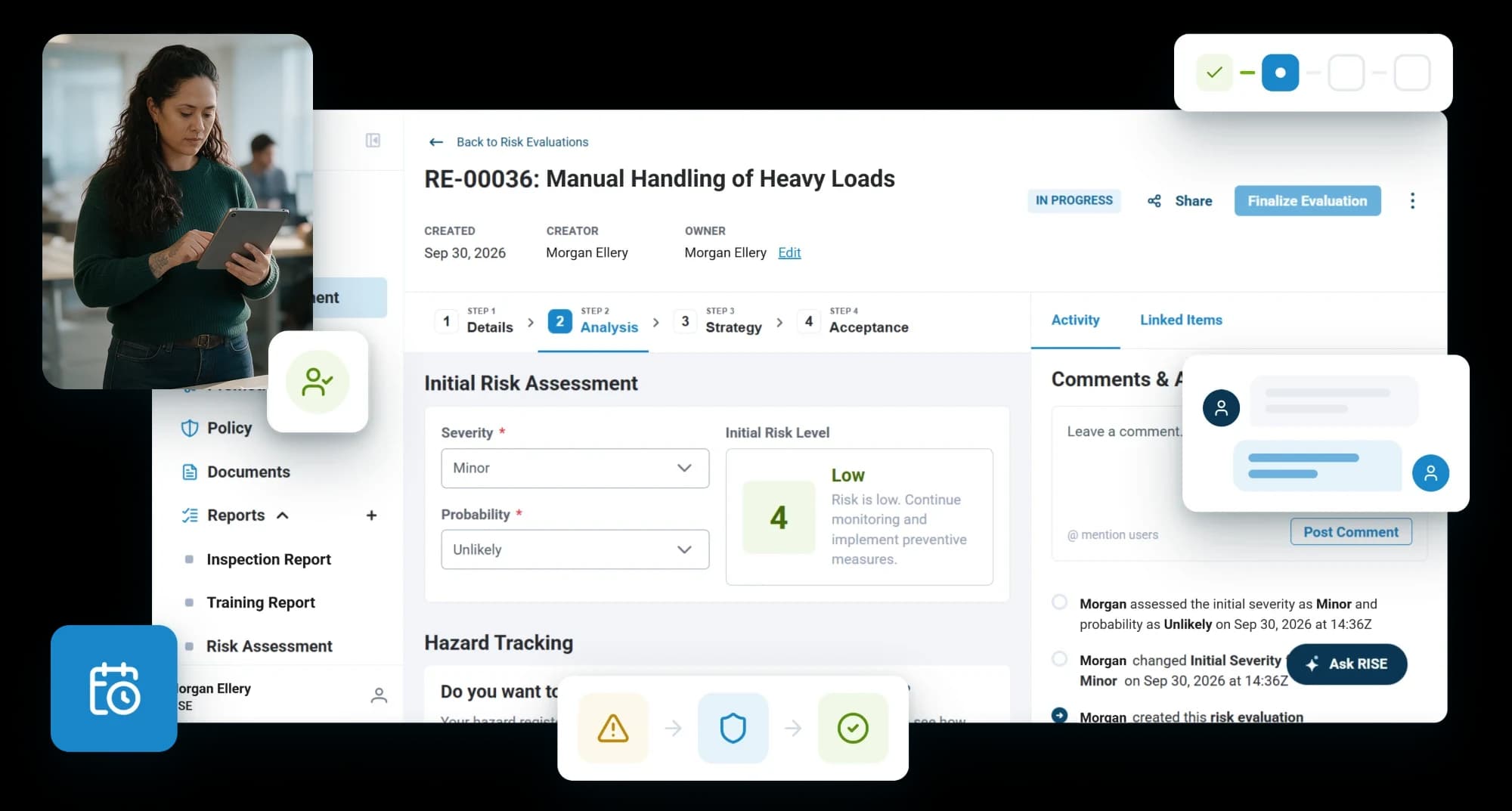
A manual handling risk evaluation on its Analysis step: severity Minor and probability Unlikely give an initial risk level of Low 4, with the assessment logged in the activity, beside a person working on a tablet

A risk score is not a mitigation record

Plenty of operations can produce a risk evaluation score. Far fewer can show the controls that were applied, what the risk was afterwards, who accepted it, and when it was due to be reviewed again. That full record is what management will want to go back and review, and it is usually the hardest thing to go back and produce.

Risk evaluations

Four steps, in the same order, every time

Details, analysis, strategy, acceptance. Severity and probability are scored on the same five by five matrix whoever is doing it, so two evaluations from two different people are comparable, and an evaluation from two years ago still means what it meant then.

The matrix is yours to set up. The grid stays five by five and the severity and probability labels are fixed, which is what keeps one operation's evaluation legible to an auditor. Where the thresholds fall, and what each pairing means in your operation, you decide once and everybody then scores against it.

  • Your thresholds and your definitions, on one shared grid
  • Initial risk, controls applied, residual risk recalculated
  • Action items assigned out of the evaluation itself
  • A re-review date set when it is finalized
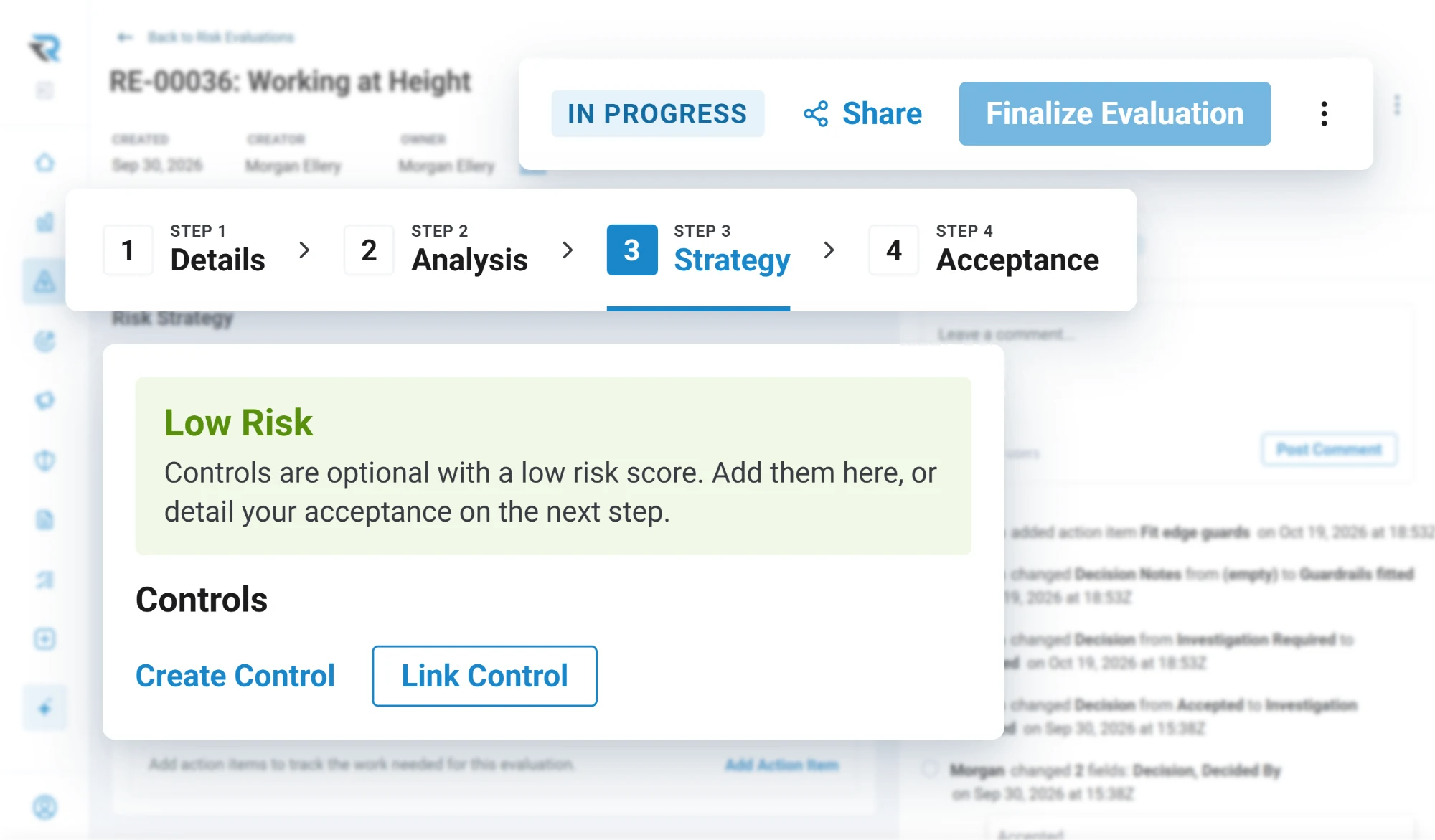
A risk evaluation on its Strategy step, third of Details, Analysis, Strategy and Acceptance, with a low risk score and the option to create or link a control

Acceptance

The higher the risk, the higher the authority required

Accepting residual risk is not a box just anybody can check. The role required to accept an evaluation rises with the risk that is left, so a high residual risk cannot be signed off by whoever happened to be working the evaluation.

It is the part of the process most often missing from a spreadsheet, and it is the part that decides whether a risk decision means anything: not that somebody accepted it, but that the right somebody did.

  • Required authority rises with residual risk
  • The decision, the person and the date, recorded together
  • Finalizing is a deliberate act, not a status change
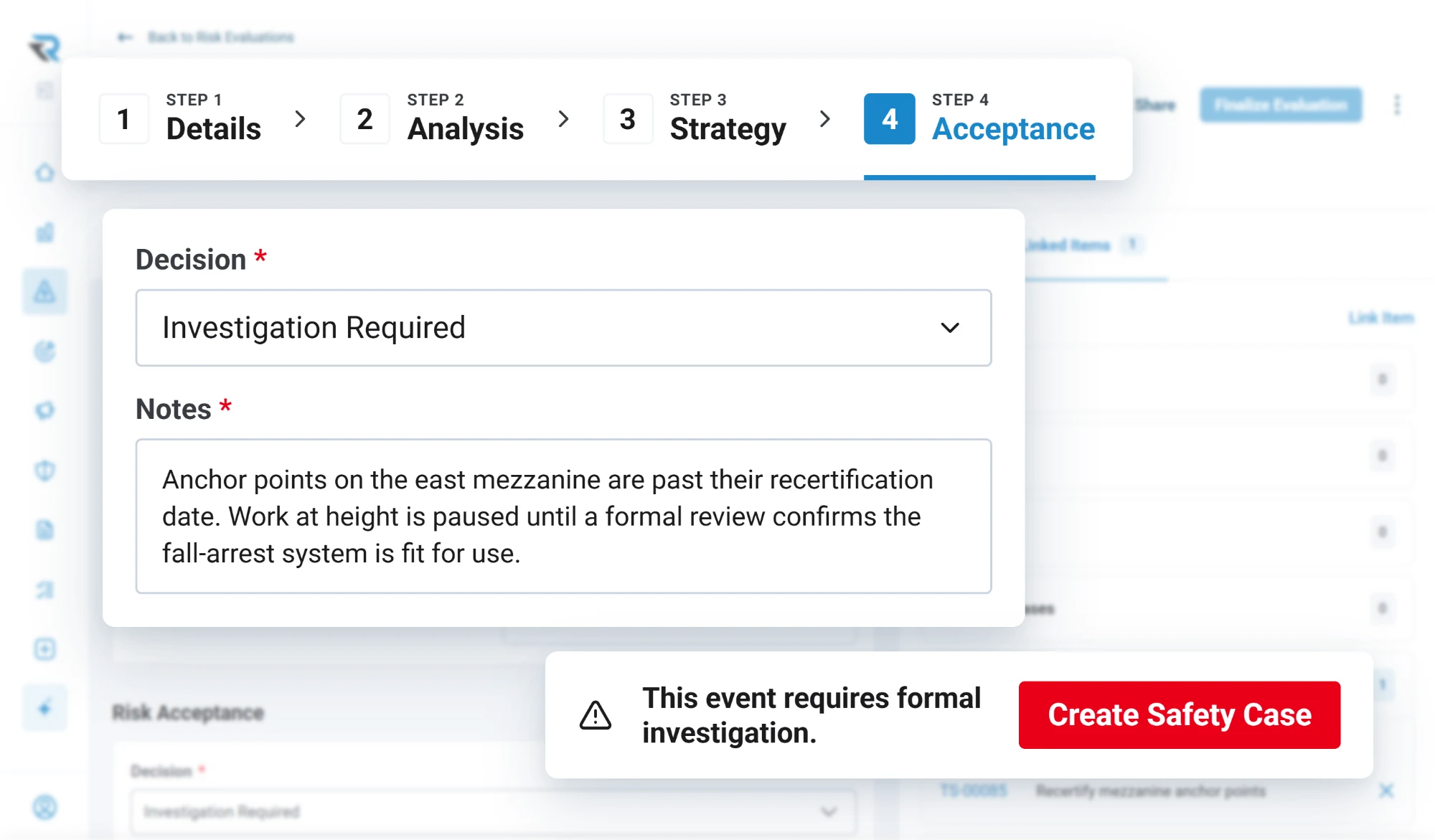
A risk evaluation on its Acceptance step: the decision Investigation required and the notes behind it, with a prompt to create a safety case

Hazard register

What this operation already knows it faces

Hazards accumulate in a register rather than in the memory of whoever has been there longest. Each one is a record with its evaluations attached, so the question is not whether somebody remembers that this came up before, it is which evaluation it was and what was decided.

  • One register, for the whole operation
  • Evaluations attached to the hazard they came from
  • Survives the person who knew about it leaving
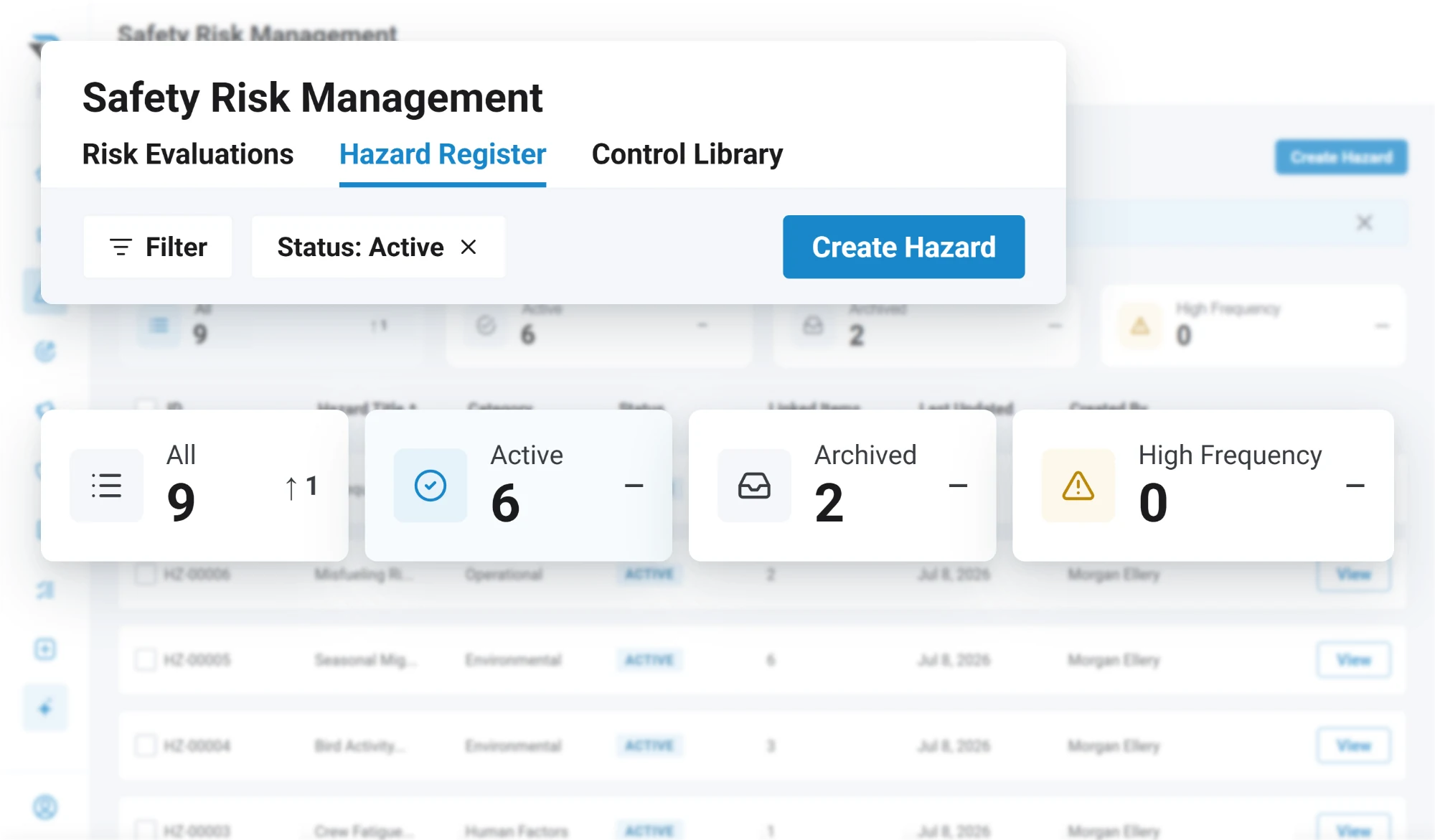
The hazard register filtered to active hazards: 9 hazards, 6 active, 2 archived and none high frequency, above a list of hazard records

Control library

The controls you rely on, in one place

A control is usually relied on by more than one hazard, and describing it fresh each time is how two records end up claiming slightly different things about the same procedure. The library holds each control once, so what you are relying on is a thing you can point at rather than a sentence somebody typed.

  • Each control described once
  • Applied across the hazards that rely on it
  • Residual risk calculated with them counted
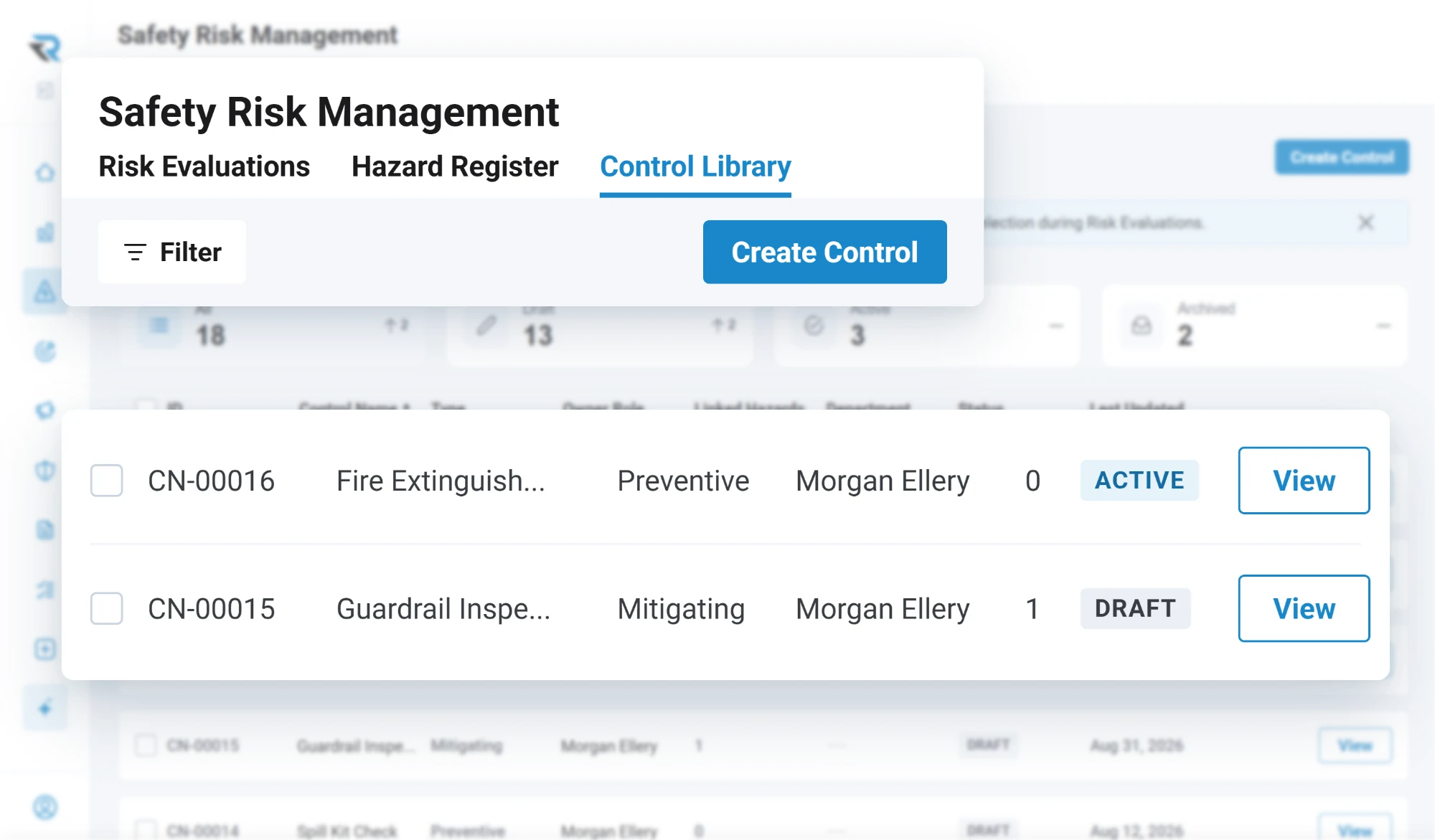
The control library: a preventive fire extinguisher check and a mitigating guardrail inspection, each with its owner, status and how many records use it

Questions

Questions people ask

How does risk scoring work in RISE?
Risk evaluations are scored on a five by five severity and probability matrix that you set up: where the low, medium and high thresholds fall, and what each pairing means in your operation. The grid stays five by five and the severity and probability labels are fixed, so everybody scores against the same yardstick once it is set. Risk assessment forms carry their own numbers on top of that: the thresholds, and the points at which mitigation and approval become required.
Who is allowed to accept a risk?
The role required rises with the residual risk left after controls, so a high residual risk cannot be signed off by whoever happened to open the record. The decision, the person and the date are recorded together on the evaluation.
What is a hazard register?
A single list of the hazards an operation knows about, each one a record with its evaluations attached. It exists so the question is not whether somebody remembers that a hazard came up before, but which evaluation it was and what was decided.

Discover how RISE can empower your safety program

A guided walkthrough of how RISE handles reporting, evaluation, resolution and insight, with time to talk about how your own operation runs today.