Skip to content
RISE

Emergency response planning

Short enough to follow, current enough to work

An emergency response plan is only worth what somebody can follow while shaken and not thinking straight. This is about clear roles, a call tree that is current, and checklists short enough to be used.

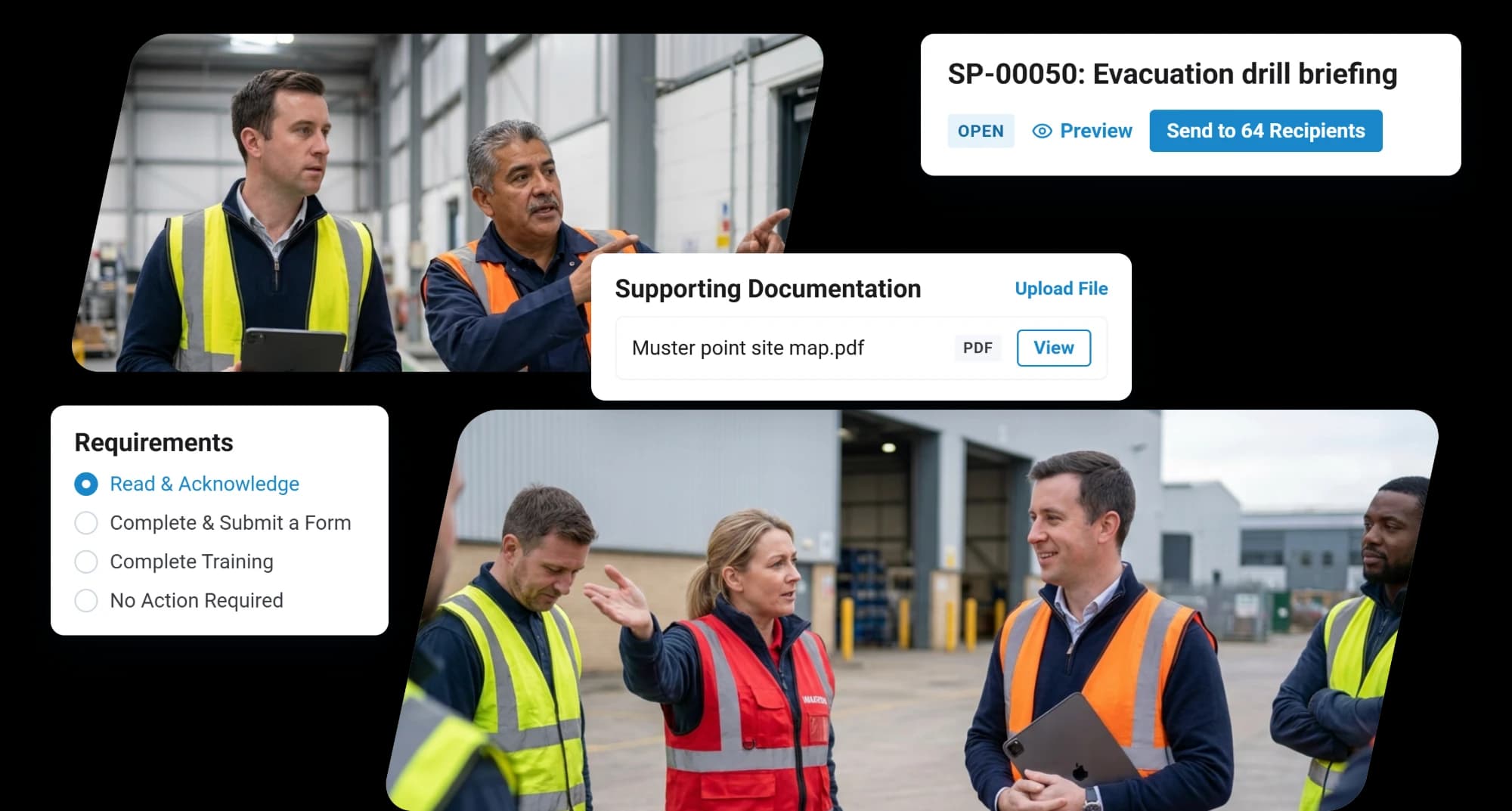
An evacuation drill briefing in RISE ready to send to 64 recipients, set to read and acknowledge, with the muster point site map attached, beside a site team and a fire warden walking through the evacuation outside a warehouse

Why it matters

Almost every operation has a plan. Far fewer have one that names people who still work there. Plans are written once, filed, and then go quietly out of date as people leave, numbers change and new aircraft arrive, and nobody notices because the document is only ever opened on the worst day of the year. The test is not whether a plan exists. It is whether somebody who has just taken the call can open it, find their own name, and know what to do in the next ten minutes.

What you end up with

  • An emergency response plan for your aircraft, people and locations
  • Defined roles and a current call tree
  • Checklists written to be used under pressure

Questions

Questions about emergency response planning

What is in an emergency response plan?
Defined roles and responsibilities, a call tree, notification procedures, checklists for the first hours, and guidance for handling family, media and authorities. It is built around your specific aircraft, personnel and locations rather than a generic template.
How often should an emergency response plan be reviewed?
Whenever the people or the operation change, which in practice means at least annually. A call tree naming somebody who left two years ago is the most common failure, and it is only found during an actual emergency or a rehearsal.

Where to start

Tell us about your operation

A call about how your program runs today and the areas where it could be stronger. If this is the service you need, we will talk about what comes next. If it is not, we will point you toward the support that would help. Either way, you come away knowing what to do next. No obligation.