· 7 min read
Toolbox Talk Topics for Construction: Pick Them From Your Own Reports
By Michael Sidler, Founder, RISE
Most safety managers pick the week's toolbox talk by turning to the next page in a binder of 52 topics. Ladders in week 14, heat stress in week 22, whether or not anyone on your sites climbed a ladder that week. The better source is the stack of near miss reports, hazard reports and inspection findings your own crews turned in last week. Choose the topic from what actually showed up on your jobs, then borrow the technical content from the generic libraries. The list still earns its shelf space. It stops setting the schedule.
Why does the generic list fall flat?
Because the crew can tell nobody picked it for them. Read a canned trench-box talk to a framing crew working four floors up, and you’ve told them the meeting isn’t about their day. The foreman reads the sheet, everyone signs, and the hazards they’ll actually face that morning, like the open floor edge or the guardrail that came down for a delivery, never come up.
Research backs up what you see at the tailgate. In a NIOSH evaluation of toolbox talks for construction workers, published by CPWR, half the participants got a standard talk and half got the same talk with a short story and discussion questions added. The authors found that "including narratives with discussion questions significantly increased knowledge gain and led to increased training impact." The stories came from actual construction fatality reports, and the authors point to relevance as one reason they worked: workers could picture themselves in them. Workers with five years or less in the trade gained more than the veterans did.
Now ask which story your crew will picture more easily: a fatality from another state ten years ago, or the near miss on your own deck last Tuesday, at the same leading edge they are working this week. Your reports are the best story library you own. Most firms file them and never read them aloud.
Where should next week's topic come from?
From four places, roughly in this order of priority.
Start with near miss and hazard reports from the past week or two. The unguarded floor opening, the cord run through standing water, the load swung over a walkway: these are your stories. Next come inspection and site walk findings. If three of the last five walks wrote up missing toe boards, you have a topic whether anyone got hurt or not.
Then look ahead. The three-week lookahead tells you steel arrives Monday, the excavator mobilizes Wednesday and the roofer starts on the 12th. Talk about the work before it starts, while the plan can still change.
Last, go back to what the crew raised at the previous talk. If it ended with "the gate on the hoist keeps sticking," find out whether it got fixed and say so.
Weather and season fill the gaps. The libraries from ABC, AGC and CPWR supply the content once you know the subject.
All of this depends on reports coming in. A crew that has to walk to the office trailer, find the right form and hunt for a pen will tell the foreman instead, and the foreman will mean to write it down. Our free hazard report form is a starter template, an ordinary form that can be filled in from a phone browser, which gives a crew something simple to fill in today and can be exported to PDF.
How do you choose one topic from a week of reports?
Give it twenty minutes on Thursday afternoon, before anybody prints Monday's sheet. Read every report from every site for the week. Then sort with three questions.
Could it have killed someone? A hand tool dropped from the fifth floor beats a cluttered laydown yard, even if the clutter got written up more often. Severity potential goes first.
Has it shown up more than once? One report is an event. The same hazard on two sites in two weeks is a pattern, and patterns are where toolbox talks pay off, because the fix usually lives in habits rather than hardware.
Is that work coming up? A demolition near miss matters less to a site that finished demo last month than a rigging near miss matters to a site setting trusses next week.
With several jobs running, split the answer. When the same thing turns up across sites, make it the company-wide topic so every crew hears the same story the same week. When it is local, the superintendent adds a five-minute site item after the main talk. Paper handles this fine on one site. Across six, somebody has to see every report in one place, or the pattern stays invisible because each piece of it is riding around in a different pickup.
How do you turn a report into a five-minute talk?
Use the same shape every week, so the foreman can build it in ten minutes:
- The story. What happened, where, and what the conditions were. Two or three sentences, no names.
- Why it nearly went bad. The hazard, said plainly. What happens if the load swings two feet farther.
- What we are doing about it. The control, and who owns the fix.
- Two questions for the crew. "Where else on this job could that happen?" and "What gets in the way of doing it right?"
- The ask. One specific thing to do differently starting today.
Step four is where the CPWR finding lives. The questions are what turn a crew from waiting for the sign-in sheet to thinking about their own work. Let the silence sit for a few seconds. Someone usually fills it.
Strip the names out, every time. A near miss told as a cautionary tale about the new hand on the concrete crew teaches the whole site one lesson: keep quiet next time. The story belongs to the job. If the person who reported it wants to tell it themselves, let them offer.
Why does the follow-up matter as much as the topic?
Because the talk is where the next round of hazards surfaces. The second question tends to produce something real: a guardrail section missing since Tuesday, a ladder that should be tagged out, two subs scheduled into the same corridor. Each of those needs one owner and a due date, or it becomes next month's near miss.
Then close the loop out loud. Open next week's talk with thirty seconds on what got fixed since last time. Crews report more when they see reports go somewhere, and those reports become the pile you pick from next Thursday. Keeping the attendance and records straight across sites is its own job, and we covered it in tracking talks.
Where to start this month
This week, pull every near miss and hazard report from your sites for the last 30 days and read them in one sitting. Note the three that repeat most and the one that scared you most, and build next week's talk from the scary one using the five-step shape above.
Then set the rhythm. Ask each superintendent for their lookahead every Thursday so topics follow the work coming up, and open every talk with what got fixed since the last one. Give it a month and your crews will start handing you next week's topic before you ask.
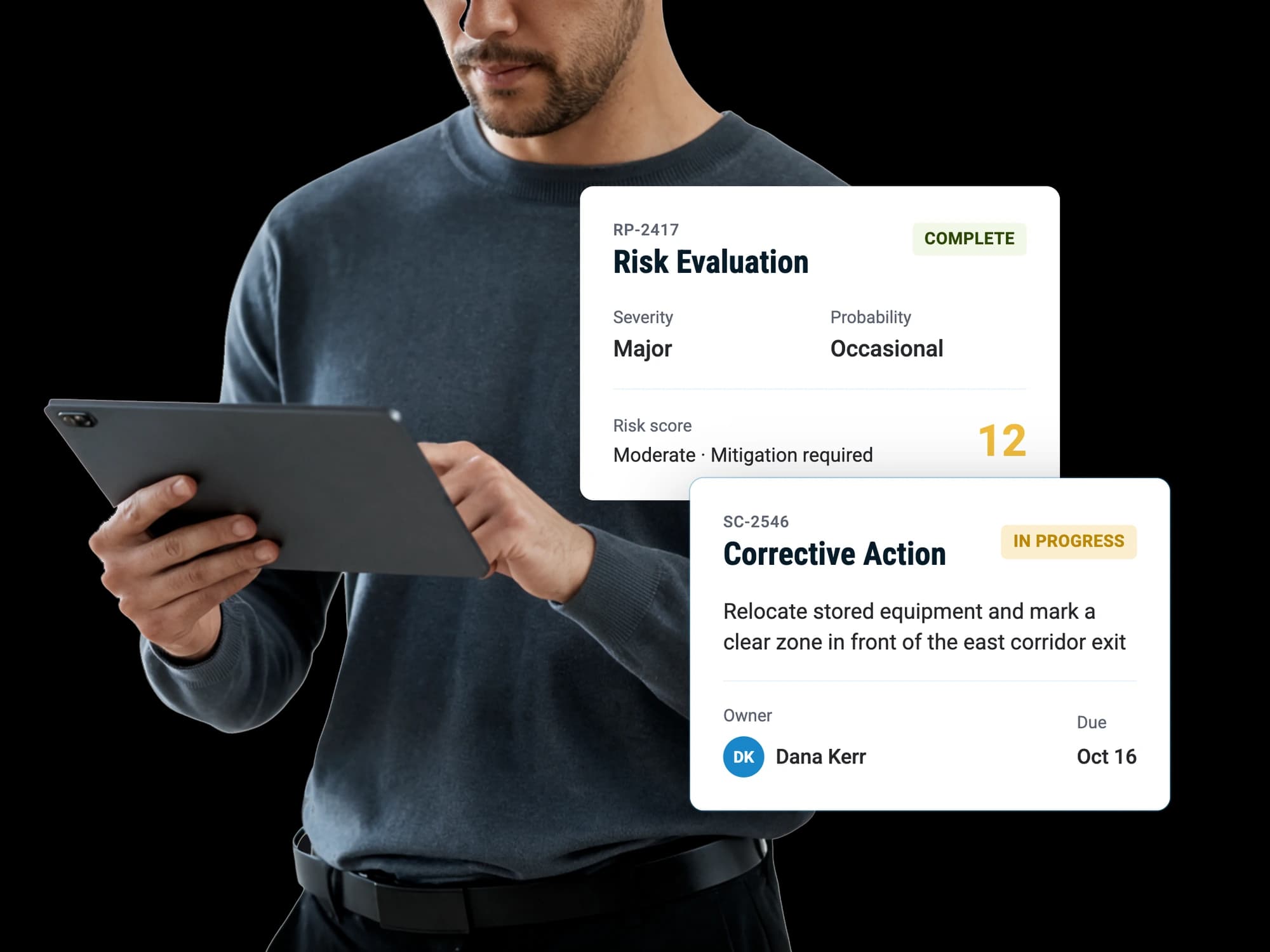
In RISE, crews file hazard and near miss reports from a phone browser or by scanning a form's QR code stuck on the gang box, with no account needed, and a reviewer classifies each one as a hazard, near miss, incident, accident or not a safety issue, so the week's real near misses are easy to pull. Reporting charts and trends show what keeps coming up. The talk itself runs in Meeting Minutes: a saved Toolbox Talk agenda, the report linked to the meeting, tasks with an owner and due date, and attendance marked when the talk is completed. A paid add-on, available on any plan, answers plain-language questions about your own records, such as which hazards came up most on one job this month. To see it with reports like yours, book a demo.
Sources
- Evaluation of toolbox safety training in construction: The impact of narratives (Eggerth et al., CPWR public version)
- CPWR Toolbox Talks
- Tool Box Talks: A Year's Worth of Weekly Safety Meeting Subjects
- Construction Tool Box Safety Talks Volume III
Questions people ask
How long should a construction toolbox talk be?
Long enough for one story, one hazard and a real answer to the discussion questions, which is five to ten minutes on most sites. Past fifteen, people start watching the crane instead of the speaker. If the topic needs more time than that, split it across two weeks and tell the second half as a follow-up.
Should we still keep a generic list of toolbox talk topics?
Keep it, and use it as a content library instead of a calendar. Once your reports tell you the subject, a CPWR or AGC handout on that subject saves you writing the technical points from scratch. It also covers the weeks when the report pile is quiet and the lookahead shows nothing new.
What if a site turns in no near miss reports?
A quiet site usually means reporting is hard or unwelcome, not that the work is hazard-free. Make that the topic: tell a near miss from another of your jobs, then ask the crew what they saw this week that almost went wrong. Write down what they say and treat each answer as a report.
Who should give the toolbox talk, the safety manager or the foreman?
The foreman or superintendent, most weeks. The crew works for them, and a topic delivered by the person who sets the pace on the job carries more weight than one delivered by a visitor from the office. The safety manager's job is to pick the topic, hand over a ready story and questions, and show up often enough to hear how it lands.
Can subcontractor reports feed our toolbox talk topics?
They should, because sub crews often see hazards your own people walk past, especially where trades overlap. Give them an easy way to report and include their reports in the Thursday read-through. When a sub's near miss becomes the company-wide story, keep their name and company out of it, the same as for your own crews.