
Safety policy statement
The safety policy nobody wrote
A safety policy statement is short, signed, and posted where people see it. That makes it the most read document in the program and the one most likely to have been copied from somewhere.
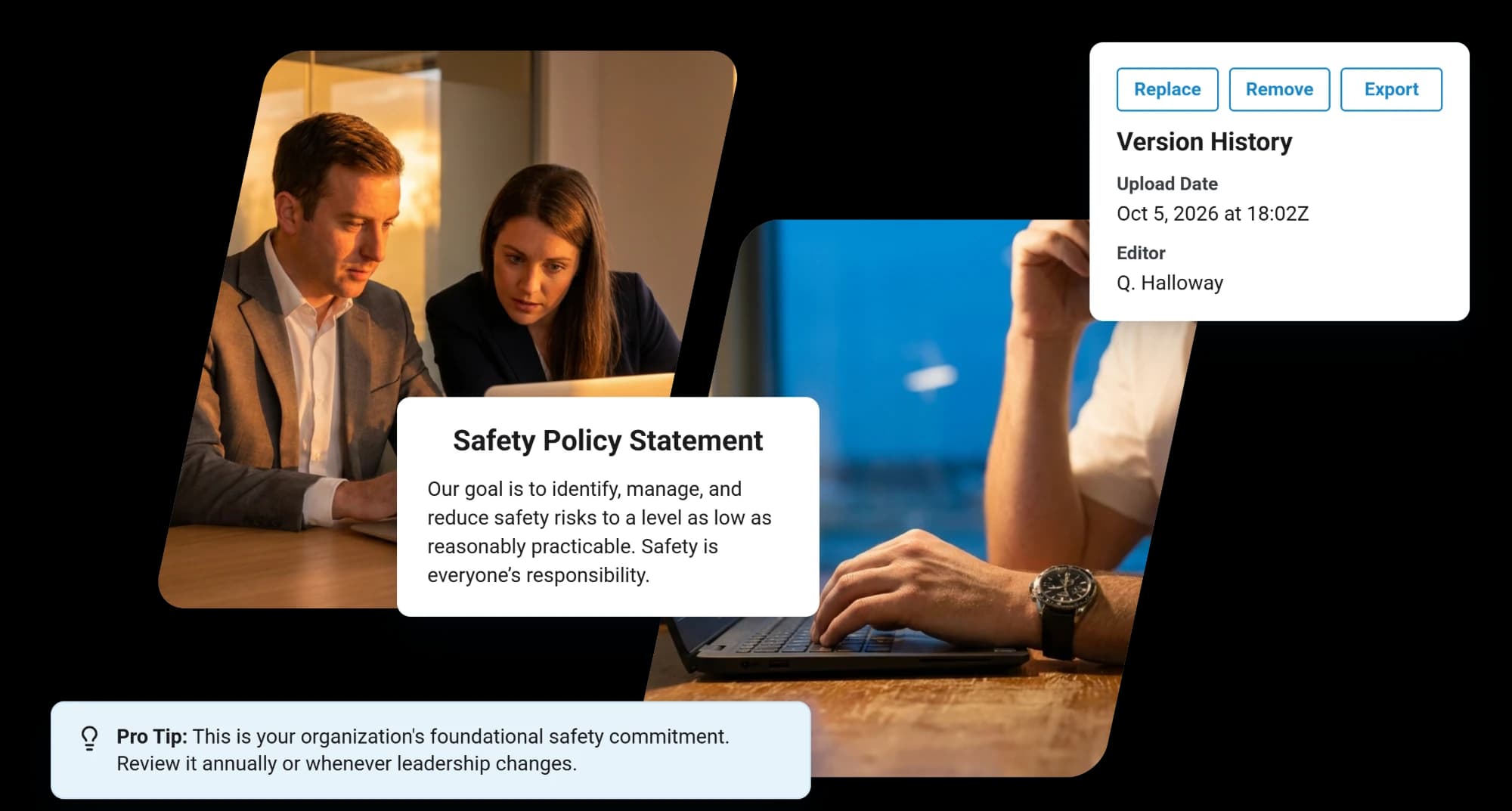
Safety policy statement
A safety policy statement is short, signed, and posted where people see it. That makes it the most read document in the program and the one most likely to have been copied from somewhere.
A policy promising things the operation visibly does not do is worse than silence, because everybody who reads it learns what the safety program is worth. It is also the document most likely to be read by the most people, which makes it the cheapest way to tell an entire operation what will happen when somebody reports something. A statement saying reports are welcome, signed by a leader who then behaves that way, moves reporting rates further than any system will.
Questions
Where to start
A call about how your program runs today and the areas where it could be stronger. If this is the service you need, we will talk about what comes next. If it is not, we will point you toward the support that would help. Either way, you come away knowing what to do next. No obligation.