Skip to content
RISE

Safety meetings and committee

Decisions that outlive the room

A safety committee that meets, discusses and disperses is a calendar entry. This is about structure: who is in the room, what is on the agenda, what gets decided, and what happens to the actions afterwards.

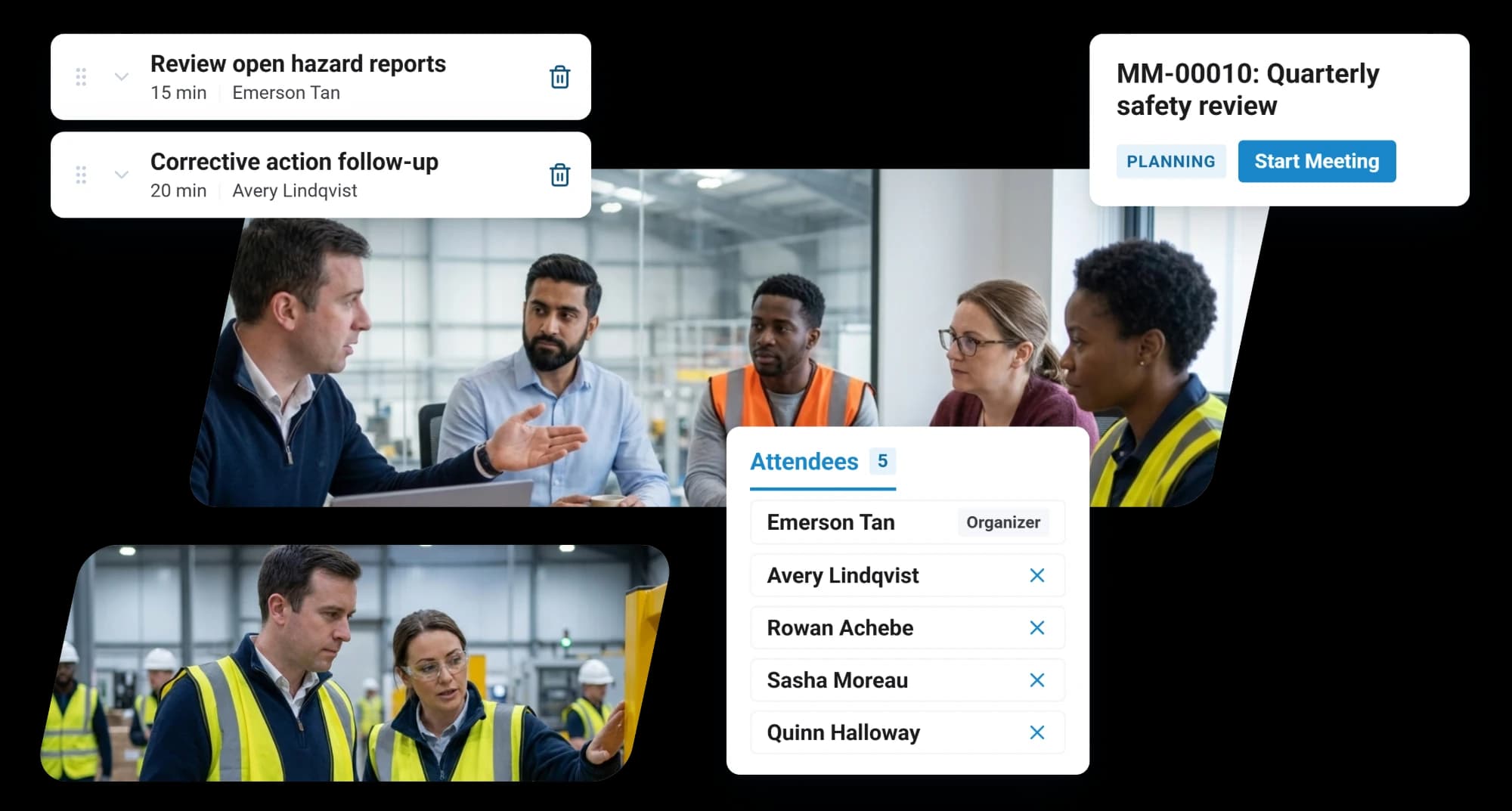
A quarterly safety review being planned in RISE, with hazard report and corrective action items on the agenda and five attendees, beside a team meeting on a warehouse floor and two leads in hi-vis walking the site

Why it matters

The safety meeting is where most operations do their best thinking and their worst record keeping. Good decisions get made in the room and then evaporate, because nobody wrote down who owned the action or when it was due, and the next meeting opens with the same discussion it closed with last time. Structure is what turns that conversation into something that accumulates. It also produces the one artifact that shows an outsider how safety decisions actually get made here.

What you end up with

  • A committee structure with defined membership and roles
  • A repeatable agenda that covers what it should
  • Actions raised in the meeting, tracked outside it

Questions

Questions about safety meetings and committee

Who should attend a safety committee meeting?
Enough seniority to make decisions and enough frontline representation that the discussion is grounded. Typically the accountable executive, the safety manager, department heads, and people who actually do the work being discussed. A committee entirely made of management discusses a different operation from the real one.
How often should a safety committee meet?
Frequently enough that actions raised in one meeting are still relevant at the next, commonly monthly or quarterly depending on the size of the operation. Regularity matters more than frequency: a predictable quarterly meeting beats an ad hoc monthly one.

Where to start

Tell us about your operation

A call about how your program runs today and the areas where it could be stronger. If this is the service you need, we will talk about what comes next. If it is not, we will point you toward the support that would help. Either way, you come away knowing what to do next. No obligation.