Maritime
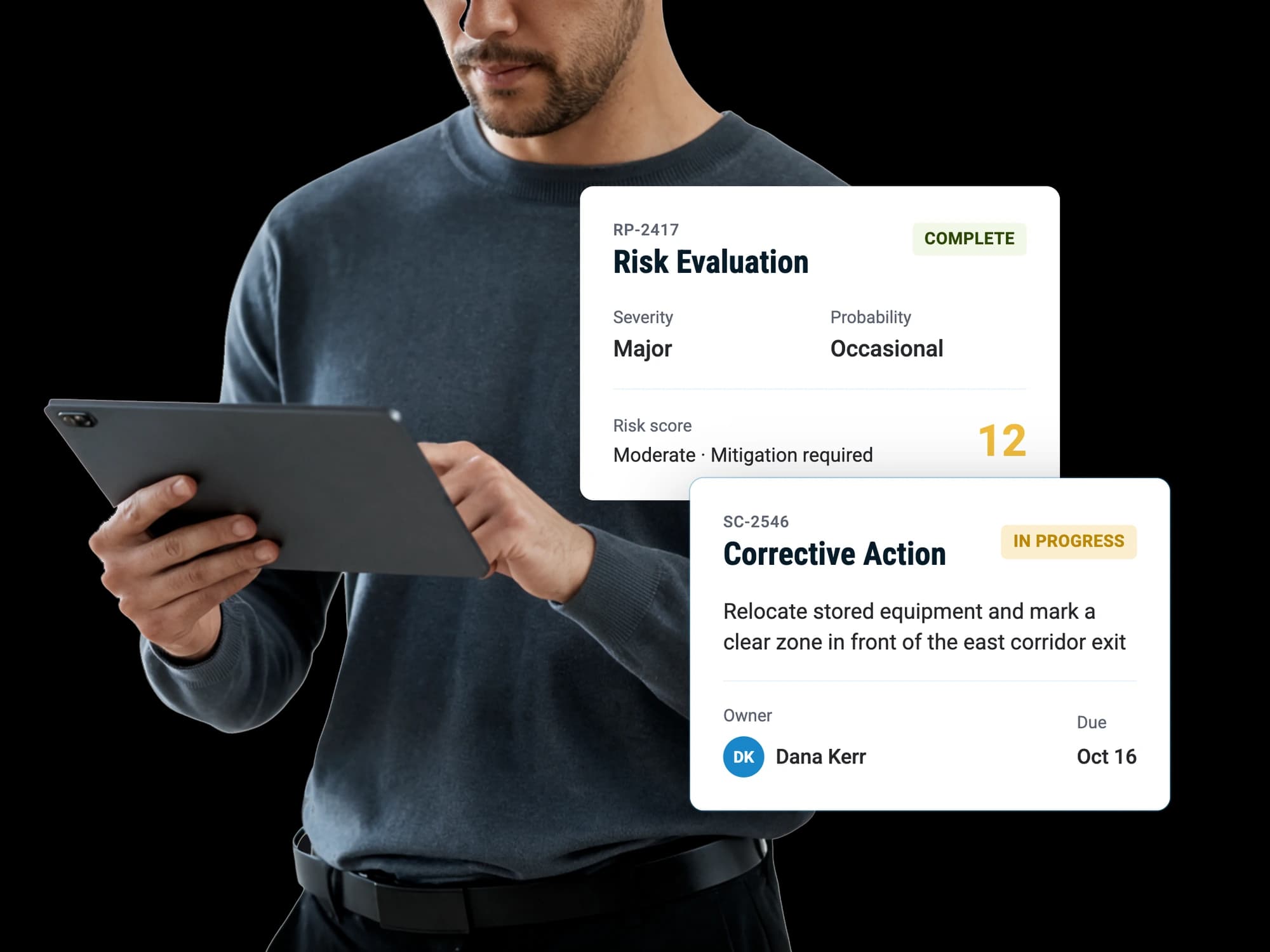
Safety management from vessel to shore
Vessel operators, offshore support, ports and terminals. Vessel and shore working from the same record instead of reconciling two.
Maritime
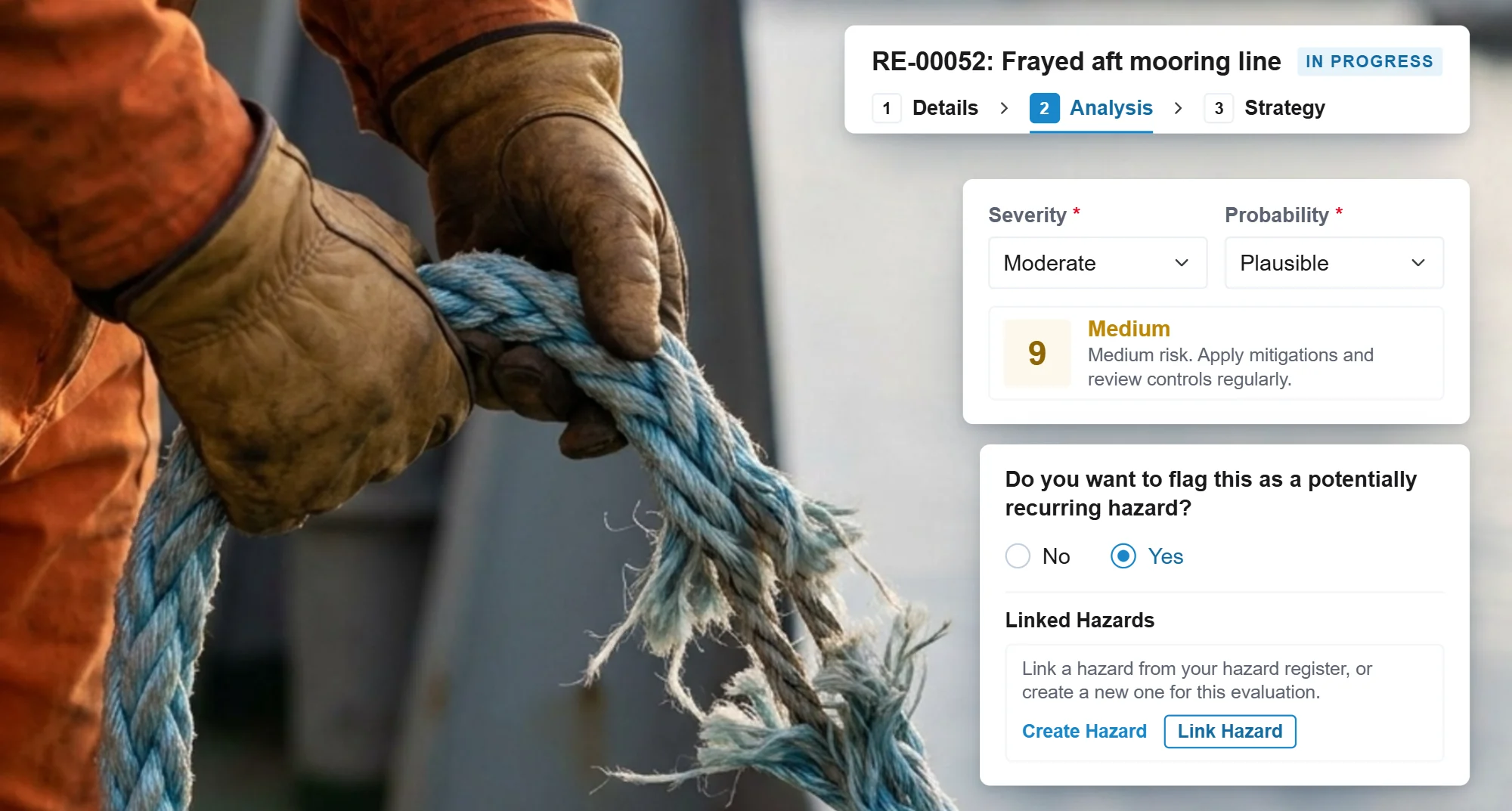
Vessel operators, offshore support, ports and terminals. Vessel and shore working from the same record instead of reconciling two.
Accessible reporting
Raised aboard, on a phone or a shared device, and it is the same record ashore.
Structured evaluation
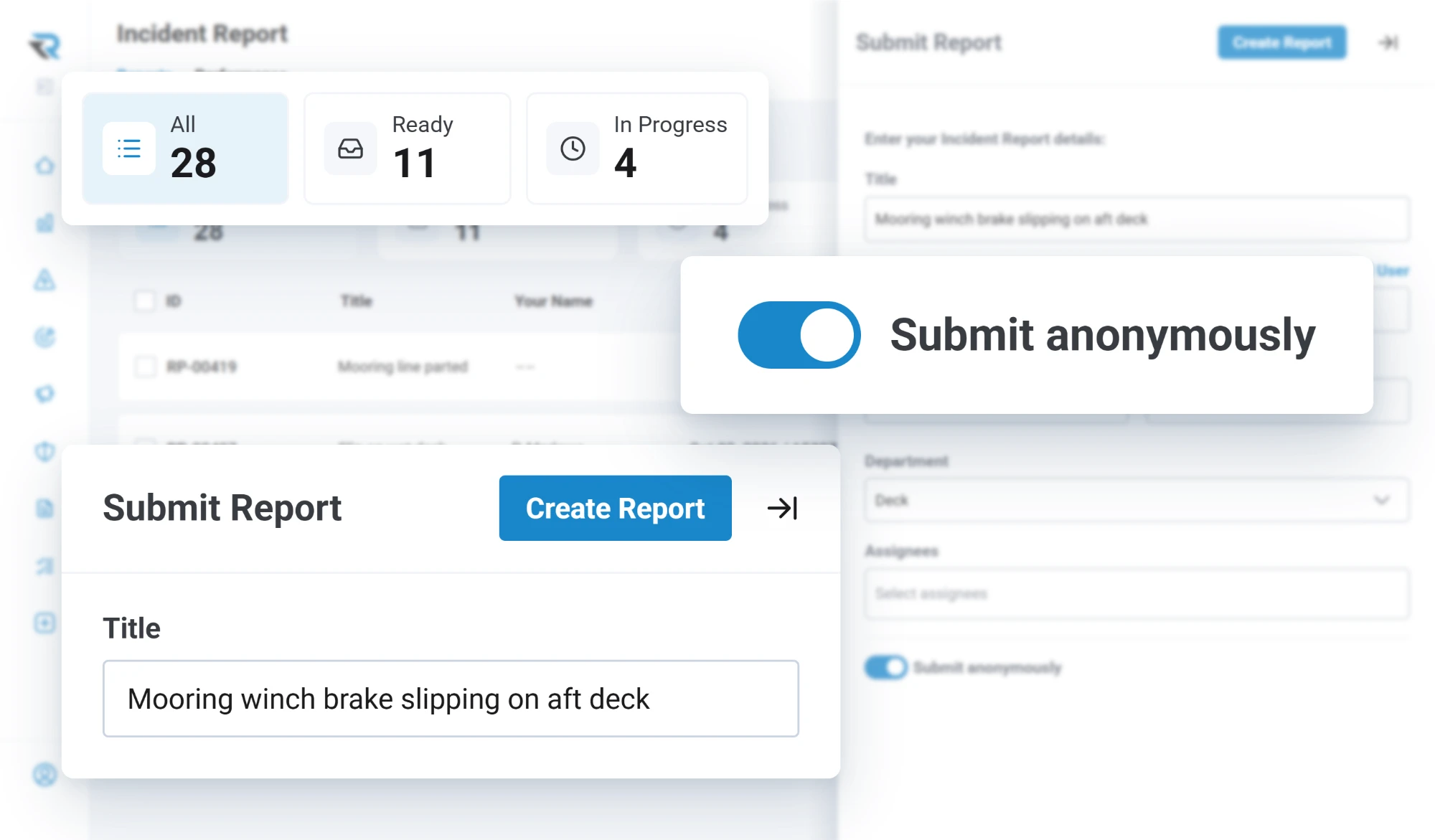
Every report goes through the same process: risk triaged, severity and probability assessed, a strategy set, and acceptance documented as you go. The same aboard and ashore, so there is one assessment rather than two.
Systematic resolution
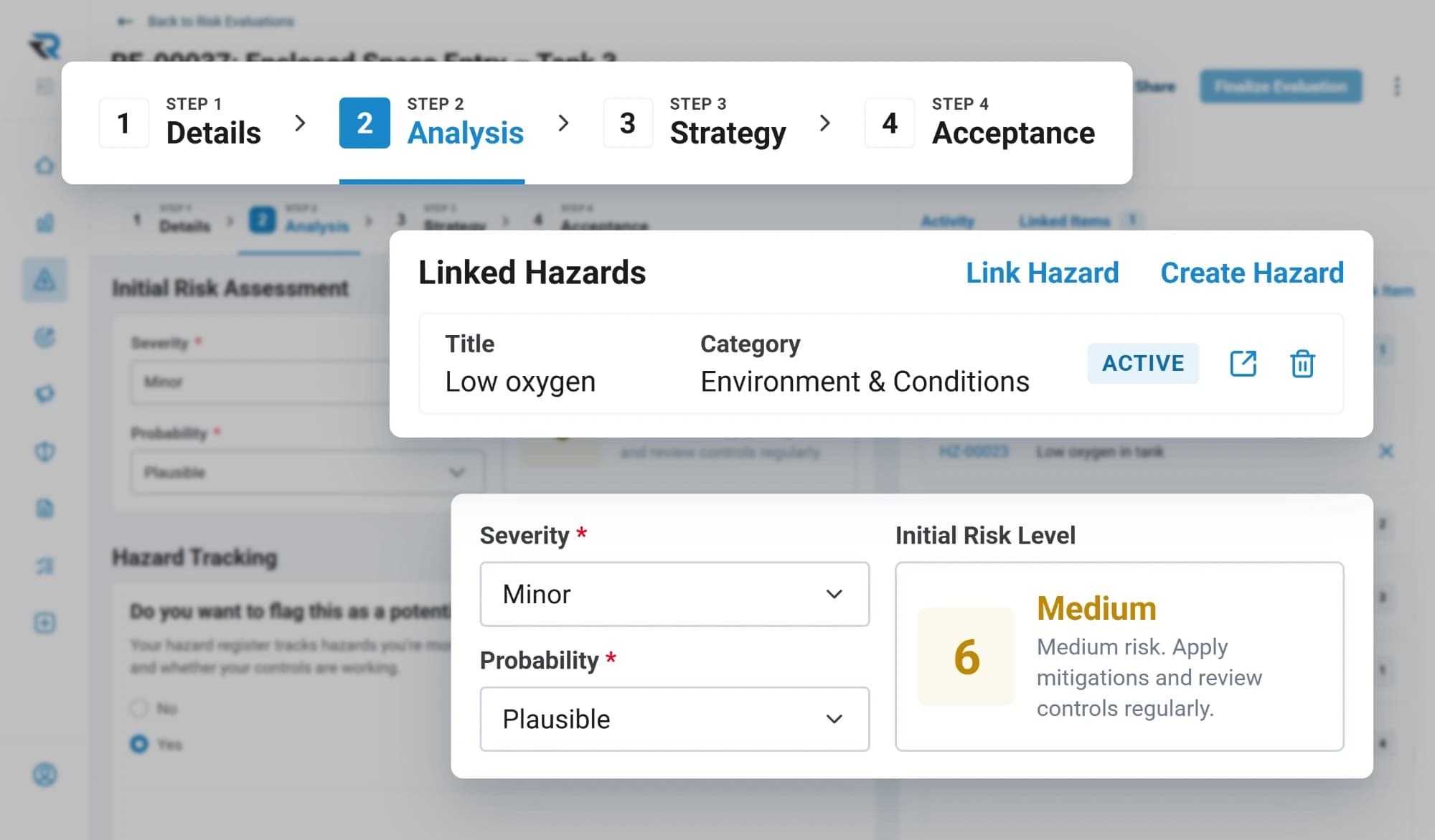
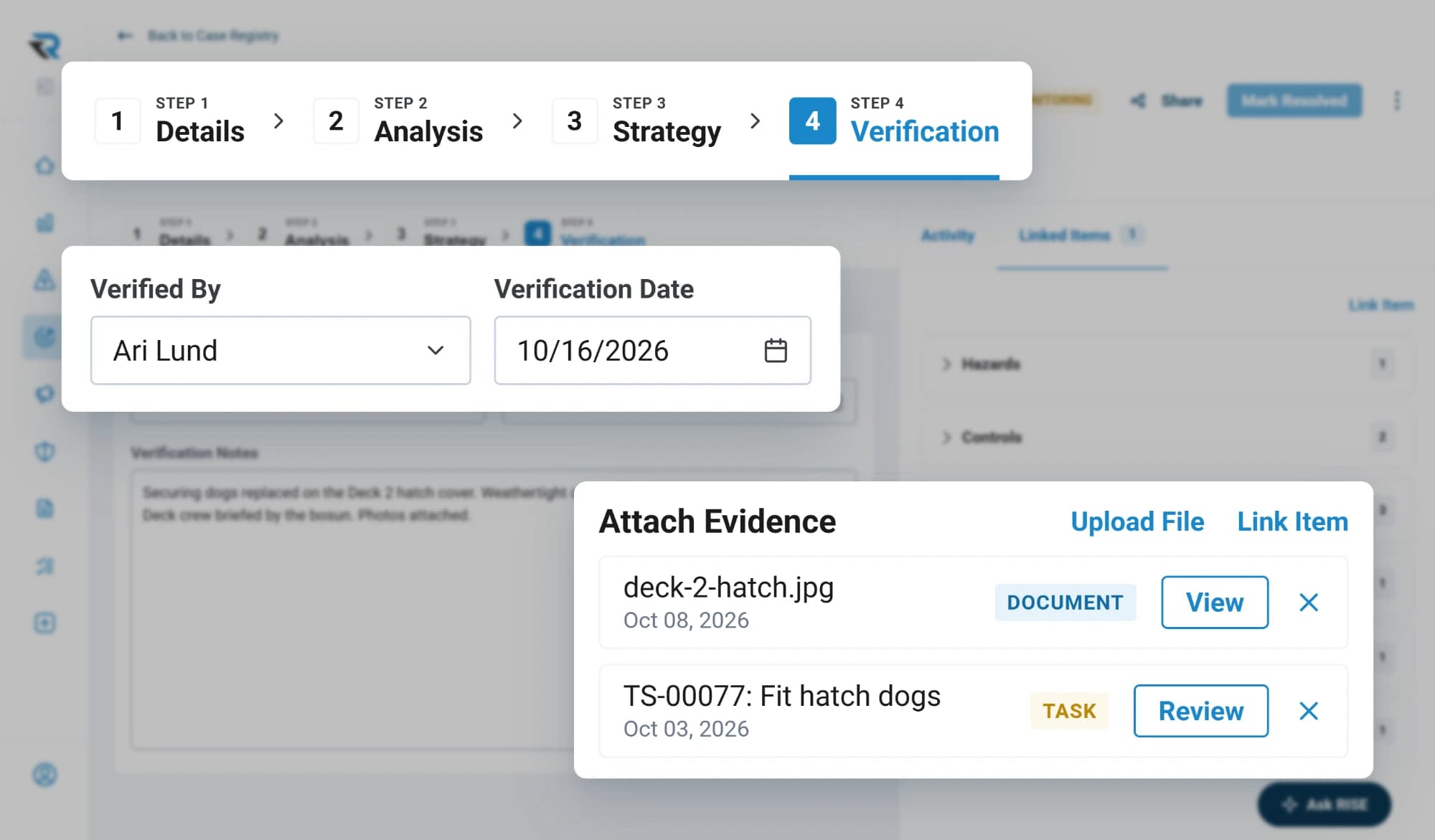
An owner, a date and an action plan, tracked to closure with verification before it is called done.
Proactive insight
Rates by vessel, route, operation and department, so a fleet-wide pattern is visible from one place.
The parts described above are the ones this operation meets first. This is the rest of what an account carries.
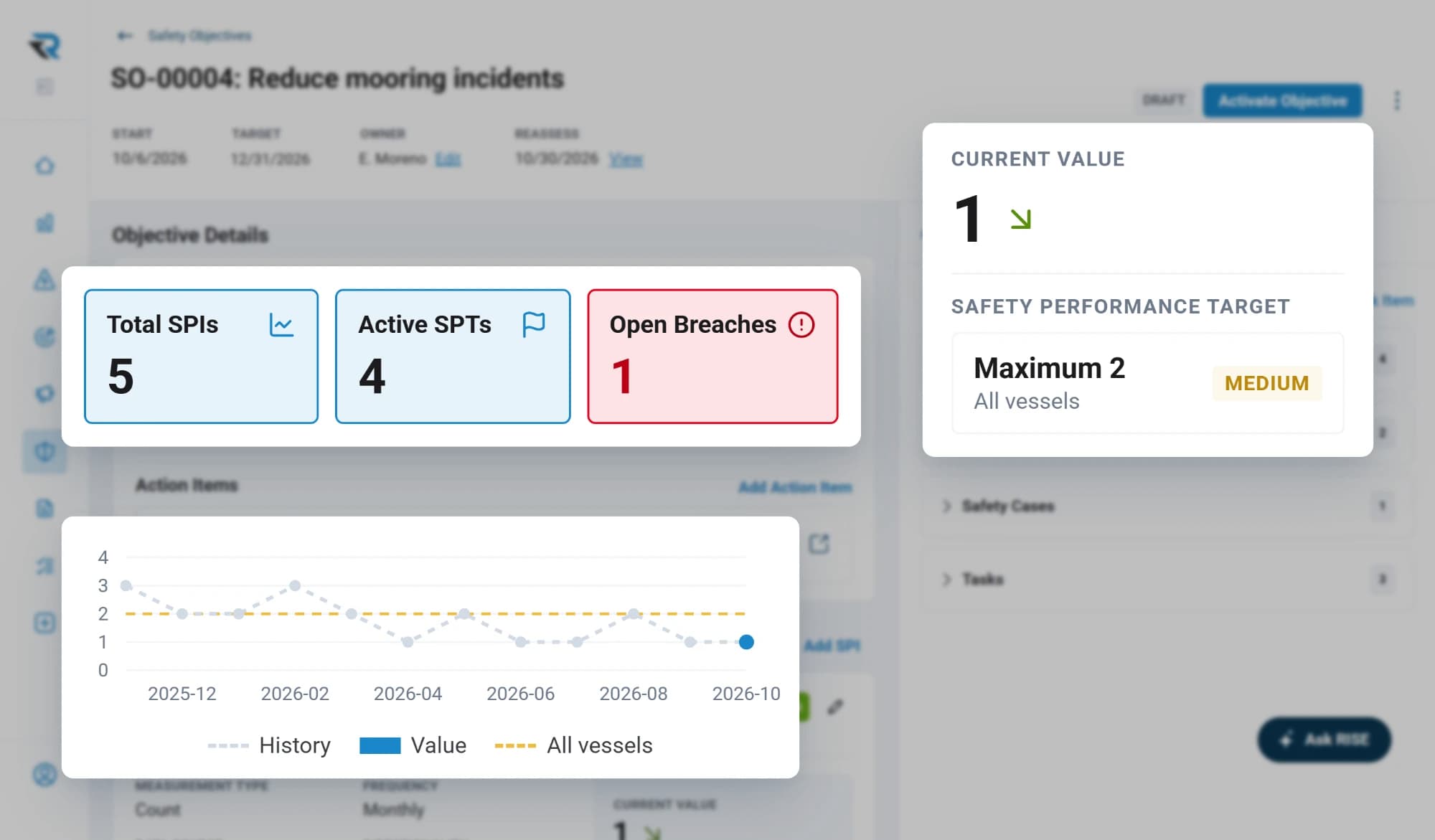
What the operation has committed to, and how it knows it is getting there.
Everything raised across the operation, by anybody, from wherever the work happens.
Judging what could go wrong, deciding what to do about it, and recording who accepted what.
Checking the controls are working, and driving what you find through to a verified closure.
Making sure the people doing the work know what was found and what changed because of it.
The parts that are not one step of the program but sit underneath all of them.
What sets us apart
The account arrives seeded with forms and templates built for maritime, so you open it to a working system rather than a blank slate. From there every one of them is yours to change: the forms, the audit and inspection templates and the risk thresholds, with the process around them already built.

Everything in one place, and simple enough that the people closest to the work will actually use it, on any device.
An SMS with nothing in it tells you nothing, and adoption is where most safety software quietly fails.
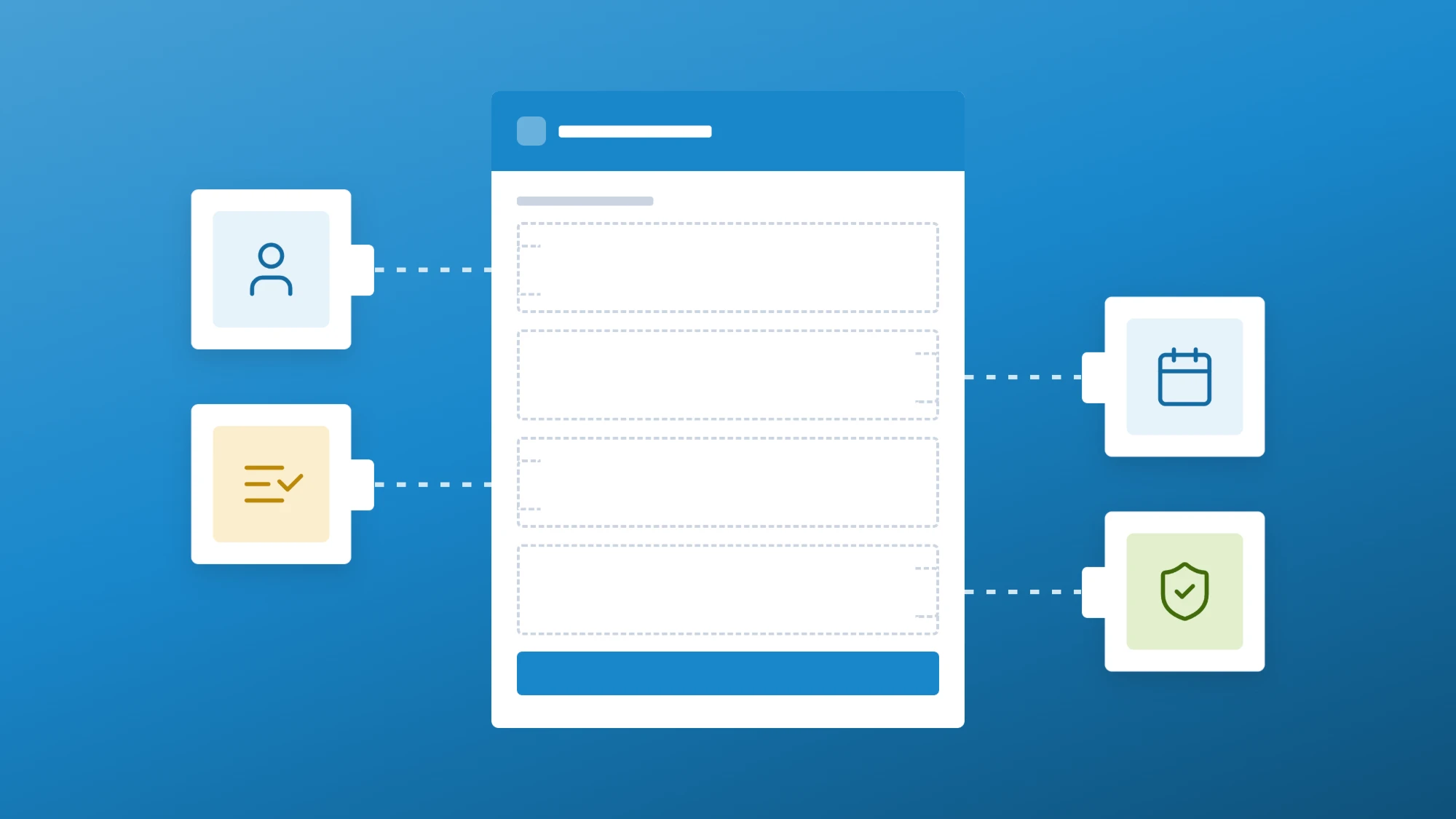
Your forms, your risk thresholds, your templates, with an owner, a date, an action plan and verification for closure already around them.
Rigid tools make you work their way; blank ones leave you to invent the process, which is how the spreadsheet happened.

Ask what is trending, where actions are slipping, or what needs attention this week, you'll get answers straight from your own records.
Every safety system can tell you what you stored; making sense of it is the part most solutions still leave to you.
Questions
Frameworks
RISE is built so the evidence lines up with whichever framework you work under, wherever you operate. Which of these applies to your operation is a conversation worth having properly, rather than a question a website should answer.
Links go to the primary source. Verify any requirement against the current text of the regulation or standard.
Resources
Practical documents you can use whether or not you ever talk to us.
Other industries
A guided walkthrough of how RISE handles reporting, evaluation, resolution and insight, with time to talk about how your own operation runs today.