Skip to content
RISE

Indicators and targets

Indicators that change what you do

Most safety indicators count reports, because reports are countable. This is about choosing measures that tell you whether the operation is actually getting safer, and setting targets somebody can act on.

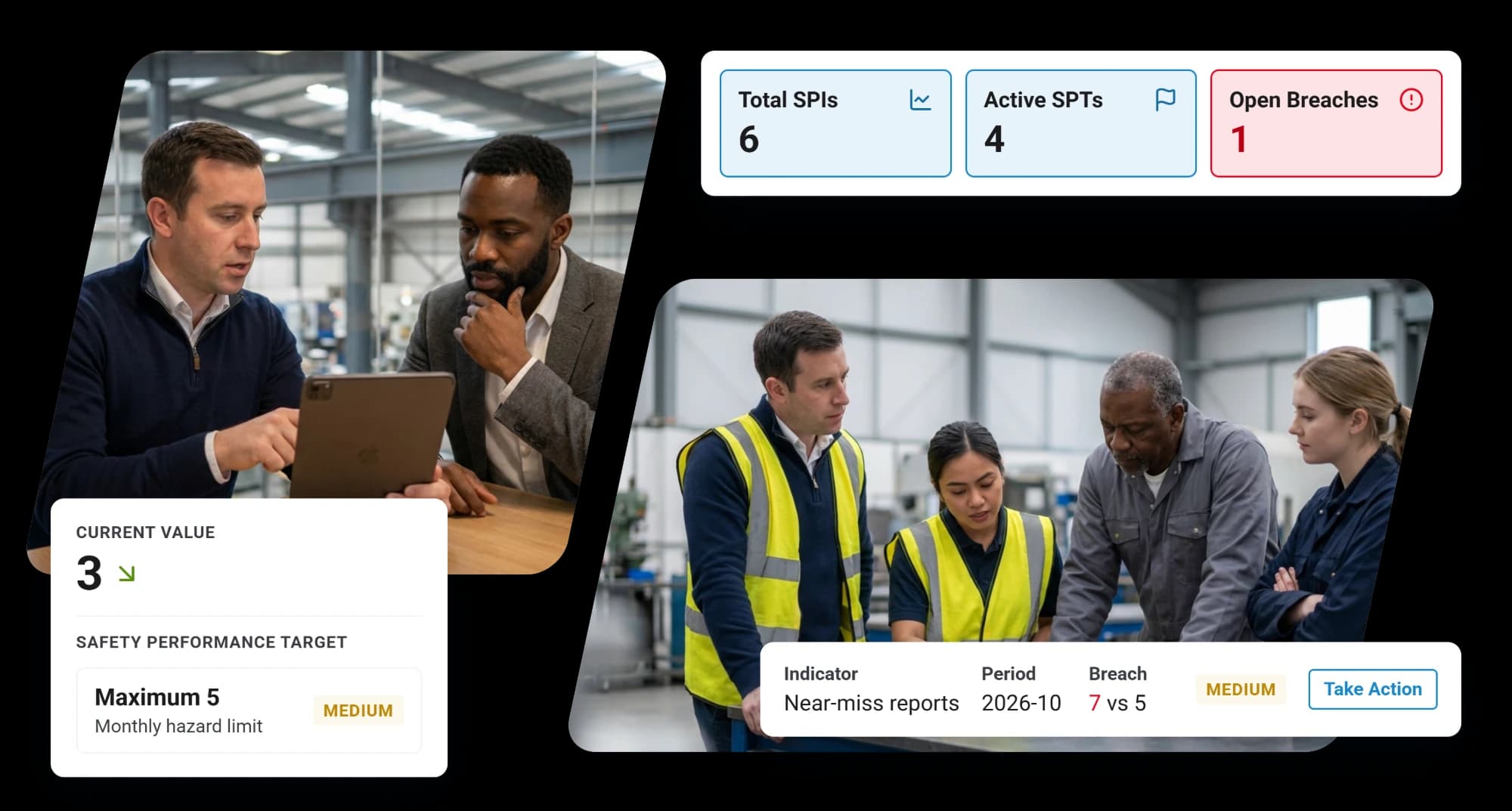
Safety performance indicators and targets in RISE: counts of indicators, active targets and open breaches, a current value of 3 against a monthly maximum of 5, and a near-miss breach to act on, beside teams reviewing them in a workshop

Why it matters

An indicator nobody can influence is a number in a slide deck, and everybody in the room knows it. The failure is a quiet one: the figure gets presented every month, nobody acts on it because nobody can, and in time the room learns to treat that whole section as a formality to be sat through. A measure worth having points at something a person in that meeting can change before the next one. It is also the only kind that survives the question a board member eventually asks, which is what you did differently because of it.

What you end up with

  • Indicators drawn from your real operational risks
  • Targets that are achievable and mean something
  • A measurement method that does not need assembling by hand

Questions

Questions about indicators and targets

What is the difference between an SPI and an SPT?
A safety performance indicator is the thing being measured, such as the rate of a particular hazard type. A safety performance target is the level you are aiming for on that indicator. The indicator tells you where you are; the target says where you intend to be.
How many safety performance indicators should we have?
Few enough that somebody looks at all of them. Operations that define twenty indicators usually review none of them properly. A handful tied to the risks that actually threaten the operation is far more useful than comprehensive coverage nobody reads.

Where to start

Tell us about your operation

A call about how your program runs today and the areas where it could be stronger. If this is the service you need, we will talk about what comes next. If it is not, we will point you toward the support that would help. Either way, you come away knowing what to do next. No obligation.