Skip to content
RISE

Management of change

New aircraft, new base, new people, new risk

Operations are most exposed while they are changing, and change is exactly when nobody has time for process. A management of change process makes the risk assessment part of the change rather than something remembered afterwards.

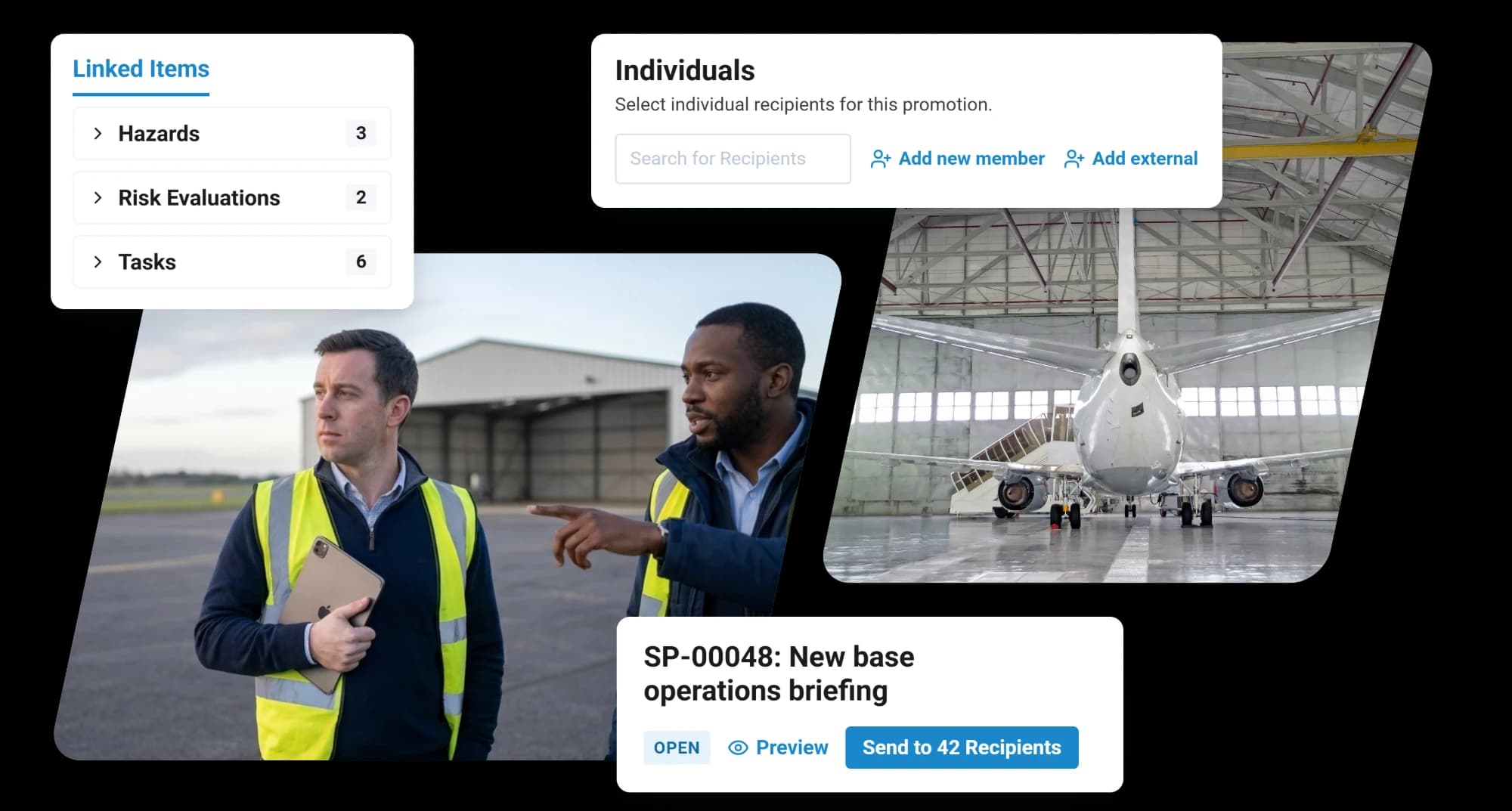
A new base operations briefing in RISE ready to send to 42 recipients, linked to the hazards, risk evaluations and tasks behind it, beside two leads in hi-vis on a ramp outside a hangar and a jet in the hangar

Why it matters

A change introduces hazards nobody in the operation has met before. Experience is what normally catches a problem early, and a new aircraft, a new base or a new contract takes that away at the moment workload is highest. Looking for them before the change is the whole point, because that is the only moment the answer can still alter the plan: a crew briefed on what is actually different, a limit set while setting one is still easy, a procedure written before the first person needs it.

What you end up with

  • A management of change process sized for your operation
  • Triggers that say when it applies
  • A documented record of what was considered and decided

Questions

Questions about management of change

What is management of change in a safety management system?

A defined process for identifying and assessing new hazards before an operational change takes effect: a new aircraft type, a new destination, a new maintenance provider, a significant staffing change. The output is a documented assessment and any controls put in place before the change happens.

What triggers a management of change assessment?

Thresholds you set in advance, so the decision is not made case by case under time pressure. Common triggers are new equipment, new locations, changes to key personnel, new contracted services, and changes to procedures that people rely on.

Where to start

Tell us about your operation

A call about how your program runs today and the areas where it could be stronger. If this is the service you need, we will talk about what comes next. If it is not, we will point you toward the support that would help. Either way, you come away knowing what to do next. No obligation.