Skip to content
RISE

Healthcare

Safety management for hospital and clinic staff

Hospitals, clinics, surgical centers and long-term care. The safety program for your staff rather than your patients: sharps injuries, patient handling, slips and workplace violence, reported from the floor and carried to a closure you can show at survey.

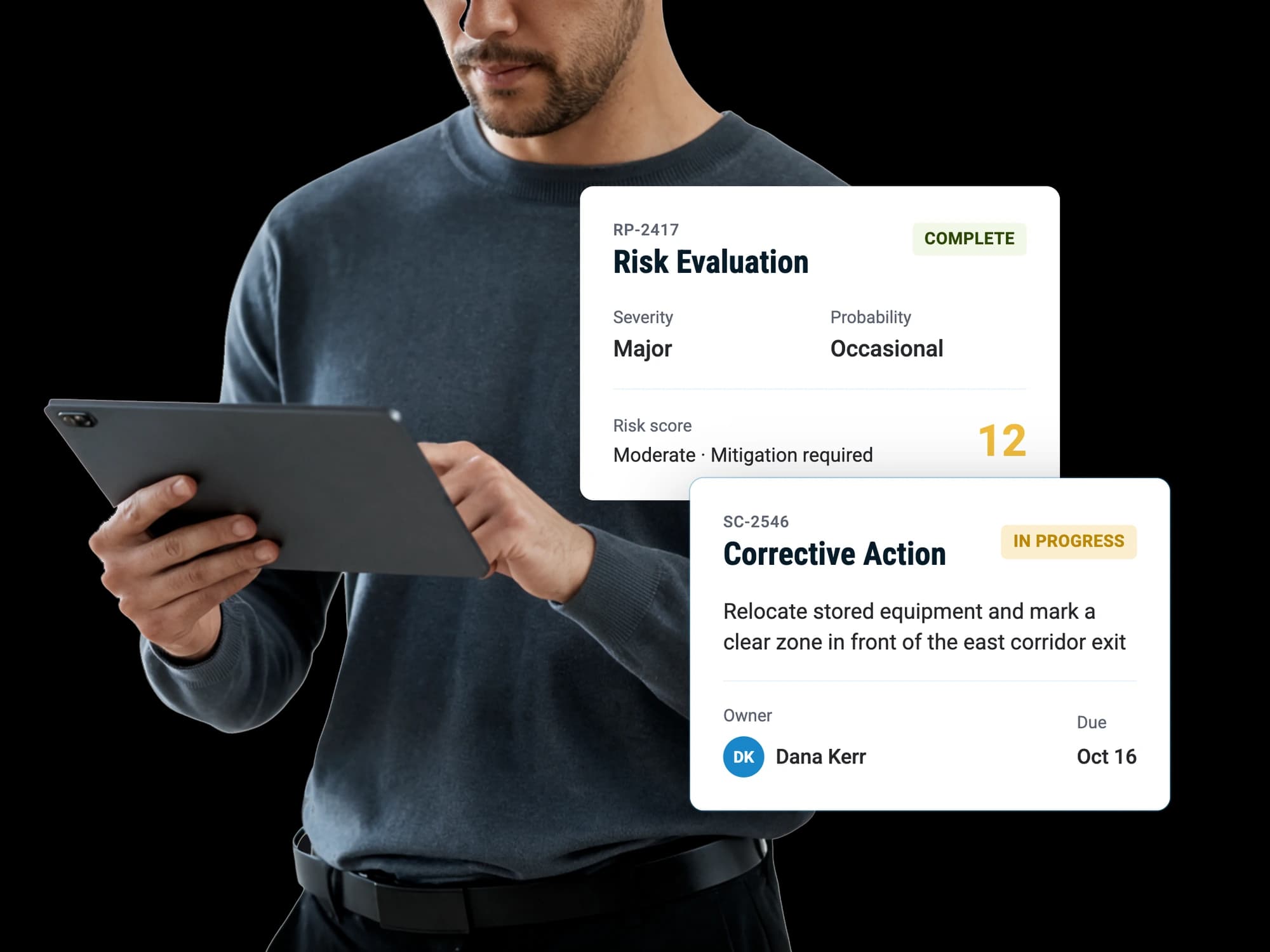
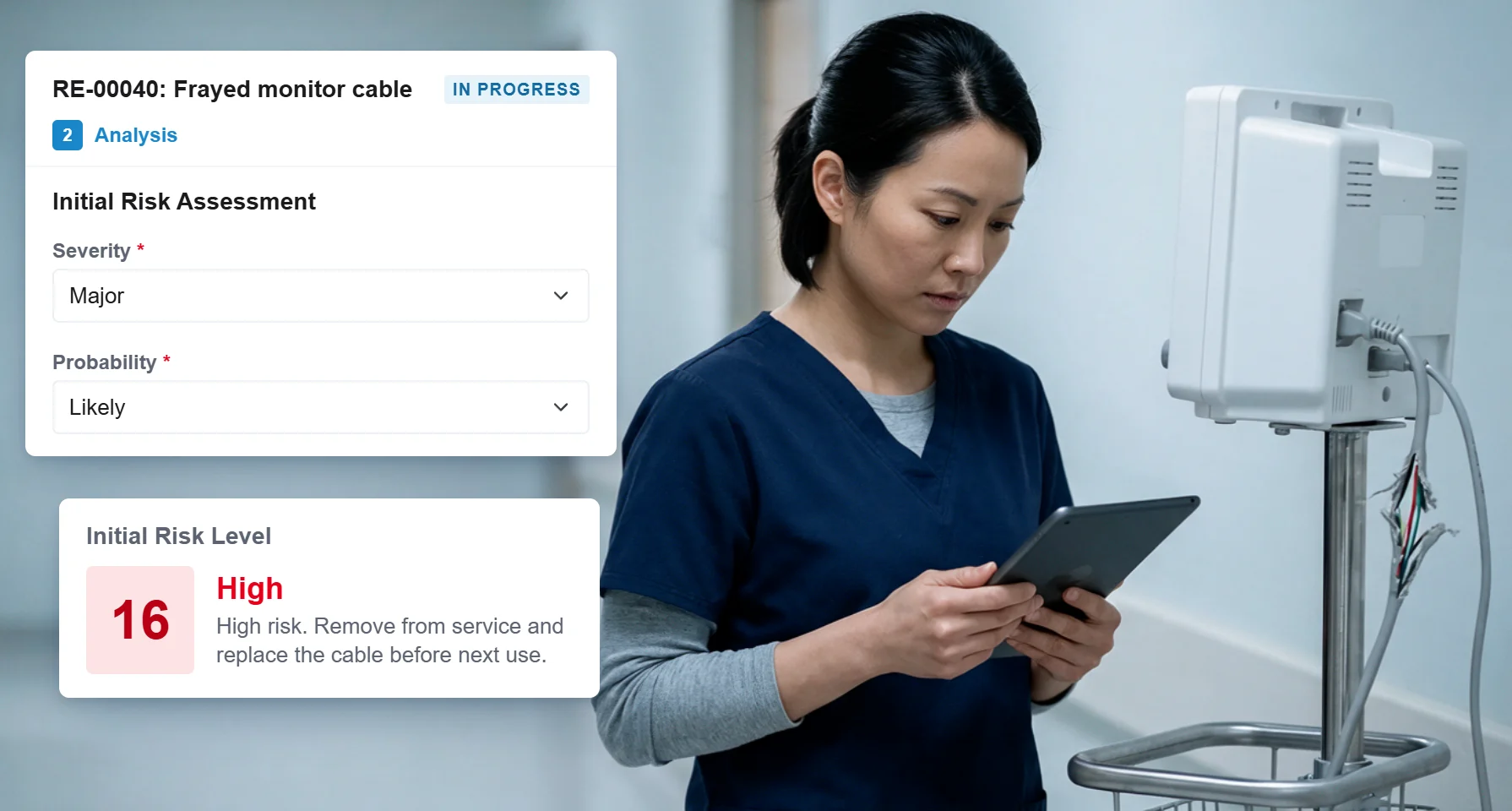
A risk evaluation in RISE for a frayed monitor cable at its analysis step, with severity Major and probability Likely giving an initial risk level of High 16, beside a staff member in scrubs reading a tablet next to a patient monitor with a frayed cable

Whatever gets raised in healthcare goes in the same place.

  • Sharps injury
  • Near miss
  • Workplace violence
  • Patient handling
  • Environment of Care

Accessible reporting

It comes in from the field

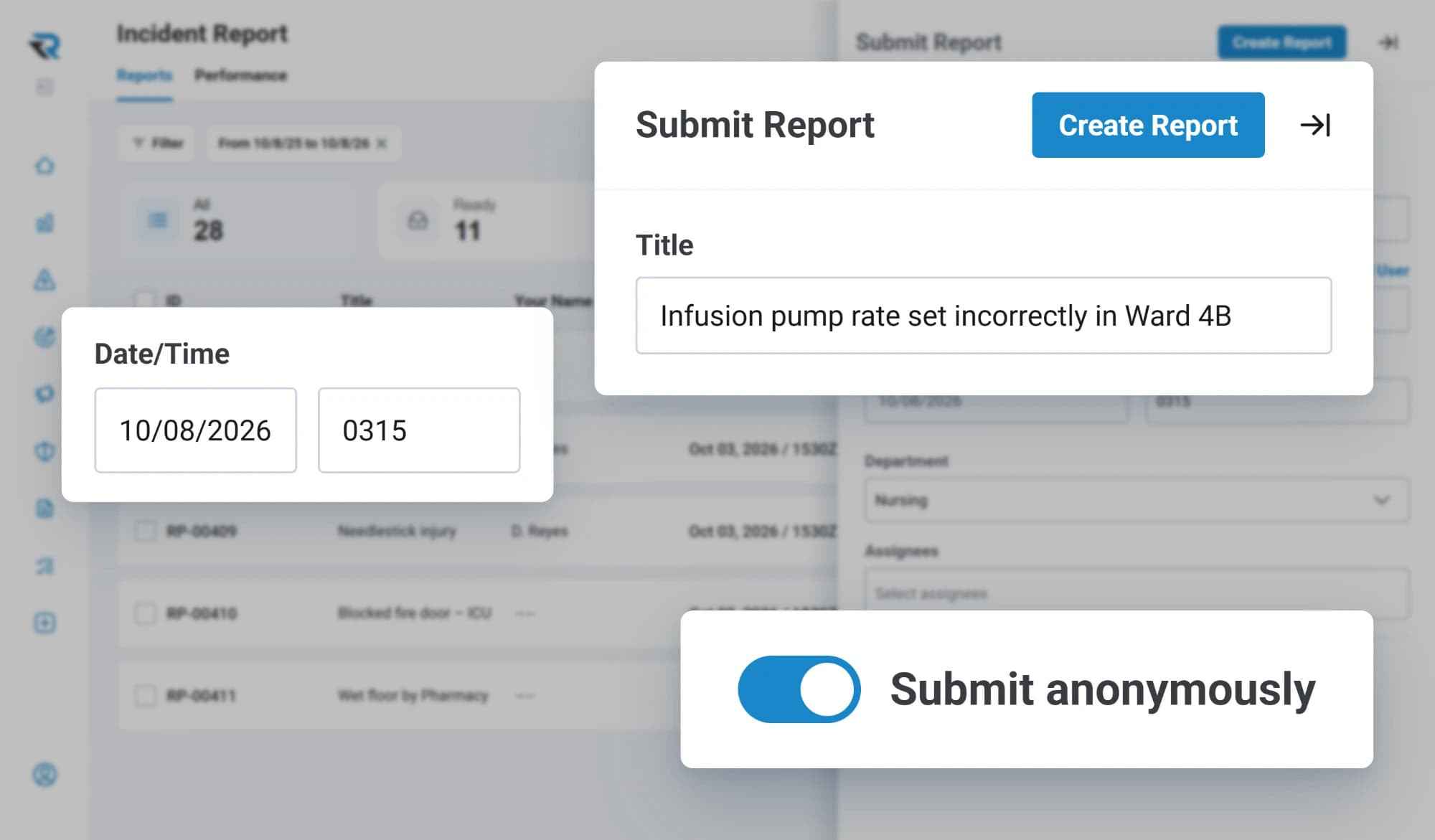
Raised in seconds from a phone or a workstation, because a report that costs five minutes gets filed once and then worked around for the rest of the shift.

  • Raised from a phone, a tablet or a desktop
  • QR codes wherever the work happens
  • Anonymous submission on any form
See how
Submitting an incident report titled Infusion pump rate set incorrectly in Ward 4B, with its date and time and the Submit anonymously toggle switched on

Structured evaluation

One way to judge what comes in

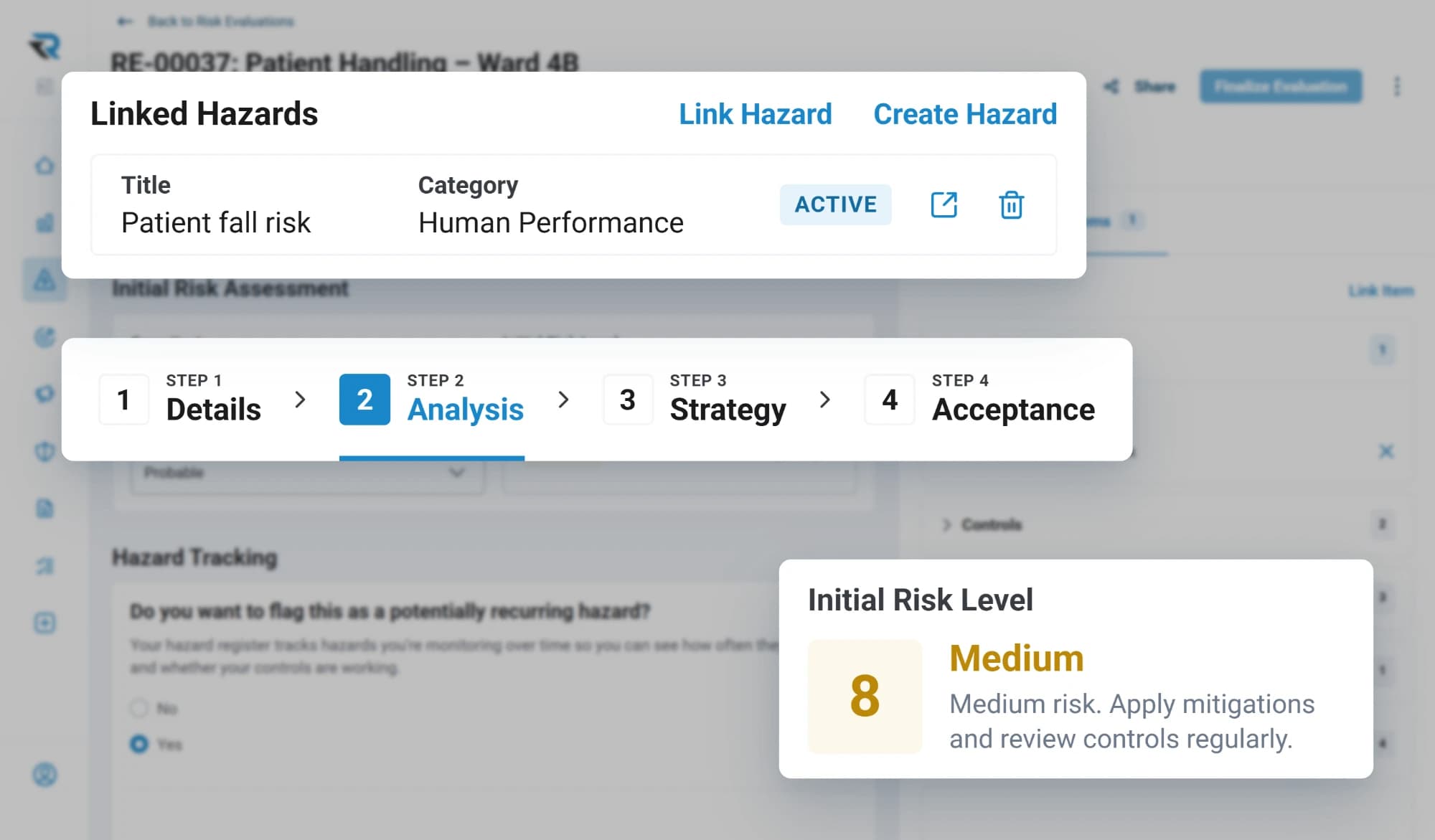
Every report goes through the same process: risk triaged, severity and probability assessed, a strategy set, and acceptance documented as you go. So a rate built on top of it describes the hospital rather than describing who reviewed what.

  • Severity and probability on one shared scale
  • Controls applied, residual risk recalculated
  • Accepted by somebody with the authority to accept it
See how
A patient handling risk evaluation for Ward 4B at its analysis step, with an initial risk level of Medium 8 and the linked hazard of patient fall risk

Systematic resolution

Driven to a close, and proved

An owner, a date and an action plan, held open until somebody has checked the change worked. The register is the same one your Environment of Care committee is asking about.

  • An owner and a date on every action
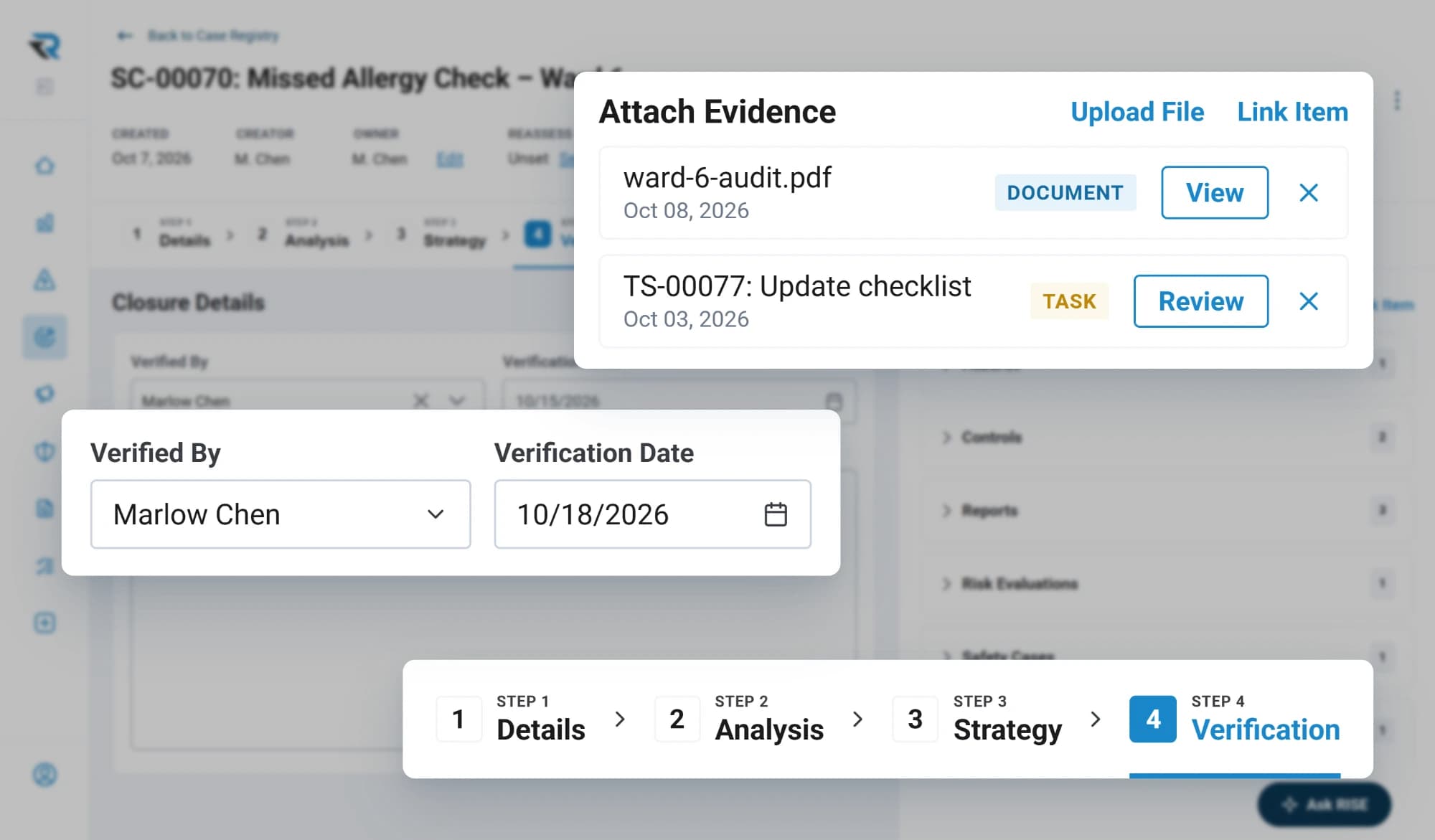
  • Verification with evidence before closure
  • One register for everything the operation owes itself
See how
A missed allergy check case at its verification step: verified by Marlow Chen with a date, with a ward audit and the checklist update task attached as evidence

Proactive insight

What the record is telling you

Rates by unit, shift and job role, so a recurring problem is visible while it is still small, and the training somebody was due is answerable without opening a spreadsheet.

  • Indicators measured from your own records
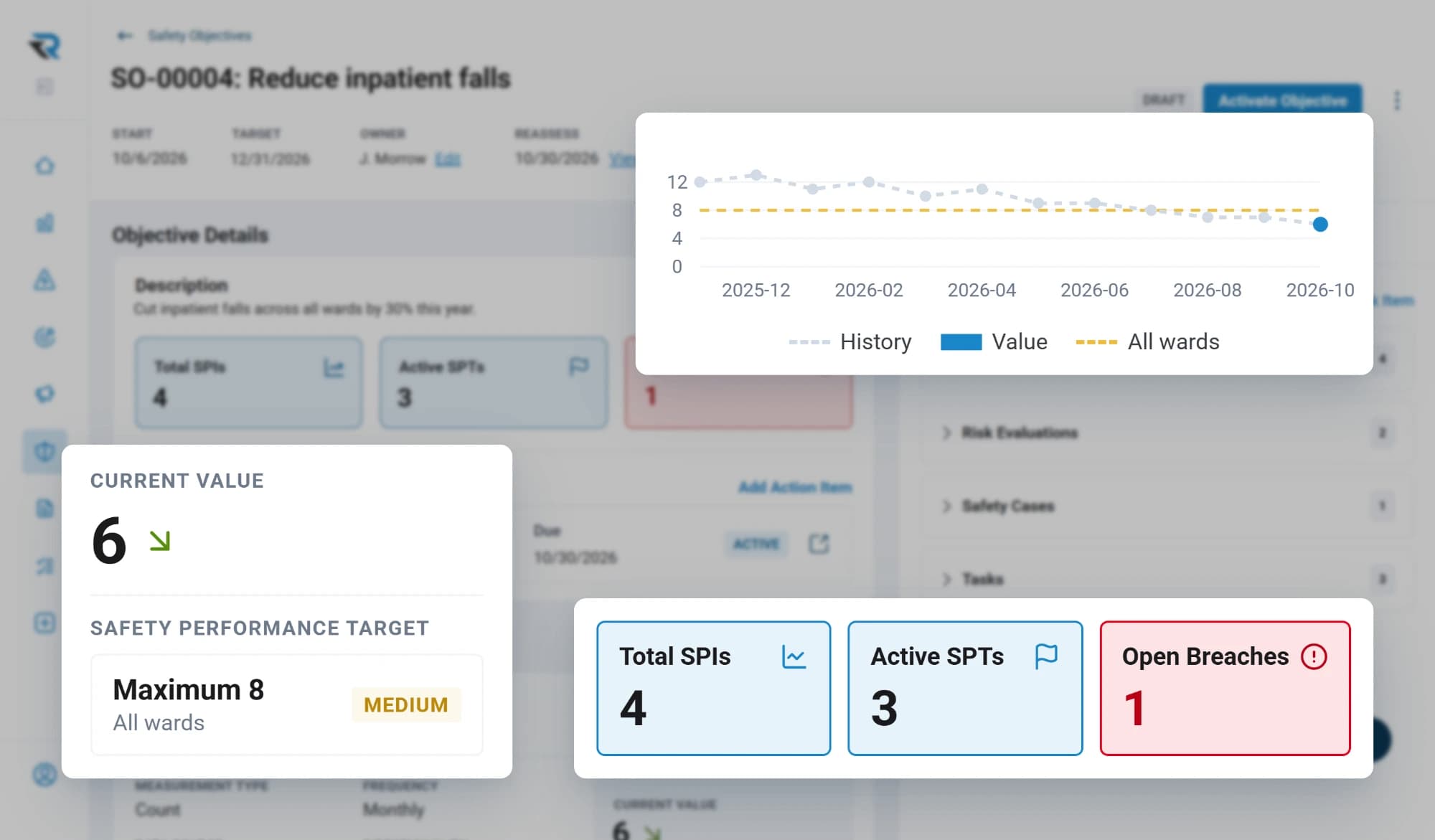
  • Targets, with a breach notice when one is crossed
  • Ask the RISE Agent in plain language
See how
An inpatient falls objective: its indicator at 6 against a maximum of 8 across all wards, charted over time against the target line, with 4 indicators, 3 active targets and 1 open breach

What sets us apart

Your forms, your templates, your thresholds

The account arrives seeded with forms and templates built for healthcare, so you open it to a working system rather than a blank slate. From there every one of them is yours to change: the forms, the audit and inspection templates and the risk thresholds, with the process around them already built.

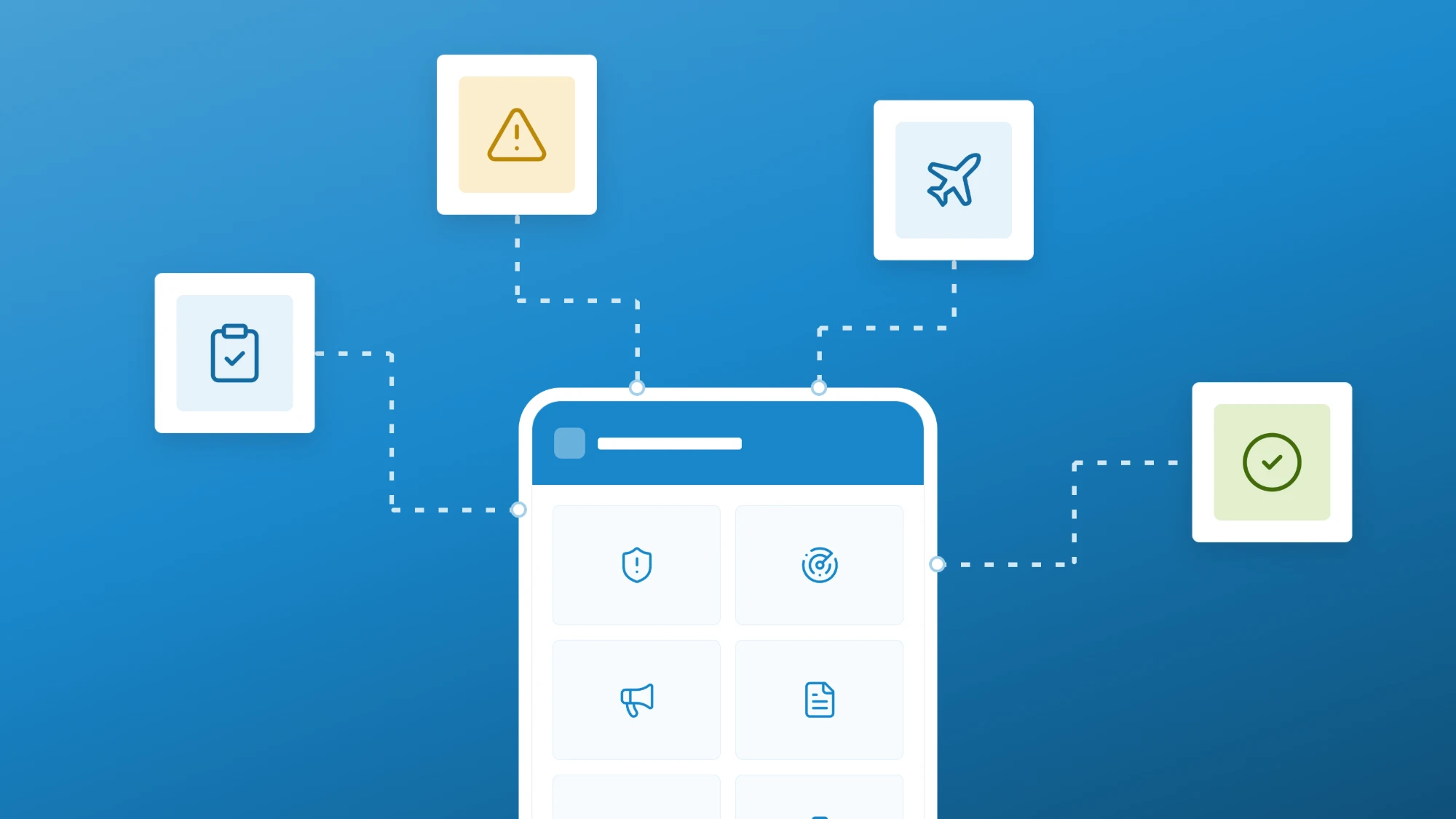
A phone app connected to checklists, hazard reports, flights and approvals

Intuitive safety management

Everything in one place, and simple enough that the people closest to the work will actually use it, on any device.

An SMS with nothing in it tells you nothing, and adoption is where most safety software quietly fails.

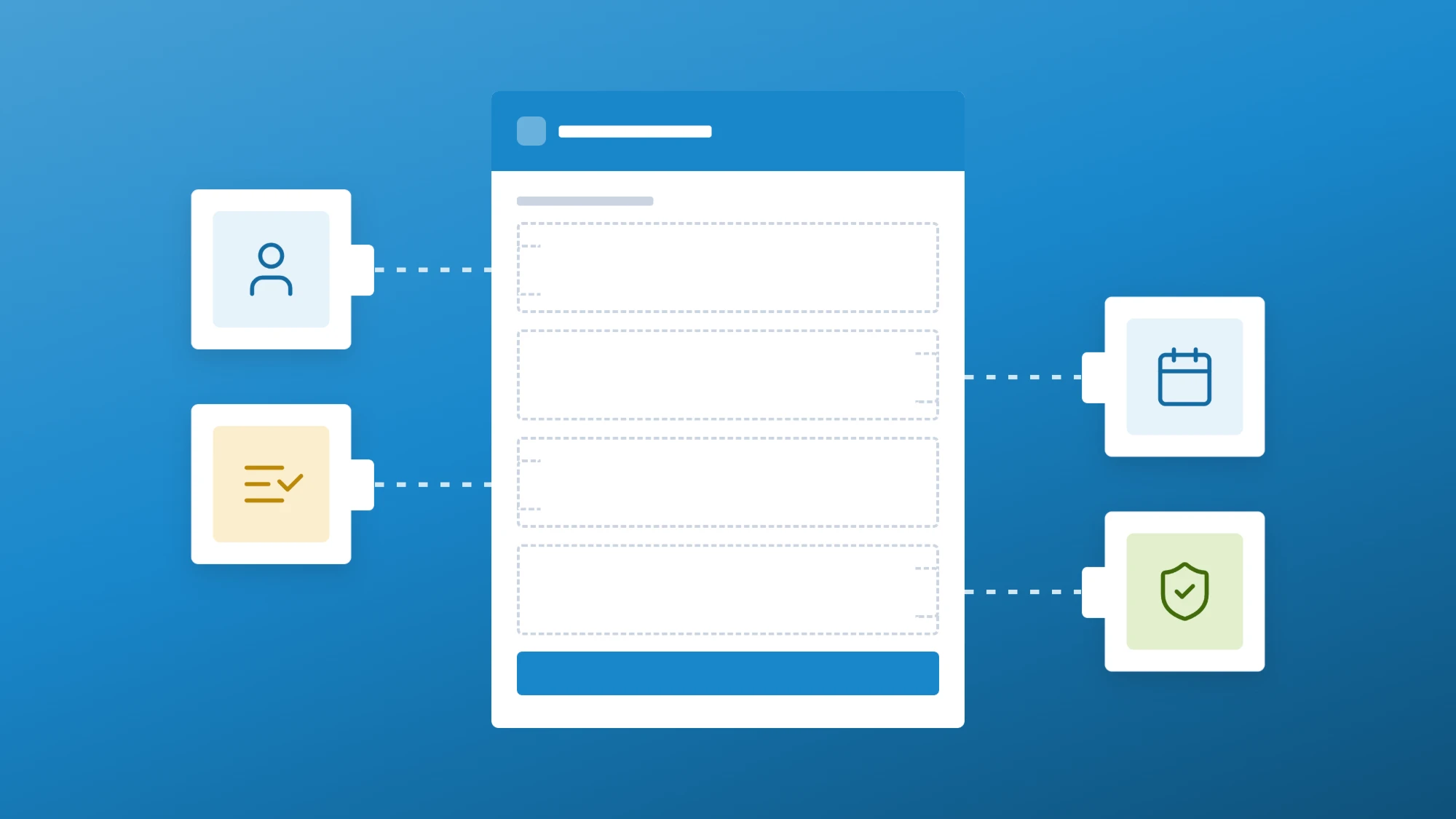
A form assembled from an owner, a checklist, a due date and verification

Customizable safety processes

Your forms, your risk thresholds, your templates, with an owner, a date, an action plan and verification for closure already around them.

Rigid tools make you work their way; blank ones leave you to invent the process, which is how the spreadsheet happened.

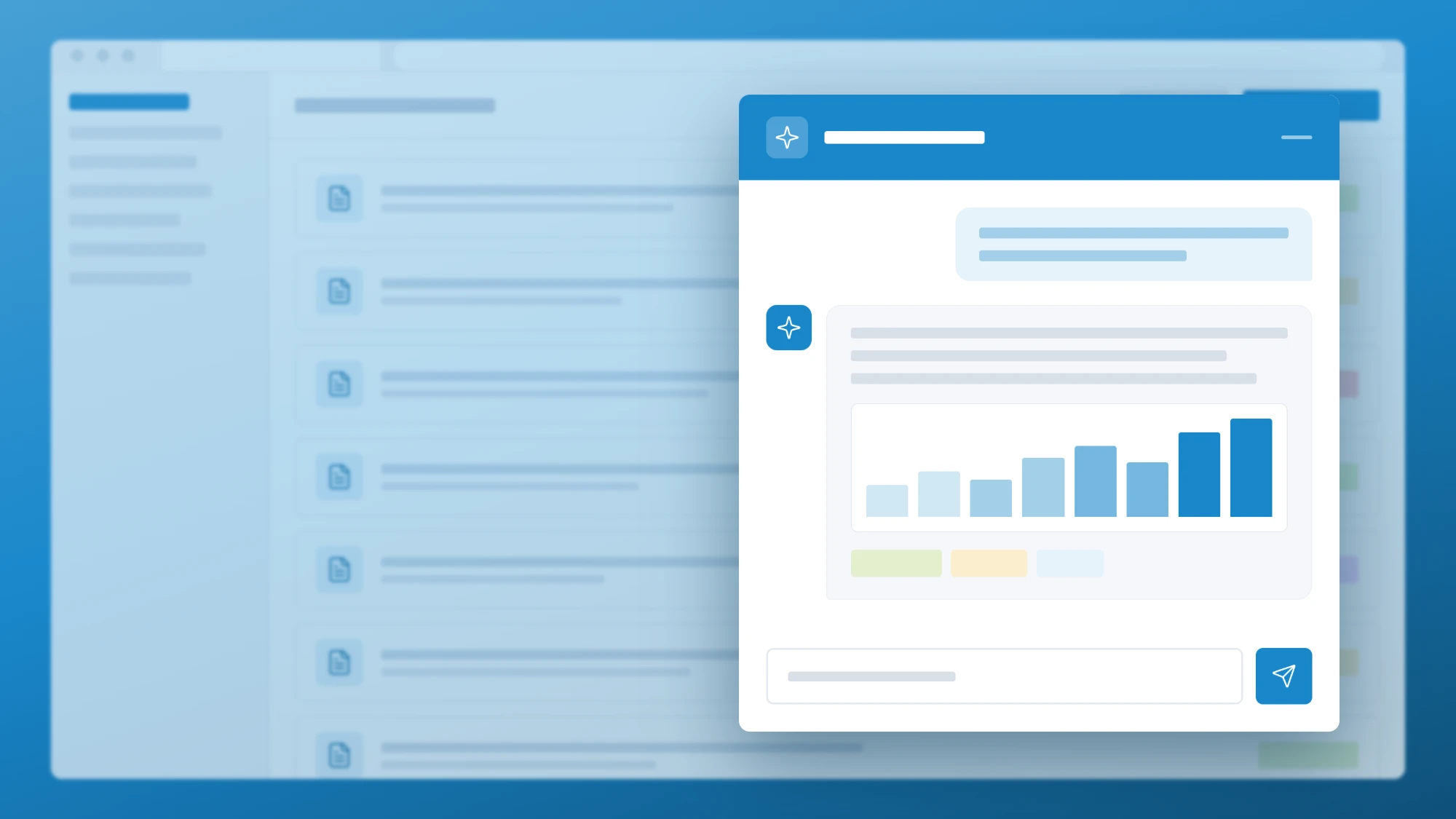
An assistant opened over a list of safety records, answering with a trend chart

Intelligent safety insights

Ask what is trending, where actions are slipping, or what needs attention this week, you'll get answers straight from your own records.

Every safety system can tell you what you stored; making sense of it is the part most solutions still leave to you.

Questions

Questions people ask

Is RISE suitable for healthcare?
Yes. The account is seeded with templates built for healthcare, so you open it to a working system rather than a blank slate. From there it is all yours to change: the forms, the audit and inspection templates, and the scoring thresholds, so the system ends up describing how your operation works rather than how somebody else's does.
Will RISE use our industry's language?
Yes. The wording adapts to the industry on your account, and everything you build inside it is yours to word however your operation words it: the forms, the templates and the questions people answer in the field.
Can people report from the field without an account?
Yes. Put a QR code where the work happens and somebody can scan it, fill in the form and submit, with no login and on whatever device they are carrying. Submission can be anonymous, decided by the person reporting at the moment they file it.
What does RISE give us when an auditor asks for evidence?
The record as it was built, not as it was reconstructed. Every report, the evaluation and who accepted the risk, the corrective action with its owner and date, the verification that closed it, and an activity log showing who changed what and when.

Frameworks

Structured around the standards operations are measured against

RISE is built so the evidence lines up with whichever framework you work under, wherever you operate. Which of these applies to your operation is a conversation worth having properly, rather than a question a website should answer.

Links go to the primary source. Verify any requirement against the current text of the regulation or standard.

Discover how RISE can empower your safety program

A guided walkthrough of how RISE handles reporting, evaluation, resolution and insight, with time to talk about how your own operation runs today.