· 6 min read
Measuring Safety Culture Without Surveys Alone
By Michael Sidler, Founder, RISE

Measuring safety culture without surveys alone is a practical necessity for business aviation operators implementing a Safety Management System in business aviation. While safety culture surveys can provide useful perception data, they are limited snapshots. They reflect how people feel at a given moment, not how the organization consistently behaves when faced with operational risk, time pressure, or competing priorities. A mature SMS requires more reliable, observable indicators of how safety is actually practiced day to day.
In aviation operations, safety culture is demonstrated through actions, decisions, and patterns over time. Regulators recognize this reality. FAA 14 CFR Part 5 and ICAO Annex 19 both emphasize performance based systems, continuous monitoring, and data driven assurance. Neither framework requires a safety culture survey. Instead, they require operators to establish processes that reveal whether safety policies are understood, followed, and effective in real operations.
This article explains how safety culture can be measured using operational data, process performance, and behavioral indicators that exist within an effective SMS. Surveys may still play a role, but they should supplement, not replace, objective evidence.
What is meant by safety culture in an SMS context
Safety culture in business aviation refers to the shared values, expectations, and behaviors that influence how individuals identify hazards, manage risk, and comply with established procedures. It is not a written statement or a training slide. It is reflected in how often hazards are reported, how leadership responds to those reports, and whether corrective actions are implemented and sustained.
Within a Safety Management System in business aviation, safety culture is most visible at the intersections between people and processes. This includes how deviations are handled, how risk decisions are documented, and how safety information flows across departments. A strong culture supports reporting, learning, and accountability. A weak culture tolerates silence, workarounds, and unresolved risk.
Why surveys alone fall short
Safety culture surveys typically measure perception. They ask whether employees feel comfortable reporting hazards or believe management prioritizes safety. These insights can be valuable, particularly when tracking changes over time. However, surveys also carry inherent limitations.
Responses are influenced by timing, recent events, and trust in anonymity. They may reflect what respondents think leadership wants to hear. Surveys also do not distinguish between intent and execution. An organization may sincerely believe it supports reporting, while data shows few reports and slow corrective action closure.
For operators subject to FAA oversight, surveys alone provide little defensible evidence of SMS effectiveness. Auditors and inspectors look for documented processes and measurable outcomes. This is consistent with guidance discussed in What auditors look for in an SMS program and broader expectations under Part 5.
Operational indicators that reflect safety culture
A more reliable way to measure safety culture is by examining how the SMS functions in practice. Several operational indicators can reveal cultural strengths and weaknesses without relying on opinion based tools.
Hazard reporting behavior
The quantity, quality, and diversity of hazard reports are among the clearest indicators of safety culture. A healthy reporting culture shows consistent submissions across roles, not only from safety managers or supervisors. Reports describe conditions, contributing factors, and operational context rather than assigning blame.
Trends also matter. Sudden drops in reporting without a corresponding reduction in activity often indicate disengagement or fear of consequences. Repeated reporting of the same hazards without resolution suggests a lack of trust that reporting leads to action. These patterns are central to discussions in What makes a good hazard report in aviation.
Timeliness of safety response
How quickly an organization acknowledges and evaluates reported hazards reflects leadership commitment. Delayed reviews, unclear ownership, or incomplete risk assessments undermine confidence in the system. In contrast, timely response, even when the issue cannot be immediately resolved, reinforces that reporting is valued.
Tracking average review times, response times, and mitigation development provides measurable insight into safety culture. These metrics align with the Safety Assurance expectations in 14 CFR Part 5 and ICAO Annex 19.
Effectiveness of corrective actions
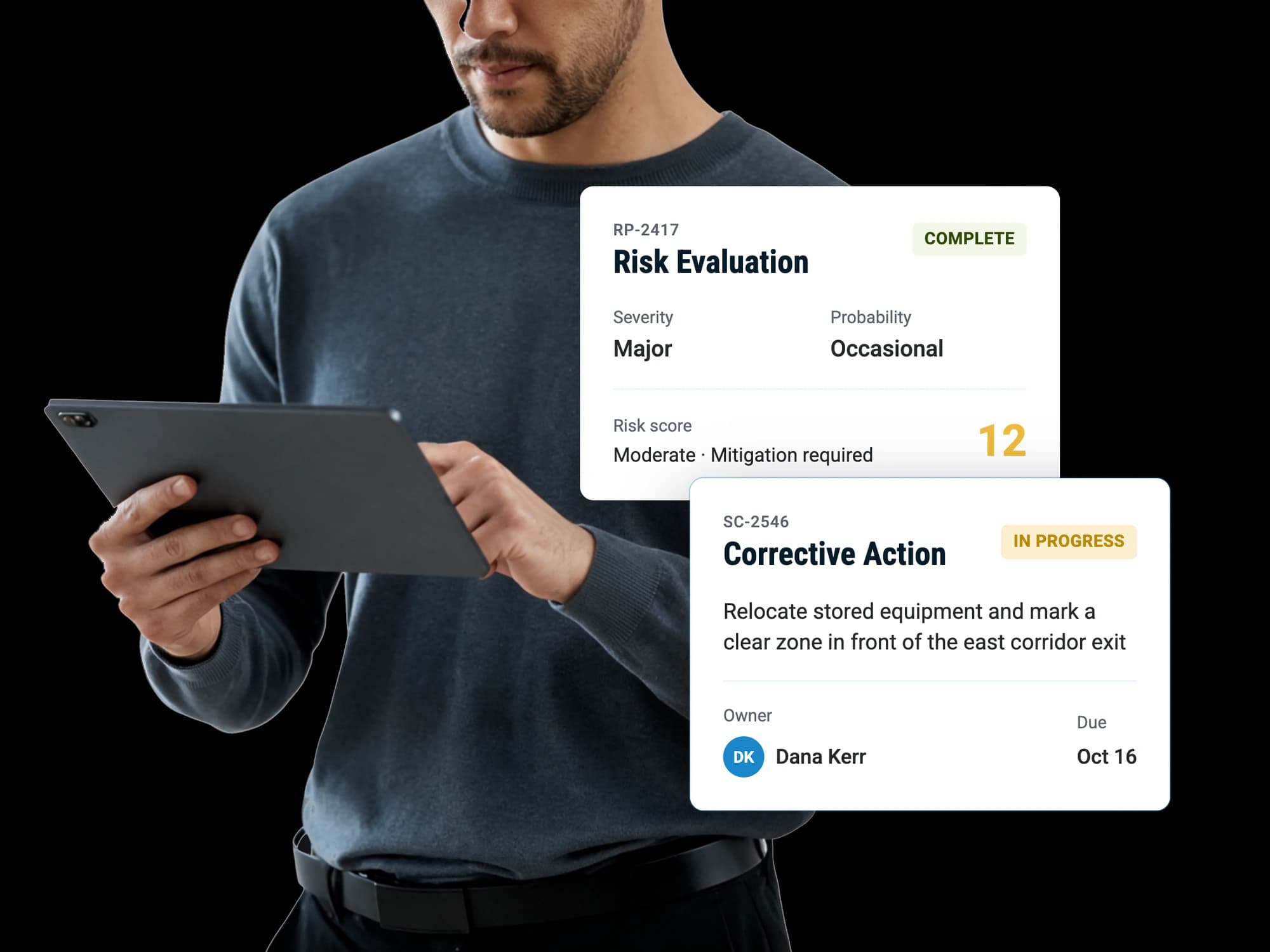
Closing a corrective action does not mean a safety issue has been addressed. Effective safety cultures verify that mitigations are implemented, understood, and sustained. Reopened findings, recurring audit observations, or repeat hazards tied to the same root causes suggest cultural gaps.
Operators should evaluate whether corrective actions address systemic contributors such as training gaps, procedural clarity, or resource constraints. This approach mirrors the intent described in How SMS helps identify systemic risk patterns.
Participation in safety processes
Safety culture is visible in participation levels. This includes attendance at safety meetings, completion of required training, engagement during risk assessments, and follow through on assigned safety tasks. Passive participation, where tasks are completed late or with minimal input, often indicates that safety is viewed as administrative rather than operationally relevant.
These indicators are particularly important in smaller Part 91 and Part 135 operations where roles overlap and informal practices are common.
Use of data in decision making
Organizations with strong safety cultures use SMS data to inform operational decisions. This includes adjusting procedures, allocating resources, or revising training based on identified risk trends. When safety data is collected but not used, the SMS becomes performative rather than functional.
This distinction is foundational to understanding the difference between an SMS and traditional safety programs, as explained in Safety Management System vs Traditional Safety Programs: What’s the Difference?
Differences across operator types
The way safety culture is measured varies by operational context. Part 135 operators typically have more structured oversight, documented procedures, and formal training programs. This provides more data points but also increases the risk of compliance driven behavior without genuine engagement.
Part 91 operators may have fewer formal processes but can still demonstrate strong safety culture through consistent reporting, documented risk decisions, and leadership involvement. Part 145 repair stations often reveal culture through maintenance error reporting, audit follow up, and adherence to human factors controls.
Understanding these differences is critical and is explored further in How SMS applies differently to Part 91, Part 135, and Part 145 operators.
Common mistakes when assessing safety culture
One common mistake is equating low incident rates with strong safety culture. Absence of reported events may reflect underreporting rather than effective risk management. Another mistake is treating safety culture as static. Culture evolves with leadership changes, operational growth, and external pressures.
Organizations also misjudge culture by focusing exclusively on frontline behavior while ignoring management actions. Leadership tolerance for schedule pressure, informal deviations, or incomplete documentation sends powerful cultural signals.
Finally, relying solely on annual surveys creates blind spots. Surveys should be validated against operational data and process performance to ensure alignment between perception and reality.
What good looks like in practice
When safety culture is effectively measured through an SMS, patterns emerge. Hazard reports are timely, descriptive, and span operational areas. Risk assessments are documented and revisited as conditions change. Corrective actions are owned, tracked, and verified for effectiveness.
Leadership reviews safety data regularly and uses it to inform decisions. Employees understand how to report concerns and see visible outcomes from doing so. Audits and evaluations identify improvement opportunities rather than recurring deficiencies.
This state does not require perfection. It requires consistency, transparency, and follow through. These characteristics align with both FAA and ICAO expectations for safety performance monitoring.
How technology supports culture measurement
Modern SMS platforms support safety culture measurement by making data accessible and actionable. Centralized reporting, automated tracking of reviews and mitigations, and trend visualization reduce administrative friction. This allows safety personnel to focus on analysis rather than data collection.
Technology also supports consistency. Standardized workflows ensure hazards are reviewed, risk assessed, and closed using defined criteria. Over time, this creates a reliable dataset that reflects actual behavior. When used correctly, technology does not create culture. It makes culture visible.
Forward looking considerations
As regulatory expectations continue to emphasize performance based oversight, operators will need to demonstrate how safety culture is monitored and sustained. Surveys may remain useful, but they will not satisfy the need for objective evidence.
Measuring safety culture without surveys alone aligns with the intent of a Safety Management System in business aviation. It reinforces accountability, supports learning, and provides regulators and internal leaders with a clear picture of how safety is managed in practice. For operators committed to continuous improvement, this approach strengthens both compliance and operational resilience.