· 6 min read
Why Silence Is One of the Biggest Safety Risks
By Michael Sidler, Founder, RISE

Why Silence Is One of the Biggest Safety Risks is a question that comes up repeatedly when reviewing accidents, incidents, and audit findings across business aviation. Silence, in this context, does not mean the absence of communication during normal operations. It refers to hazards that go unreported, concerns that go unraised, and weak signals that never make it into a Safety Management System in business aviation. When those signals are missing, leadership loses visibility into how work is actually being done, and risk is allowed to accumulate unnoticed.
In many cases, silence is not intentional. Pilots, technicians, dispatchers, instructors, and line personnel often believe that a concern is too minor, too subjective, or already known by management. Others worry about being perceived as difficult, unprofessional, or overly cautious. Over time, this creates an environment where operational risk exists but is not formally acknowledged, documented, or mitigated.
From an SMS perspective, silence is not a cultural issue alone. It is a systemic safety risk. FAA 14 CFR Part 5 and ICAO Annex 19 both assume that hazards are identified through active reporting, data collection, and feedback loops. When reporting channels exist but are not used, the system cannot function as designed.
What Is Meant by “Silence” in an SMS Context
In a Safety Management System in business aviation, silence refers to the absence of hazard identification and safety feedback relative to actual operational exposure. This can take several forms:
-
Hazards that are observed but never reported.
-
Deviations that are normalized and no longer questioned.
-
Safety concerns discussed informally but not documented.
-
Frontline personnel assuming management already knows.
-
Management assuming the absence of reports means the absence of risk.
Silence should not be confused with low incident rates or high professionalism. An operation can appear stable on the surface while still carrying unmanaged risk below the threshold of formal reporting.
Part 5 defines hazard identification as an ongoing process. That process depends on input from the people closest to the work. When those inputs are missing, the SMS becomes reactive rather than proactive.
Why Silence Is Especially Risky in Business Aviation
Business aviation environments often have characteristics that make silence more likely. Smaller teams, flatter hierarchies, and long-standing professional relationships can discourage formal reporting. In some operations, reporting a hazard may feel unnecessary or even disloyal when issues are usually resolved through conversation.
Unlike large airlines, many Part 91, 135, and 145 operators do not have dedicated safety departments with full-time analysts. Safety responsibilities are often shared among individuals who also fly, maintain aircraft, or manage operations. Without clear structure and expectations, hazard reporting can feel secondary to daily operational demands.
This is why understanding what a Safety Management System in business aviation is designed to do is critical. SMS is not meant to replace professionalism or experience. It exists to capture information that would otherwise remain informal, fragmented, or lost over time.
In Part 135 operations, silence can directly affect regulatory compliance, particularly as SMS requirements expand. In Part 145 repair stations, unreported hazards can mask procedural drift or human factors trends that inspectors expect to see addressed through internal evaluation and corrective action. Even in Part 91 environments where SMS may not be mandated, silence still undermines risk awareness and decision-making.
How Silence Shows Up in Real Operations
Silence rarely appears as a single failure. It usually emerges through patterns.
A pilot notices that a runway is consistently contaminated during early morning operations but adapts technique instead of filing a report. A technician observes repeated task interruptions during night shifts but assumes it is just part of the job. An instructor sees recurring student confusion about a procedure but addresses it individually rather than raising it as a systemic issue.
Each of these examples involves risk that is managed informally at the individual level. The problem is that informal management does not scale. It does not create organizational learning, and it does not support trend analysis or preventive action.
This is why discussions about what makes a good hazard report in aviation are so important. A report does not need to describe an accident or violation. It needs to capture conditions, behaviors, or system gaps that increase exposure over time.
Common Misunderstandings About Reporting and Silence
One of the most persistent misunderstandings is the belief that reporting reflects poorly on the reporter or the organization. In reality, most auditors and regulators view a lack of reporting as a greater concern than a high volume of reports.
Another misconception is that only confirmed hazards should be reported. In an effective SMS, uncertainty is acceptable. Reports can describe observations, concerns, or near misses without definitive conclusions. The analysis process exists to evaluate and prioritize those inputs.
There is also a tendency to equate silence with trust. While trust is essential, trust without visibility creates blind spots. A Safety Management System in business aviation relies on transparency to support informed leadership decisions.
Finally, some operators believe that informal conversations satisfy SMS intent. While discussions are valuable, they do not replace documented hazard identification, risk assessment, and follow-up. Without records, the organization cannot demonstrate learning, accountability, or improvement.
What Good Looks Like When Silence Is Addressed
When silence is reduced, reporting becomes routine rather than exceptional. Personnel understand what to report, how to report it, and what happens afterward. Reports are acknowledged, reviewed, and closed with visible feedback.
Good systems make it clear that reporting is about understanding risk, not assigning blame. This aligns closely with the principles outlined in ICAO Annex 19, particularly around just culture and non-punitive reporting.
In mature SMS environments, leadership uses reporting data to identify trends, adjust procedures, and allocate resources. Reports are linked to risk assessments, safety assurance activities, and management review. Over time, this creates a shared understanding of operational risk across the organization.
This is also where concepts discussed in how SMS helps identify systemic risk patterns become practical. Silence hides patterns. Reporting reveals them.
The Role of Leadership in Breaking Silence
Leadership sets the conditions that determine whether silence persists. Clear policy statements, consistent responses to reports, and visible follow-through all signal that reporting is expected and valued.
Under Part 5, accountable executives are responsible for ensuring the SMS is effective. That effectiveness depends on the quality and completeness of safety information. Leaders who only react to events inadvertently reinforce silence. Leaders who ask questions, review trends, and support reporting create space for early risk identification.
This applies across operator types. While the scale and formality may differ between Part 91, 135, and 145 operations, the principle is the same. Silence increases uncertainty. Information reduces it.
How Technology Can Help Reduce Silence
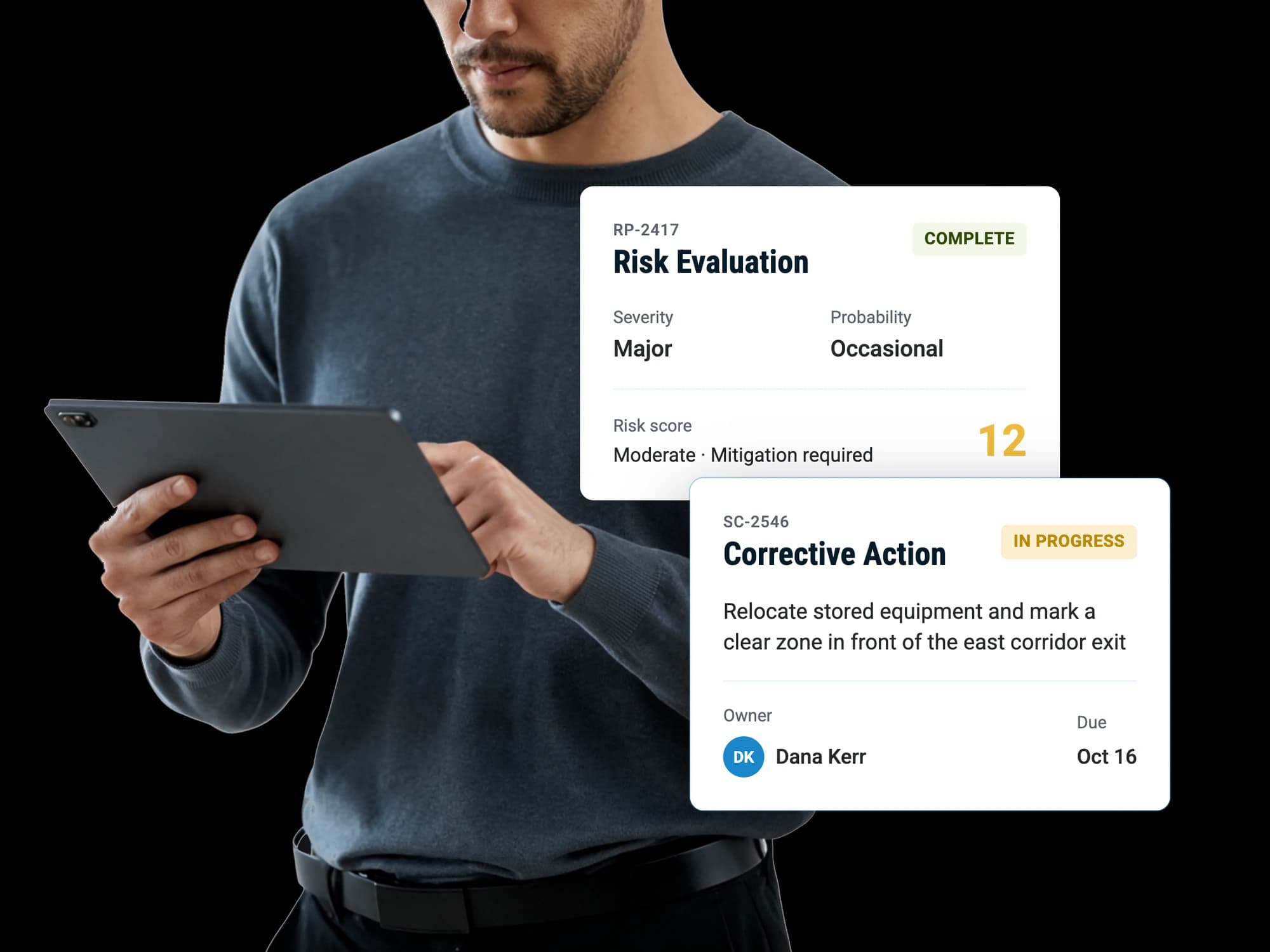
Technology alone does not create a reporting culture, but it can remove practical barriers. Modern SMS platforms simplify reporting, allow anonymous submissions where appropriate, and centralize safety data.
When reporting tools are easy to access and use, personnel are more likely to document observations before they are forgotten or normalized. Technology also supports timely feedback, which reinforces trust in the process.
Importantly, software enables trend analysis that would be difficult to perform manually. Even low-level reports can reveal meaningful patterns when viewed collectively. This supports the broader objectives of safety assurance and continuous improvement without increasing administrative burden.
A Forward-Looking View on Silence and Safety
Silence will always exist to some degree in aviation operations. The goal of an SMS is not to eliminate it entirely, but to reduce it to a level where risk remains visible and manageable.
As regulatory expectations evolve and operational complexity increases, relying on informal knowledge becomes less sustainable. A Safety Management System in business aviation provides the structure needed to capture and act on information that would otherwise remain unspoken.
Addressing silence is not about changing personalities or enforcing compliance through fear. It is about designing systems that make it easier to speak up than to stay quiet, and easier to learn than to react. Over time, this shift supports safer, more resilient operations across all segments of business aviation.