· 7 min read
How to Reduce Recordable Incidents Across Several Job Sites
By Michael Sidler, Founder, RISE
You reduce recordable incidents across several job sites by working on what happens before the injury, not on the rate after it. When recordables climb, the usual response is to manage the number. The rate goes on the monthly slide, a zero-injury banner goes up at the gate, and every clean month earns the crew a lunch off the truck. None of it touches the next injury, because a recordable rate is a count of injuries that already happened.
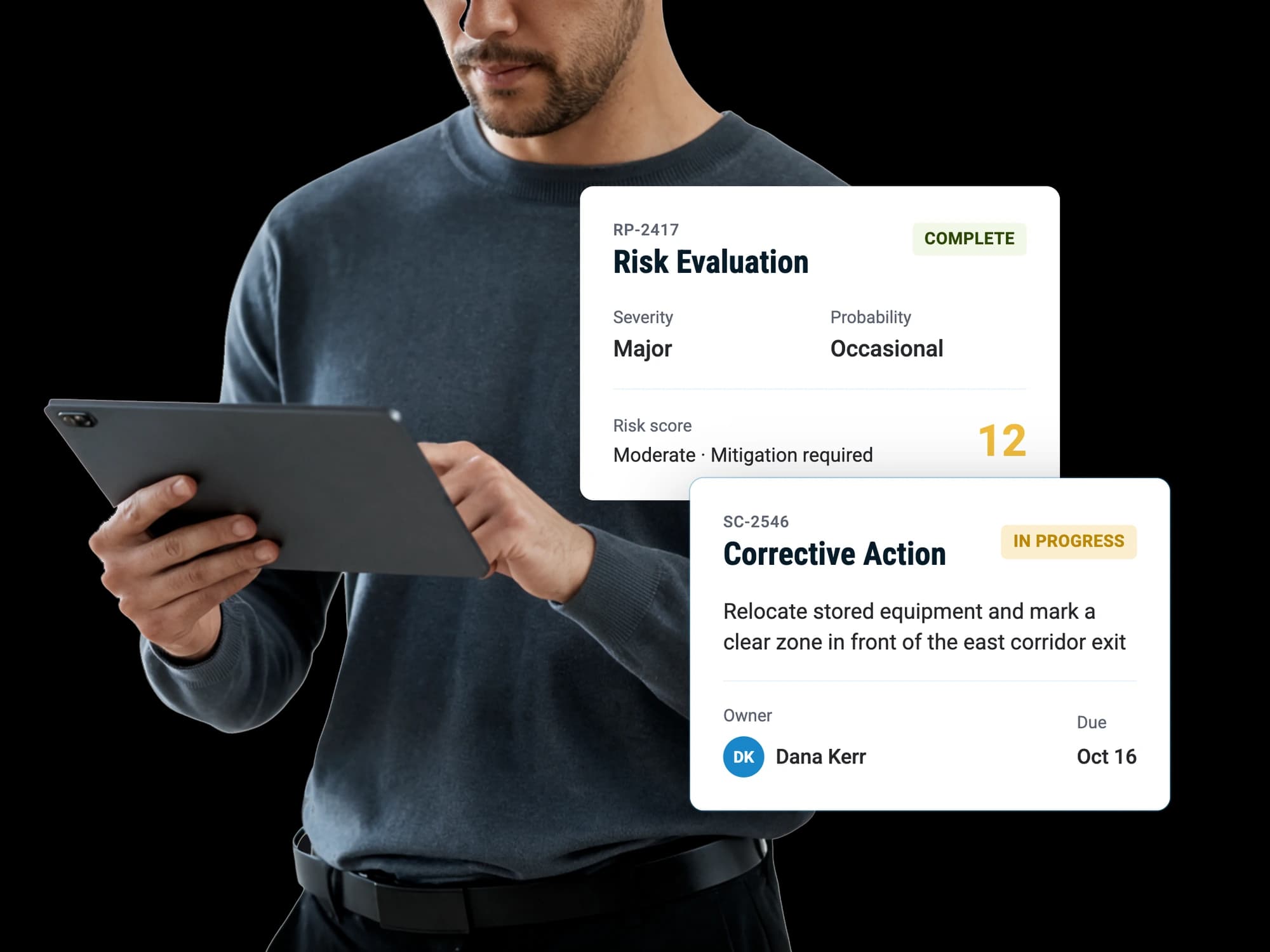
What brings recordables down across several job sites is managing the work upstream of them. Get every crew on every site, subs included, reporting hazards and near misses. Answer those reports fast. Close each corrective action with a named owner and a due date. Then compare your sites every week on those leading numbers, not on last quarter's log.
Why doesn't watching the rate bring it down?
The rate arrives too late and too thin to steer by. As OSHA 3886, the agency's recommended practices for construction, puts it, "Lagging indicators generally track worker exposures and injuries that have already occurred." The same guidance pairs them with leading indicators, which track how well the program is running before anyone gets hurt, and recommends using both.
Spread across six jobs, the lagging number gets noisier still. A 40-person site can go five months clean and then log two cases in one week. Was it safe in March and dangerous in April? The rate cannot tell you. It can tell the owner's rep you had a bad quarter.
There is a quieter cost. Reward a site for a low count and the count gets low, sometimes because the injuries stopped and sometimes because the reports did. OSHA's construction guidance says incentive programs should be designed so they do not discourage injury and illness reporting, because otherwise hazards may stay undetected. Reward the reporting itself and you get information you can act on.
Which leading indicators are worth tracking?
Pick a handful you can count the same way on every site. OSHA's guidance lists candidates, and four of them do most of the work for a contractor running several jobs:
- Hazards, near misses and first aid cases reported, per site
- Time from a report landing to someone responding to it
- Corrective actions closed by their due date
- Management walkthroughs completed
None of these needs a consultant. They come out of the reporting and follow-up you already run, as long as those live somewhere you can count them. A stack of carbon copies in the job trailer is hard to count from the office.
The CPWR workbook adds the human side. Its eight leading indicators of jobsite safety climate run from management commitment and accountability at all levels through supervisory leadership, worker involvement, communication, training and owner or client involvement. Read that list as a contractor and the foreman stands out. The superintendent who walks the deck, runs a real toolbox talk and gets the guardrail fixed before lunch moves every other number on the list. To hear how your crews see it, our free crew survey sheet gives you ten questions to put to the people doing the work, with a printable sheet to hand out at the trailer.
How do you get reports from crews that are not yours?
Make reporting so easy that nobody needs a login, a phone number or a reason, as our guide to reporting without a login explains. On most commercial jobs the sub crews outnumber yours, and they see the most: the missing toe board on the third floor, the cord run through standing water, the telehandler that keeps cutting the corner by the laydown yard.
OSHA's guidance calls for a simple reporting process with an option to report anonymously, and it ties prompt follow-up on every report to fixing problems before someone is hurt. On a job site that looks like one short hazard and near miss form behind a printed code at the gate and the break area, opening in any phone's browser, with the anonymous option there for the reports people would rather not sign. For a starting point, our free hazard report form opens in any browser, and a RISE form can carry answer points with low, medium and high thresholds and export to PDF.
Response speed matters more than volume. A laborer who reports a cracked ladder and sees it tagged out the same shift will report the next one. A laborer who hears nothing has learned something too, and so has everyone at the lunch table.
Why is corrective action closure where recordables drop?
A hazard that gets reported and not fixed is still there on Monday, a pattern our guide to why hazard reporting systems fail examines. Closure is the step that turns a report into one fewer way to get hurt.
OSHA's construction guidance on hazard control plans covers the mechanics: assign each control to a specific person with the power to put it in place, set a target completion date, and plan how you will verify the control works. Three ingredients. Multi-site programs tend to lose one. The action goes to "site team." The date drifts to "after steel." The fix gets marked done from the office and nobody walks out to look.
Open actions also hide well. One lives in the superintendent's notebook, one in last week's meeting minutes, one in an email thread with the electrical sub. Pull them into one list, give each one owner and one date, and review that list by site every week. The overdue items are the agenda.
How do you compare sites fairly?
Use the same forms, the same inspection templates and the same categories on every job, so a near miss on the hospital job means the same thing as one on the warehouse. Then compare reporting rates, response times and overdue actions across sites, alongside the injury counts rather than in place of them.
Read the comparison with care. The site with zero reports is rarely your safest. More often it is the one where reporting quietly stopped. OSHA's guidance suggests grouping similar incidents and looking for trends in what gets reported, and across several jobs that is where the patterns show: the same scaffold erector on three sites, the same pinch point every time the steel crew sets joists.
Recurring inspections close the loop. A weekly site walk on a fixed template, with findings that turn straight into corrective actions, gives you a leading indicator (walks completed) and a steady source of fixes at the same time.
Where to start this month
- Choose three or four leading indicators from the list above and write down how each one gets counted on every site.
- Put one short hazard and near miss form on every active site, reachable without a login, and tell every crew, subs included, who reads it.
- Set a response target for new reports, such as an answer within one working day, and make it part of each superintendent's week.
- Pull every open corrective action out of notebooks, minutes and email into one list, with one owner and one date each, and start a 15-minute weekly review by site.
- Stop rewarding sites for low injury counts. Recognize reports filed and actions closed instead.
RISE supports that loop. Anyone on site can file a report from a form's QR code without an account, and every corrective action lands in one Task Register with a named owner, a due date and a link back to the report or inspection that raised it. To see it on your own jobs, book a demo.
Sources
- OSHA Recommended Practices for Safety and Health Programs in Construction (OSHA 3886)
- CPWR: Strengthening Jobsite Safety Climate by Using and Improving Leading Indicators
- CPWR: Enhancing Safety Climate through Leadership (Foundations for Safety Leadership)
Questions people ask
What counts as a good recordable rate for a contractor?
A good rate is one that keeps falling over several years while your hazard and near miss reporting keeps rising. One quarter on one job says very little, because a single case swings a small site's rate hard. Compare yourself with your own trade and your own history, and judge the trend, not the month.
Will recordables go up when we push near miss reporting?
Reporting usually rises first, and that rise can look like the program is getting worse. Most of what comes in will be hazards and near misses, which is the point: they are the cheap version of the lesson. Give it a few months of fixing what gets reported before you read anything into the injury numbers.
Who should own a corrective action on a multi-employer site?
The person with the authority to make the fix, which on a multi-employer site is often the sub's foreman rather than your superintendent. Your superintendent can still verify it got done. Keep it to one name per action: two owners usually means nobody walks out to check.
Should a site with lots of near miss reports be treated as a problem site?
A site with lots of near miss reports is usually a site where people trust that reporting leads somewhere. Look at what is being reported and how fast it gets closed before drawing conclusions. The site to worry about is the busy one that reports nothing.
How long should a weekly multi-site safety review take?
Fifteen to thirty minutes is enough if the open corrective actions are already in one list. Walk it site by site, overdue items first, and ask each owner for a date they will stand behind. Anything that has slipped twice gets a different owner or a different fix.