· 8 min read
How SMS Software Supports Audit Readiness
By Michael Sidler, Founder, RISE

How SMS software supports audit readiness is a practical question for many operators implementing a Safety Management System in business aviation. Audits rarely fail because an operator lacks a policy statement or a hazard form. They fail because information is incomplete, inconsistent, hard to retrieve, or disconnected from day to day operations. SMS software supports audit readiness by helping operators maintain accurate records, demonstrate continuous oversight, and show clear linkages between hazards, risk decisions, corrective actions, and management accountability.
Audit readiness in an SMS context does not mean preparing for an inspection at the last minute. Under FAA 14 CFR Part 5 and aligned ICAO Annex 19 principles, audit readiness is the result of an SMS that is functioning continuously. Modern SMS platforms support this by structuring how safety data is captured, stored, reviewed, and presented over time. When an auditor asks how the system works, the records already exist because the system has been used as intended.
What Does Audit Readiness Mean in an SMS?
Audit readiness refers to an operator’s ability to demonstrate that its Safety Management System is implemented, active, and effective. This includes showing that hazards are reported, risks are assessed, controls are implemented, and safety performance is monitored. It also includes showing that management reviews safety information and takes action when needed.
In business aviation, audits may come from different sources. These can include FAA surveillance, conformity inspections, internal evaluations, customer audits, insurance reviews, or third party standards such as IS-BAO. While the scope and tone may differ, auditors consistently look for the same fundamentals. They want to see evidence that the SMS exists beyond written manuals and that it is integrated into operations.
SMS software does not replace the SMS. It supports the SMS by organizing records and workflows in a way that makes audit evidence easier to produce and easier to understand.
Why Audit Readiness Matters in Business Aviation
Business aviation operations often operate with smaller teams, overlapping roles, and limited administrative bandwidth. Safety Managers may be part time. Directors of Safety may also be pilots, maintenance managers, or directors of operations. In this environment, audit preparation can become reactive if safety records are scattered across spreadsheets, email threads, shared drives, and paper files.
For Part 135 operators approaching SMS compliance milestones, audit readiness has direct regulatory implications. For Part 145 repair stations, audits often focus on how safety risk management integrates with maintenance and quality systems. Part 91 operators may not be required to have an SMS but are increasingly expected to demonstrate structured safety practices to customers, insurers, and auditors.
SMS software helps level this playing field by providing a single system of record. This reduces reliance on individual memory and makes the organization less vulnerable when personnel change.
How Auditors Evaluate an SMS
Auditors rarely start by asking to see software. They start by asking questions. How do hazards get reported. How are risks assessed. Who approves risk acceptance. How do you know mitigations are working. How does management know if the system is effective.
From there, they ask to see evidence. This evidence typically spans all four SMS pillars. Safety policy documentation, hazard and risk records, assurance activities such as audits and investigations, and safety promotion records such as training and communication.
A common theme in audits is traceability. Auditors want to follow a hazard from identification through risk assessment, mitigation, and follow up. They also want to see that the process is repeatable and applied consistently. SMS software supports this traceability by linking related records rather than storing them as isolated documents.
This aligns closely with what is discussed in the cornerstone article on what auditors look for in an SMS program.
How SMS Software Structures Safety Records
One of the most direct ways SMS software supports audit readiness is through structured data entry. Instead of free text documents stored in multiple locations, safety information is captured using defined fields and workflows.
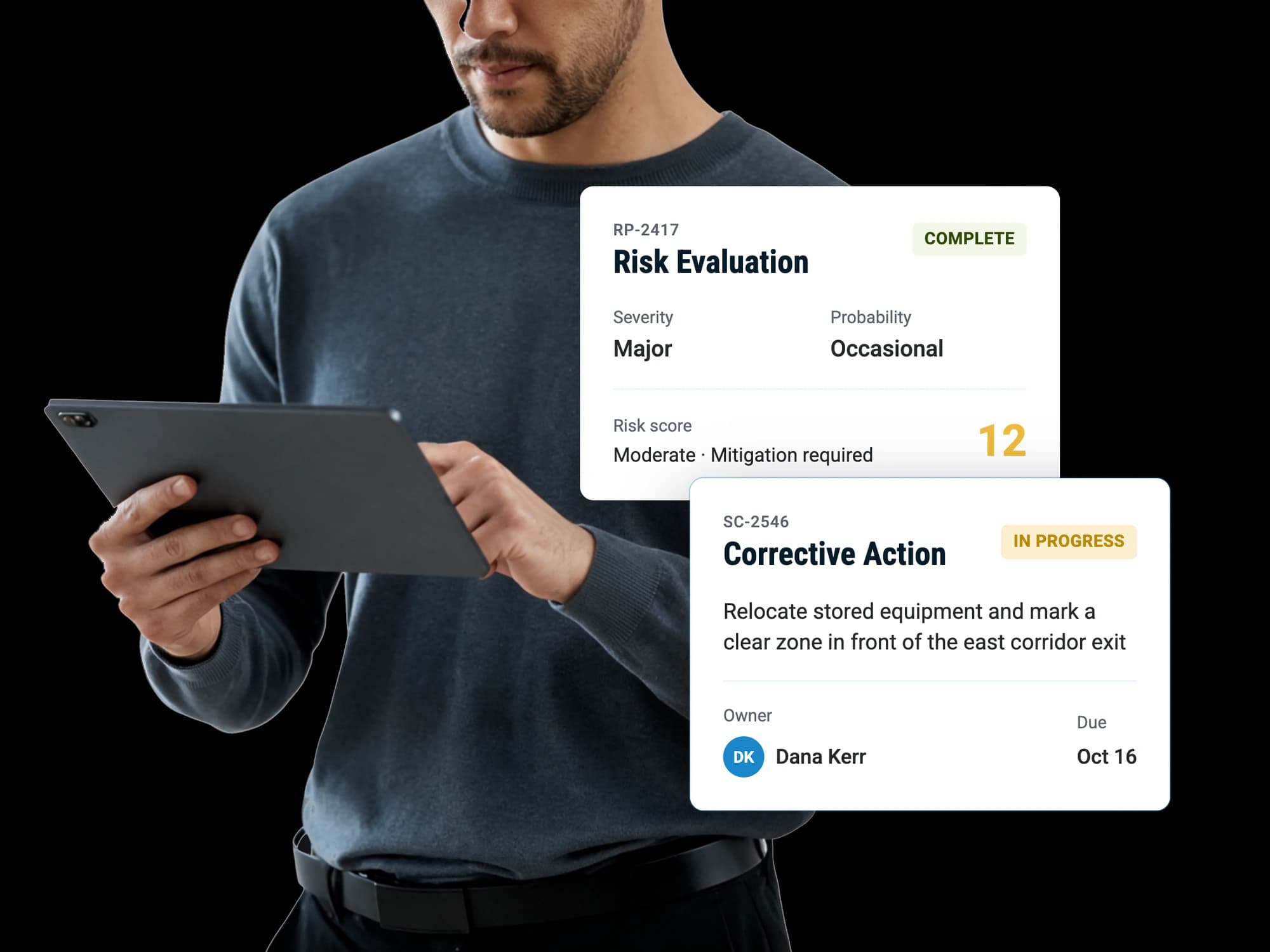
Hazard reports, for example, typically include information about the operational context, potential consequences, initial risk assessment, and assigned ownership. Risk assessments capture severity and probability using consistent criteria. Corrective actions are assigned due dates and responsible persons.
This structure creates consistency. When an auditor reviews multiple records, they see the same logic applied each time. This consistency makes it easier to demonstrate that the SMS is systematic rather than ad hoc.
Structured records also support filtering and reporting. This becomes important when auditors ask broader questions such as how many hazards were reported last year or how often risk controls were reviewed.
Supporting the Safety Risk Management Process
Safety Risk Management is often the most scrutinized area during an audit. Auditors want to see that hazards are not only identified but evaluated and controlled using a defined process.
SMS software supports this by embedding risk assessment logic into the workflow. This helps ensure that hazards are evaluated using approved severity and probability definitions. It also supports documenting why certain risk acceptance decisions were made and who approved them.
In practice, this means an operator can demonstrate that risk decisions were informed, authorized, and recorded at the time they were made. This is particularly important when auditors ask how management exercises risk acceptance authority.
This connects naturally to foundational concepts discussed in what is a Safety Management System in business aviation and the four pillars of SMS explained for business aviation.
Linking Hazards, Mitigations, and Follow Up
A frequent audit finding is the lack of follow up on mitigations. Operators may identify hazards and even define controls, but there is no evidence that those controls were implemented or reviewed for effectiveness.
SMS software helps address this by linking mitigations directly to the hazards they address. It can also support review intervals, status tracking, and documentation of effectiveness reviews.
From an audit perspective, this linkage is critical. It allows an auditor to see not only that a mitigation exists, but that it was tracked over time. This supports compliance with Part 5 expectations related to monitoring and continuous improvement.
Supporting Safety Assurance Activities
Safety assurance is often misunderstood as a standalone audit function. In reality, it is the ongoing activity of monitoring, measuring, and evaluating the SMS.
SMS software supports assurance by organizing internal audits, evaluations, investigations, and safety performance monitoring in one system. This helps operators demonstrate that assurance activities are planned, conducted, and documented.
For example, internal audit findings can be tracked from identification through corrective action and closure. Trends can be reviewed across audit cycles. Investigations can be linked back to hazards and risk controls.
This level of organization makes it easier to demonstrate that the SMS is being evaluated as required under Part 5 and consistent with ICAO Annex 19 principles.
Managing Documentation and Version Control
Another common audit challenge is documentation control. Auditors may find multiple versions of procedures, outdated manuals, or inconsistencies between written policy and actual practice.
SMS software can support document control by centralizing policies, procedures, and forms. Version history, approval records, and distribution tracking help demonstrate that documents are current and controlled.
This is particularly relevant when auditors compare the SMS manual to actual records. Consistency between documented processes and system use is a strong indicator of an effective SMS.
Supporting Safety Promotion Evidence
Safety promotion often receives less attention during audits, but it is still a required pillar. Auditors may ask how safety information is communicated, how training is tracked, and how safety culture is supported.
SMS software can help capture evidence of safety communications, training completion, and employee engagement. Records of safety meetings, bulletins, and training acknowledgments help demonstrate that safety promotion is active rather than symbolic.
This is especially useful in small organizations where informal communication is common but difficult to document after the fact.
Common Misunderstandings About SMS Software and Audits
One common misunderstanding is that using software automatically makes an operator audit ready. Software does not fix poor processes or lack of management engagement. If hazards are not reported or reviewed, the system will simply reflect that gap.
Another misunderstanding is that auditors want to see complex dashboards or analytics. In most cases, auditors are more interested in clear records and logical processes than advanced visuals.
A third misunderstanding is treating the system as an audit filing cabinet. When records are entered only to satisfy future audits, the system does not reflect real operations. Auditors are skilled at identifying this disconnect.
What Good Audit Readiness Looks Like in Practice
In an audit ready operation, safety records are current, complete, and consistent. Hazard reports show evidence of review and follow up. Risk assessments are documented using approved criteria. Management reviews are recorded with clear outcomes.
When auditors ask questions, answers are supported by records that align with how the operation actually functions. There is no scramble to collect documents because the system has been used continuously.
This aligns closely with guidance discussed in how SMS helps identify systemic risk patterns, where trend data emerges naturally from consistent use.
How Technology Supports Audit Readiness Without Replacing Judgment
Technology supports audit readiness by reducing administrative friction and improving visibility. It helps ensure records are captured at the time of activity rather than reconstructed later. It also helps safety managers and accountable executives see the health of the system.
However, technology does not replace judgment. Decisions still require operational understanding and management involvement. SMS software supports these decisions by making information accessible and organized.
When used properly, modern SMS platforms act as an enabler. They help operators meet regulatory expectations and demonstrate effective safety management without adding unnecessary complexity.
A Forward Looking View of Audit Readiness
As regulatory oversight and customer expectations continue to evolve, audit readiness will remain an ongoing requirement rather than a periodic event. Operators who rely on fragmented records may find audits increasingly disruptive.
SMS software supports a shift toward continuous readiness. By embedding SMS processes into daily operations, audit evidence becomes a byproduct of doing safety work properly.
For business aviation operators, this approach supports both compliance and operational resilience. It reflects the intent of Part 5 and ICAO Annex 19, which emphasize systematic, data driven safety management over reactive compliance.