· 8 min read
Flight Risk Assessment Tools: How Small Operators Score Every Flight
By Michael Sidler, Founder, RISE

It is 0540, the King Air is on the ramp, and the captain is adding up a FRAT in pen on a sheet copied so often the boxes have gone gray. Score: 14. The sheet goes in a folder nobody opens.
A flight risk assessment tool (FRAT) is a short scored checklist completed before each flight. Night, a wet runway, a pilot new to type: each hazard carries points. The total lands in a green, yellow or red band your operation sets, and each band has a response: go, mitigate and get a second opinion, or change the plan.
What does a FRAT actually ask?
A good FRAT asks the questions a careful pilot already thinks about, in writing, before the pressure of a departure time kicks in. The FAASTeam FRAT is built around the PAVE checklist: pilot, aircraft, environment and external pressures. How much rest did you get? How much time do you have in this airplane? What is the weather doing at the destination?
The sample tool in FAA InFO 07015 groups 38 items under pilot qualifications and experience, operating environment, and equipment. It gives a single-pilot flight 5 points, night 5, crosswinds over 15 knots 4, and a wet runway 3. Treat it as a starting point. The InFO itself invites operators to add items unique to their operation and to change existing ones, as long as the hazard gets a realistic assessment. For another base to compare, our free flight risk assessment template scores a single trip on twenty-eight weighted risk factors and prints a blank form you can adapt.
The external pressure questions are the ones that matter most and get answered least honestly. "Passengers waiting" and "trip added with less than four hours' notice" belong on the form. Everyone feels them. Writing them down is how they stop running the decision.
How is a FRAT scored?
Most FRATs add up points. Each yes carries a weight, the weights reflect both how probable the problem is and how bad it would be, and the sum is the flight's risk number.
The worked example in InFO 07015 shows the whole cycle. A night flight, a wet runway, crosswinds over 15 knots, a captain under 200 hours in type and a first officer under 100 hours in the last 90 days add up to 20. The example company's threshold for chief pilot review is 15, so the chief pilot steps in, swaps in a more current first officer and changes the destination to one without the crosswind. The flight goes out at 13. Same captain, same airplane, a better plan.
Add a few hard stops for the combinations that addition underrates. Five minor items can push a routine trip into yellow while one bad pairing, say a low-time pilot and a circling approach at night into an unfamiliar field, slips through in green. A hard stop is a named combination that sends the flight to review whatever the total says.
Where should the green, yellow and red lines sit?
Your thresholds should sit where yellow happens often enough that the review process gets exercised. InFO 07015 puts the test bluntly: "If every flight is within the acceptable range under any condition, it is likely that the thresholds have not been set correctly."
The fastest way to set them is to back-score last month's flights. Pull 20 or 30 trips, run each through the draft FRAT, and look at the spread. If the January trip into the mountain strip with snow showers scored green, your weights are wrong. If half your routine legs score red, the form is crying wolf and pilots will learn to ignore it.
Not sure where to start your numbers? Our free risk tolerance quiz takes about eight minutes. Twelve questions about your operation, and it ends with two threshold numbers you can set on your own form, then back-score against last month's flights.
Red means change the plan. Swap the crew, the timing, the fuel stop or the destination, then score it again. Sometimes the new plan is tomorrow morning.
Yellow needs a person. At a regional operator that is the chief pilot or director of operations. In a one-airplane department where the pilot is also the chief pilot and owner, name someone outside the cockpit before you need them: a trusted instructor, a fellow captain, the safety manager. The FAASTeam suggests a designated contact such as a flight instructor. A two-minute phone call with someone who is not tired and not late is the point.
Why do pilots pencil-whip the FRAT?
Pilots pencil-whip a FRAT when filling it in changes nothing. If every score goes into the folder and no one ever asks about it, the form becomes a ritual, and rituals get done fast and from memory.
The opposite failure is equally common. If a yellow score earns a lecture, scores drift down. Pilots are good at arithmetic. A FRAT that punishes honesty teaches pilots to stop reporting risk, which is the exact problem it was meant to solve. It is the same dynamic behind speaking up: if raising something costs you, you stop raising it.
Three things keep it honest. Let line pilots help write and weight the questions. Keep the form short enough to finish in a few minutes. And treat a yellow review as a planning conversation, with the mitigation written on the form, never as a hearing.
How do you make it part of every preflight?
Tie it to a fixed point in the sequence. The cleanest rule is no score, no release: the FRAT is done after the weather and NOTAM review and before the airplane leaves the chocks, every leg, including the empty reposition home. If the plan changes, say a delay turns a day leg into a night arrival, the crew scores it again.
Put the form in the same place every time and make it findable in under ten seconds. A FRAT kept in a drawer on the far side of the hangar gets filled in after landing, from memory, with every box marked zero. At a Part 141 school, the instructor's sign-off on a yellow solo flight is a natural fit for the dispatch routine you already run. Repair stations can borrow the idea for an unfamiliar task before the cowlings come off, and the FAASTeam material mentions maintenance work alongside flights.
For more on folding assessments into the working day without adding drag, see daily operations.
What should happen to the scores afterward?
Every completed FRAT is a small piece of hazard data, and a year of them tells you things no single flight can. Which items push you into yellow most often? Is it the same airport every winter, the same late-notice charter customer, the same crew pairing? That is your hazard picture, drawn by your own pilots.
Look at the scores monthly. Note the top three drivers, decide whether any of them deserves a standing fix, and tell the pilots what you found. When pilots see that their answers changed a procedure, the scores get more honest.
Where to start this month
- Download the FAASTeam FRAT and the InFO 07015 sample, and pick one as your base.
- Cut it to the questions that fit your flying, and add the hazards your pilots name.
- Back-score 20 or 30 recent flights and set your green, yellow and red lines.
- Name who reviews yellow, including the backup when that person is the one flying.
- Run it on every leg for 30 days, then review the scores with the pilots.
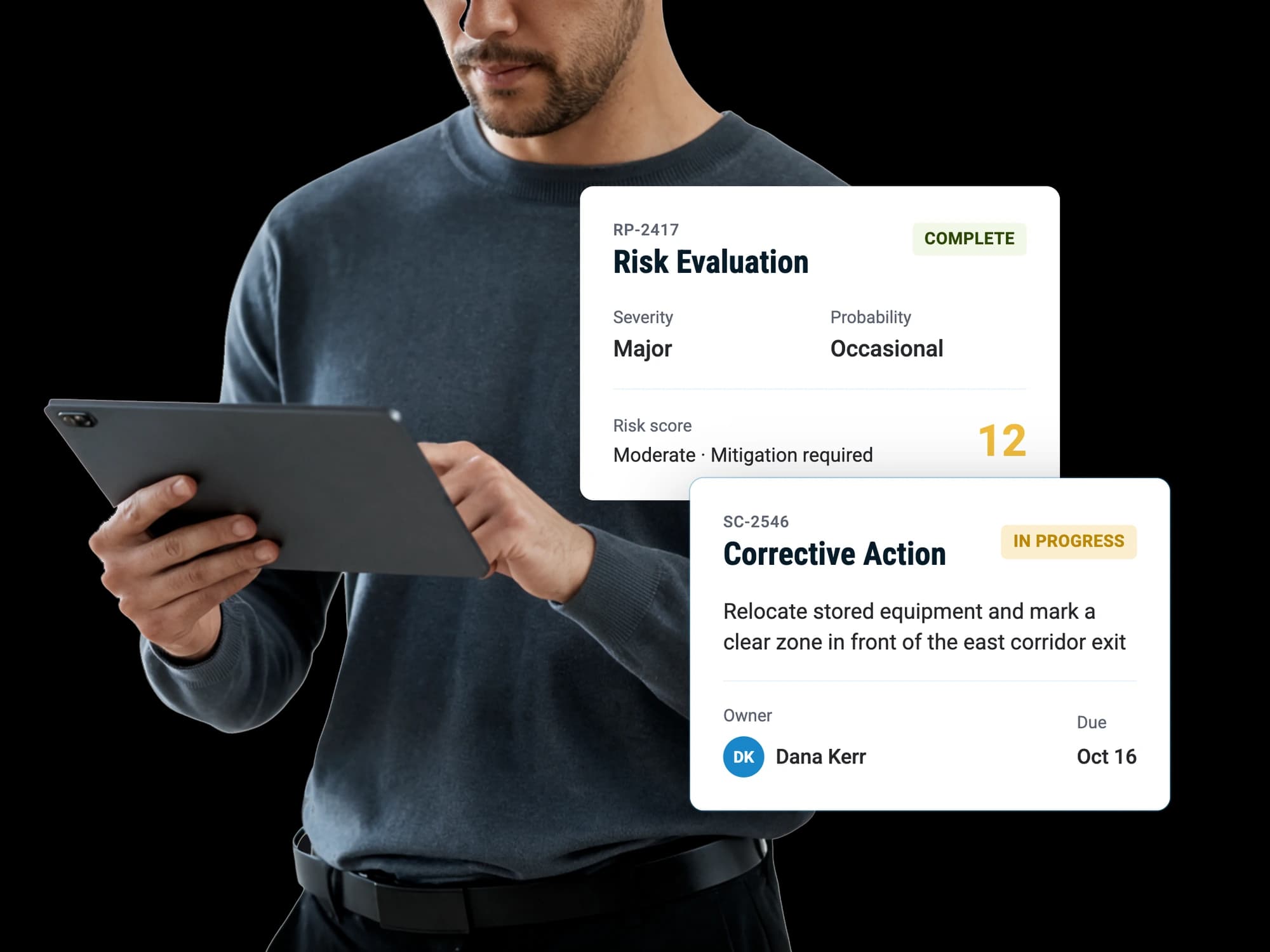
In RISE, a FRAT is a risk assessment form: answers carry points, the form has low, medium and high thresholds, and above a threshold you choose, mitigation or approval can be required before the form is submitted. Named combinations of answers can raise an alert or force approval, which is how hard stops work. Aviation accounts can connect ForeFlight Dispatch, Schedaero, Airplane Manager or EuroFPL so each trip arrives in RISE with a default risk assessment. If you want to see that on your own flying, book a demo.
Sources
- Flight Risk Assessment Tool (FRAT) - FAA Safety Team
- FAA InFO 07015: Flight Risk Assessment Tool
- Flight Risk Assessment Tools (GAJSC Safety Enhancement Topic SE 42)
Questions people ask
Is a FRAT the same as a personal minimums checklist?
They work together, but they measure different things. Personal minimums are the lines one pilot draws for themselves, like the lowest ceiling they will shoot an approach to. A FRAT scores the whole flight against thresholds the operation sets, so the same lines apply whoever is in the left seat. Plenty of pilots use both, with personal minimums as the floor under the FRAT.
How long should a FRAT take to complete?
Three to five minutes is a good target for a routine leg. If it regularly takes longer, the form has grown too many questions or asks for numbers the pilot has to go hunting for. Cut it back to the hazards that actually move the score for your kind of flying.
Can a FRAT replace a safety management system?
A FRAT is one piece of safety risk management, and FAA InFO 07015 describes risk assessment tools as part of an SMS rather than the whole system. It covers the flight in front of you. Hazard reporting, investigations, corrective actions and assurance handle what the scores reveal over months.
Should FRAT scores ever be used for discipline?
Keep FRAT scores out of discipline. A pilot who reports a high score has done exactly what the tool asks, and treating that as a problem teaches the whole crew room to score low. Save accountability conversations for deliberate disregard of the process, such as departing in the red with no review.
Who should fill in the FRAT on a two-pilot crew?
The pilot in command owns it, and both pilots should see the score before departure. Some departments have the first officer complete it and the captain review it, which puts a second set of eyes on every answer. Either way, the crew agrees on the mitigation before the engines start.
Is a FRAT required for my operation?
That depends on your certificate, your operations specifications and the kind of flying you do, so it is a question for your principal inspector or local FSDO. If you would like to talk through how a FRAT fits your program, book a demo with RISE and we will walk through it with you.