Last updated · 4 min read
Why Repair Stations Are Turning to SMS
By Michael Sidler, Founder, RISE
This article explains published regulations and is not legal or compliance advice. See the linked sources.
Verify against the current regulation at the primary source.

If you’re running a Part 145 repair station, you already know how much rides on getting the regulations right. Your manuals, training, tooling, personnel, and documentation are where your certificate and your reputation are built. But meeting the baseline requirements laid out in FAR Part 145 is only part of the equation.
Customers increasingly look for maintenance providers that take an active, structured role in safety. Whether you’re supporting air carriers, business jets, or international operators, adopting a formal Safety Management System (SMS) is one of the clearest ways to strengthen your safety practices.
Where Repair Stations Fit
Part 121 air carriers already had an SMS before the FAA’s 2024 rule, which, as written in 14 CFR 5.7(a), gave them until May 28, 2025 to revise it, and the agency has made it clear for years that SMS reaches beyond airlines. Repair stations, especially those servicing complex aircraft or working under contract for operators who are already subject to SMS requirements, are increasingly expected to think and operate with the same proactive safety mindset.
Repair stations that run an SMS develop structured hazard identification processes, formal risk assessments, documented safety assurance activities, and clear safety promotion strategies that drive continuous learning and improvement.
The message is simple: repair stations gain the most by treating SMS as a core part of their operation now. The sooner you implement an SMS, the more prepared you’ll be to demonstrate due diligence to both regulators and your customers.
Beyond Checklists and Sign-Offs
For repair stations working on European-registered aircraft, the expectations around safety are especially clear. European customers usually look beyond checklists and sign-offs, to whether a provider applies human factors principles, monitors error trends, encourages open reporting, and creates systems that promote ongoing safety improvement. These are all core ideas that mirror the foundation of an SMS.
Auditors check that your records are in order, and they look for signs that safety is more than paperwork:
-
Are your personnel encouraged to report hazards and near misses?
-
Is management tracking and analyzing safety reports after filing them?
-
Are recurring risks identified and addressed with long-term corrective actions rather than temporary fixes?
Repair stations that can answer “yes” to these questions, and back it up with clear, consistent processes, pass audits more smoothly. They also position themselves as trusted partners for operators who rely on maintenance for compliance and for keeping their operation airworthy and resilient.
Why Adopting SMS Makes Sense for Your Business
Beyond regulatory pressures, there are real-world business reasons repair stations are adopting SMS:
An SMS gives you the tools to connect your daily maintenance activities with your long-term operational goals, from a compliance standpoint and from a reputation, liability, and customer service perspective.
When you run a formal SMS, you can:
-
Identify small hazards before they become major failuresWhen technicians and inspectors log risks consistently, management can spot trends early and prevent future disruptions.
-
Demonstrate a proactive safety posture to customersOperators want to work with repair stations that take safety seriously. Showing a structured SMS process sends a clear message about your commitment.
-
Simplify audits and inspectionsWhen safety policies, risk assessments, hazard reports, and corrective actions are all documented and traceable, your team can spend less time scrambling for records when an auditor or inspector shows up.
-
Promote accountability and safety culture across your workforceAn SMS supports management oversight and helps create a shared understanding of risk at every level, from hangar floor to front office.
RISE: Designed to Support Aviation Operations Across the Board
At RISE, we understand the unique challenges that Part 145 repair stations face: balancing rigorous regulatory requirements, customer expectations, and the demands of real-world maintenance workflows. Our software is designed to bring SMS into your operations without adding unnecessary complexity or slowing down your maintenance timelines.
RISE empowers Part 145 repair stations to streamline safety management across the organization. With RISE, your team can:
-
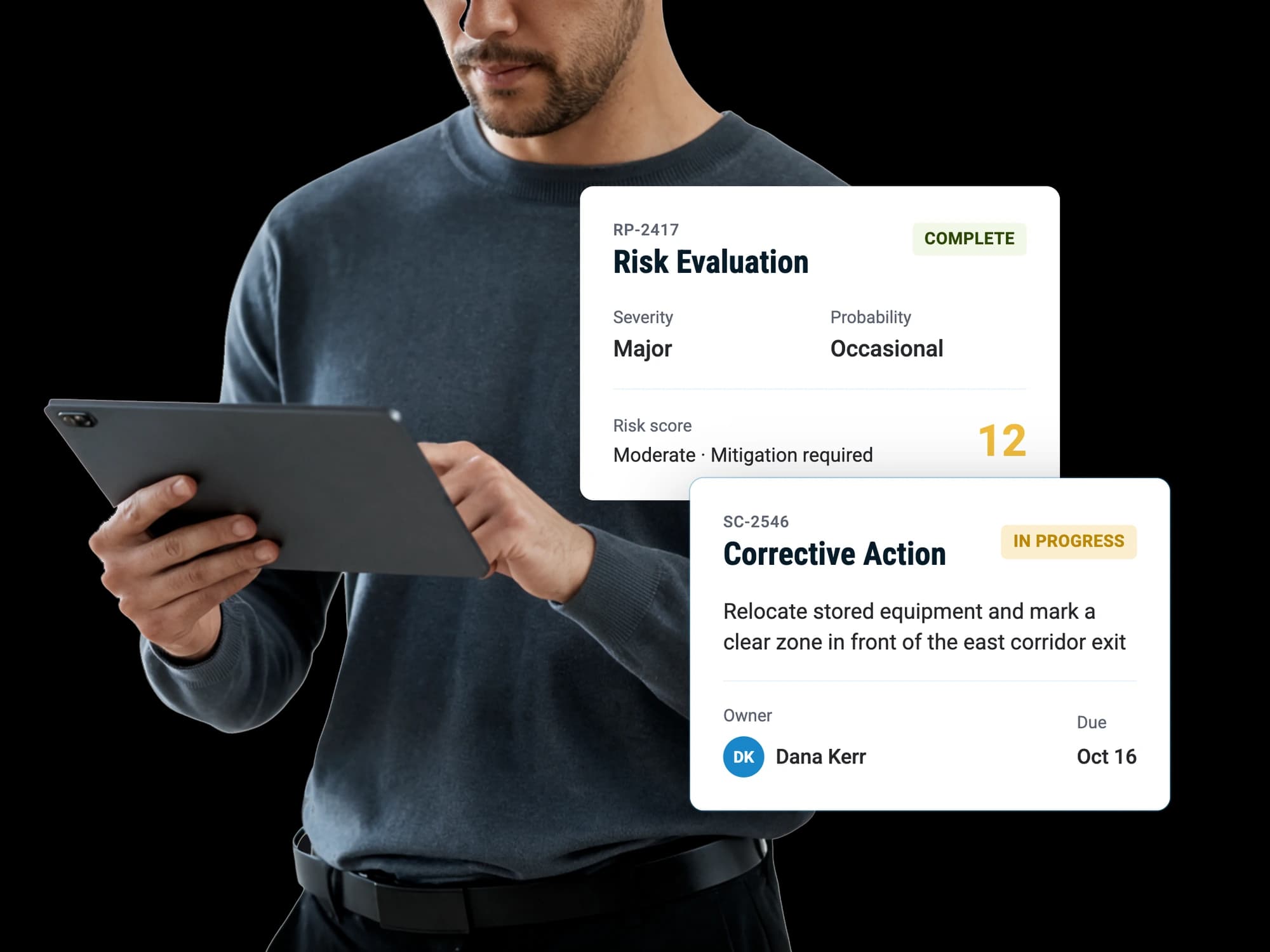
Log and track hazard reports directly from the shop floor with mobile-friendly forms and customizable fields, ensuring no hazard goes unnoticed.
-
Assign and monitor corrective actions with clear accountability and visibility to ensure risks are mitigated in a timely manner.
-
Create safety communications and distribute them across your operation to reinforce safety protocols and lessons learned.
Our platform is built for aviation. This means you can bring your SMS together across maintenance, operations, and safety teams. With RISE, your repair station can track every hazard and corrective action, improve safety culture, and operate more efficiently, all without the burden of managing complex systems or outdated tools.
Stay Ahead of Expectations, Not Behind Them
Whether you’re working with high-utilization airframes, supporting global operators, or preparing for your next audit, adopting an SMS means being ready for the next inspector and embedding safety into your daily maintenance decisions.
When you build that foundation now, you’ll meet expectations and raise them.
Let’s talk about how RISE can help you make that happen. Book a consultation or start your free trial today.