Skip to content
RISE

Airports

Safety management across the airfield

Certificated airports and airfields, where whoever sees a hazard first often works for somebody else. Ground handling, fuel, tenants and airside in one place.

US Part 139Canada CAR 302Europe EU 139/2014Australia CASR 139
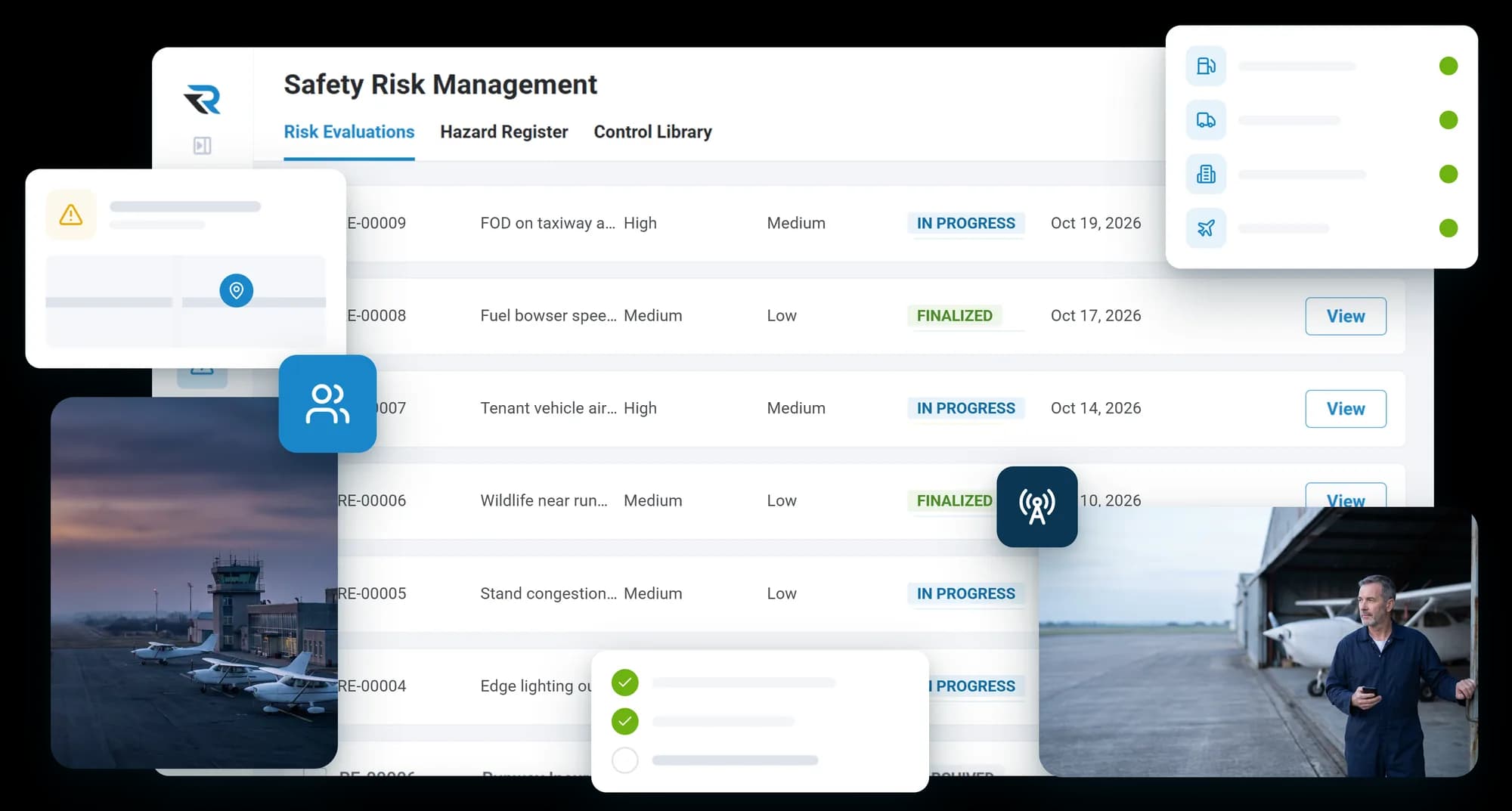
Risk evaluations in RISE for an airport, including FOD on a taxiway, fuel bowser speed, a tenant vehicle airside, wildlife near the runway, stand congestion and edge lighting, beside light aircraft by a control tower at dusk and a mechanic at a hangar door

Whatever gets raised goes in the same place.

  • Hazard
  • Wildlife strike
  • Vehicle incursion
  • Inspection finding
  • Near miss

Accessible reporting

It comes in from where the work is

Raised from the ramp or the movement area, by staff already signed in on the work phone they carry and by contractors and tenants scanning a code.

  • Raised from a phone, a tablet or a desktop
  • QR codes wherever the work happens
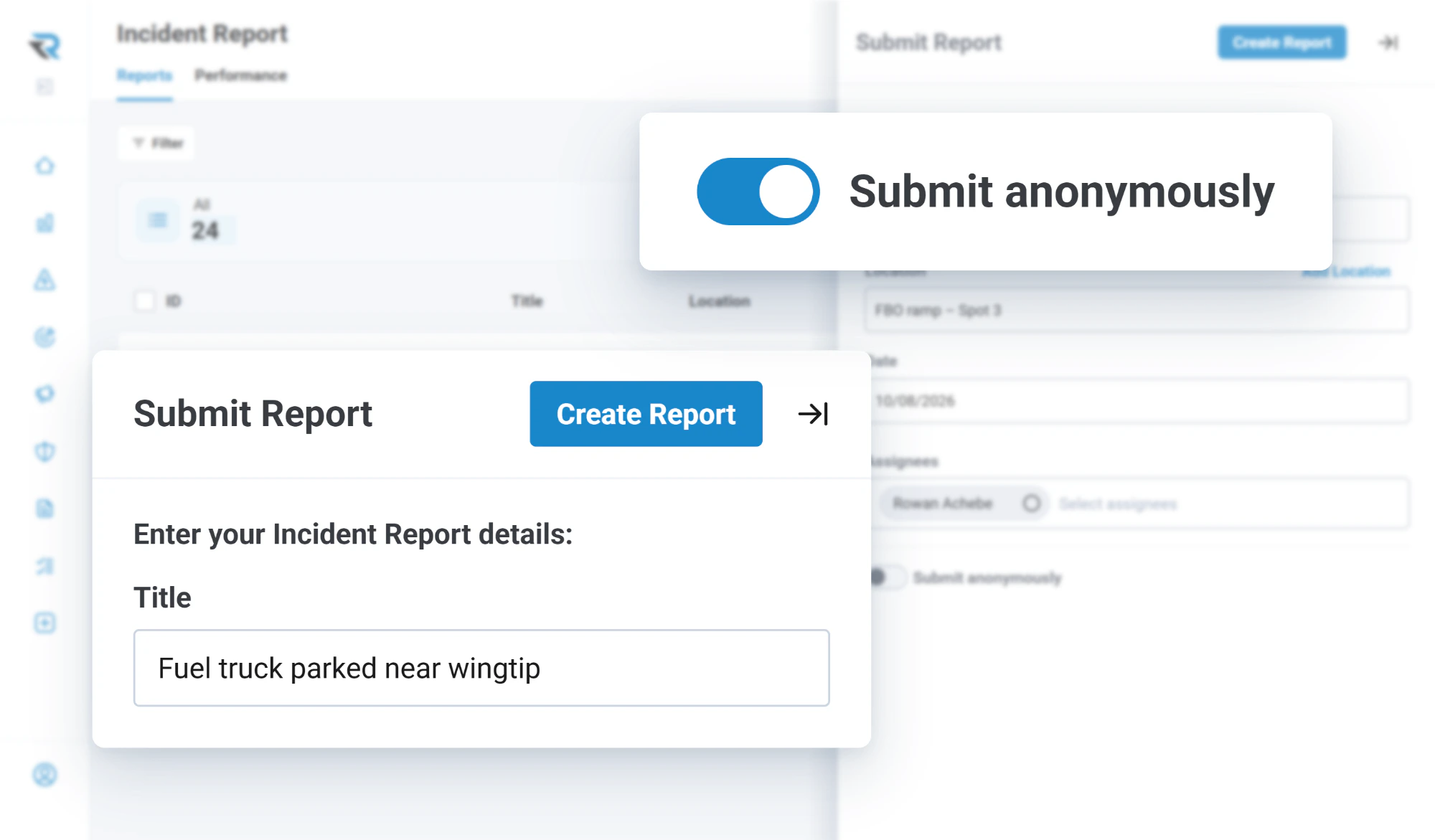
  • Anonymous submission on any form
See how
An incident report being submitted in RISE about a fuel truck parked near a wingtip, with the submit anonymously toggle switched on

Structured evaluation

One way to judge what comes in

Every report goes through the same process whoever raised it, so a hazard reported by a fuel contractor is judged the same way as one reported by operations staff.

  • Severity and probability on one shared scale
  • Controls applied, residual risk recalculated
  • Accepted by somebody with the authority to accept it
See how
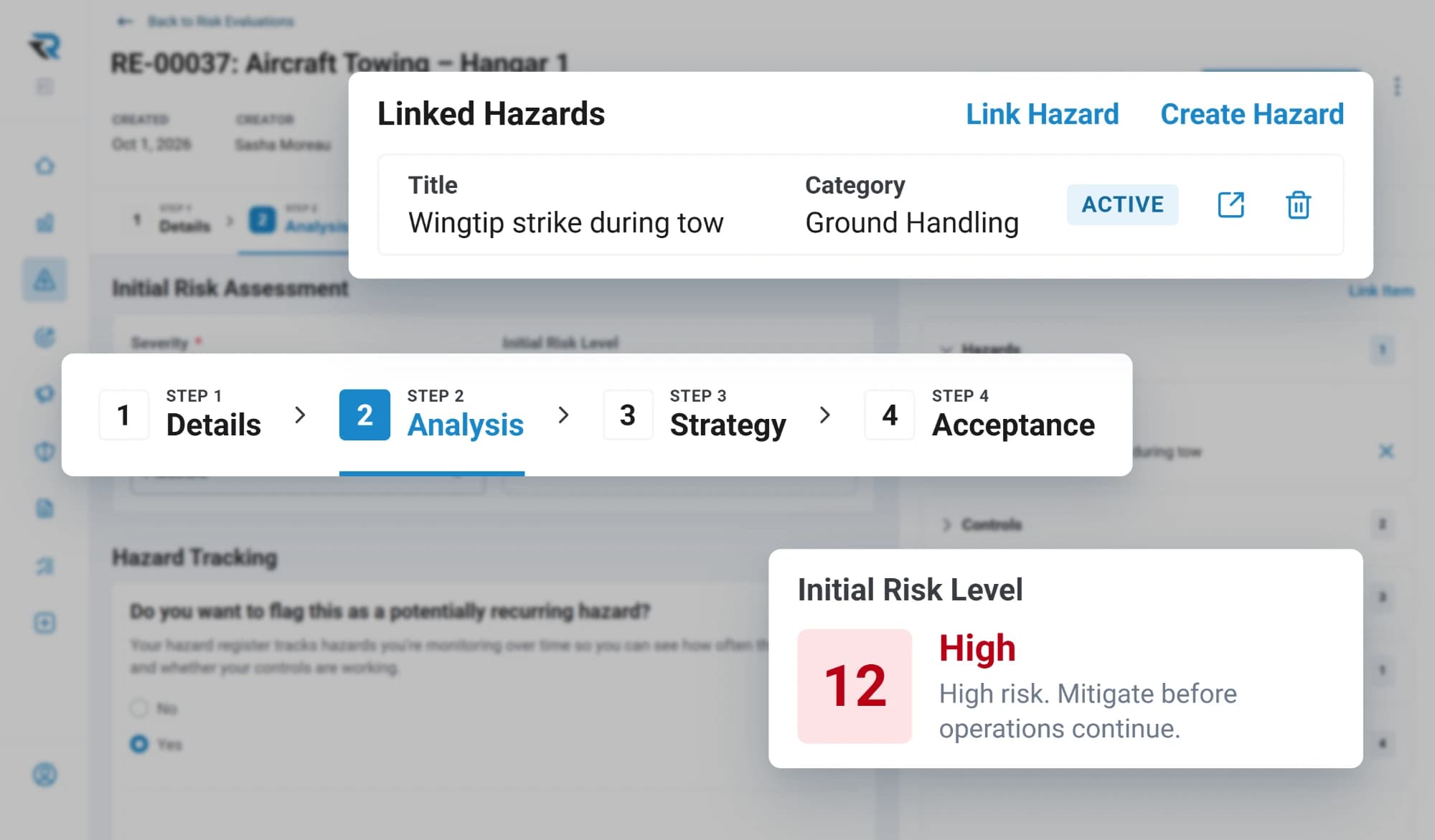
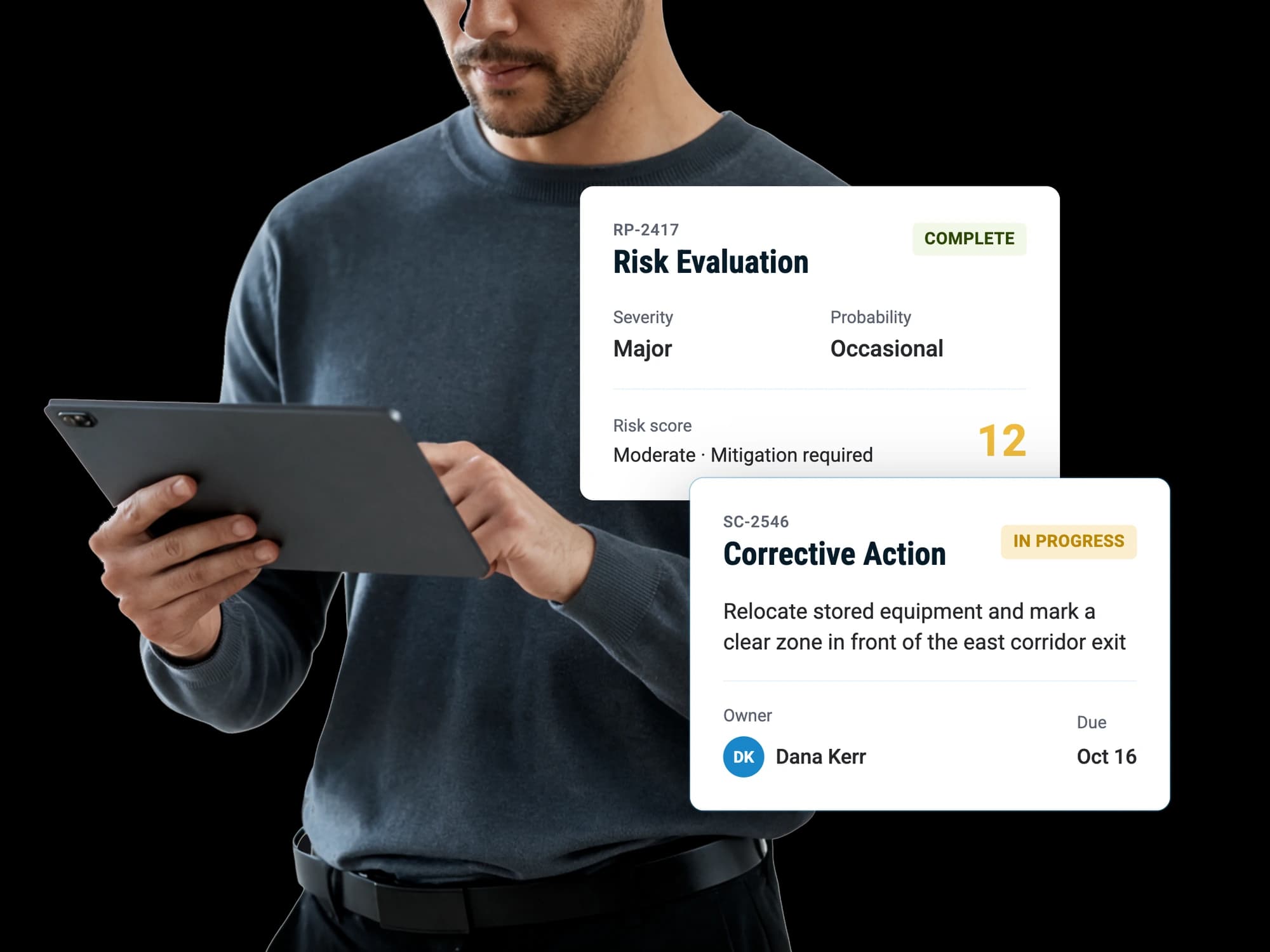
A risk evaluation in RISE for aircraft towing at its analysis step, linked to a wingtip strike hazard and scored at a High initial risk level of 12

Systematic resolution

Driven to a close, and proved

An owner, a date and an action plan, chased and held open until the fix has been checked, across organizations that do not share a payroll.

  • An owner and a date on every action
  • Verification with evidence before closure
  • One register for everything the operation owes itself
See how
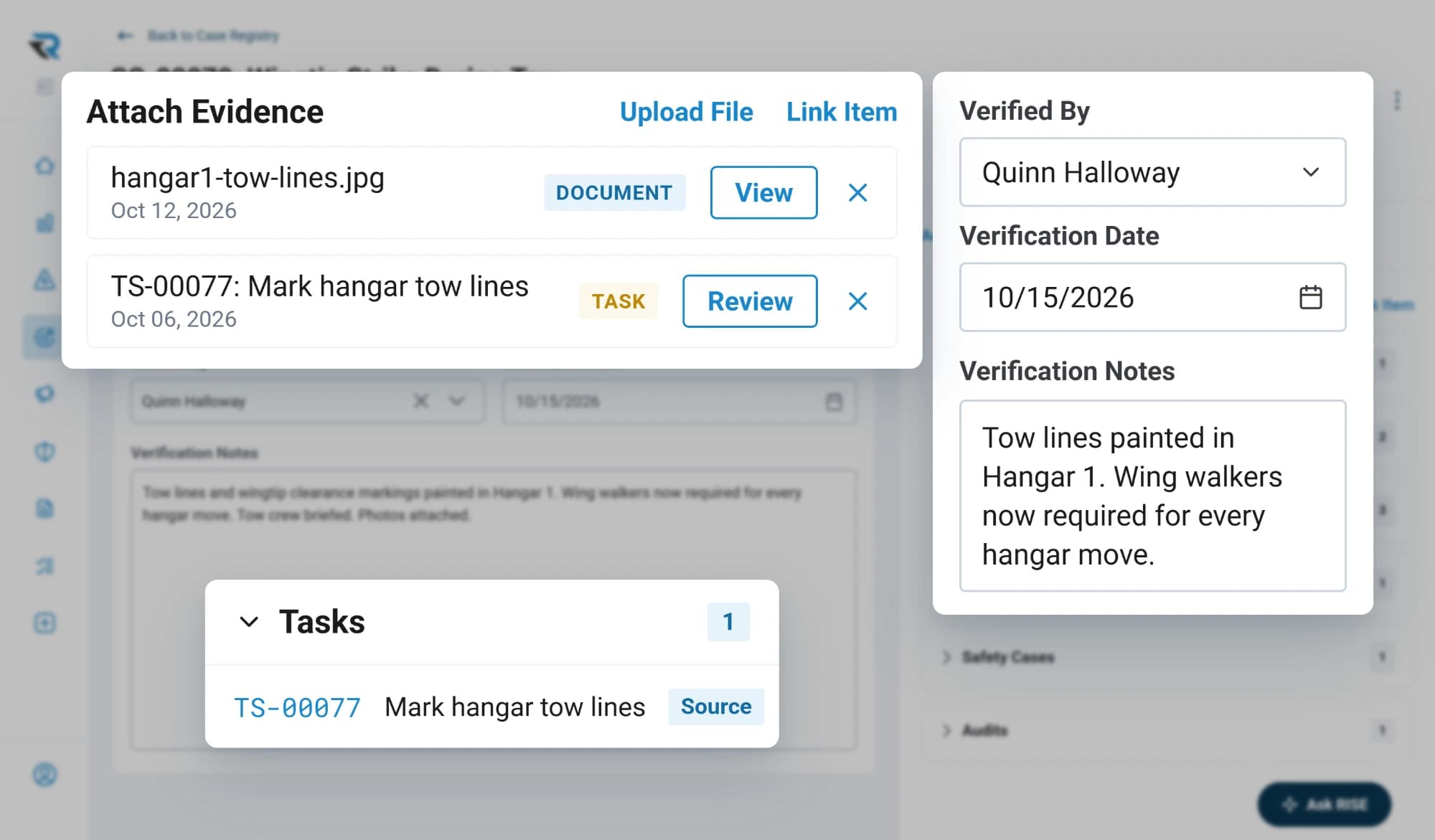
A safety case in RISE verified by Quinn Halloway, with notes that tow lines were painted in Hangar 1 and wing walkers are now required, a photo and the task that did the work attached as evidence

Proactive insight

What the record is telling you

Rates by area, activity and tenant, so a recurring problem in one corner of the airfield is visible before it becomes an event.

  • Indicators measured from your own records
  • Targets, with a breach notice when one is crossed
  • Ask the RISE Agent in plain language
See how
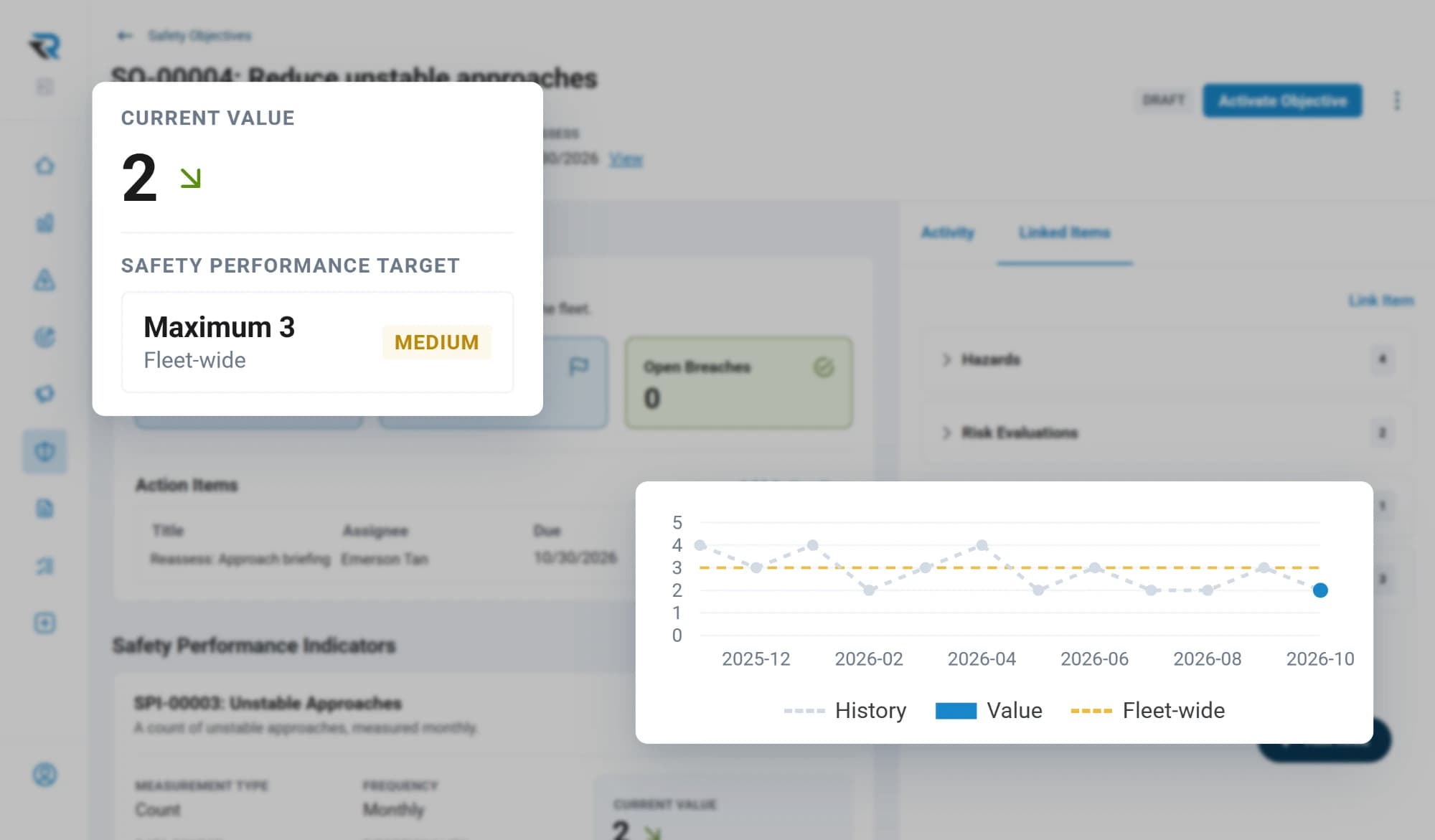
An unstable approaches indicator in RISE at a current value of 2 against a fleet-wide maximum of 3, charted month by month against that target

Start with FREE ASAP reporting

A free account with the ASAP report form in it. Add your team, change the form to suit your operation, and start collecting reports. No cost, and nothing to change if you ever want the rest of the platform.

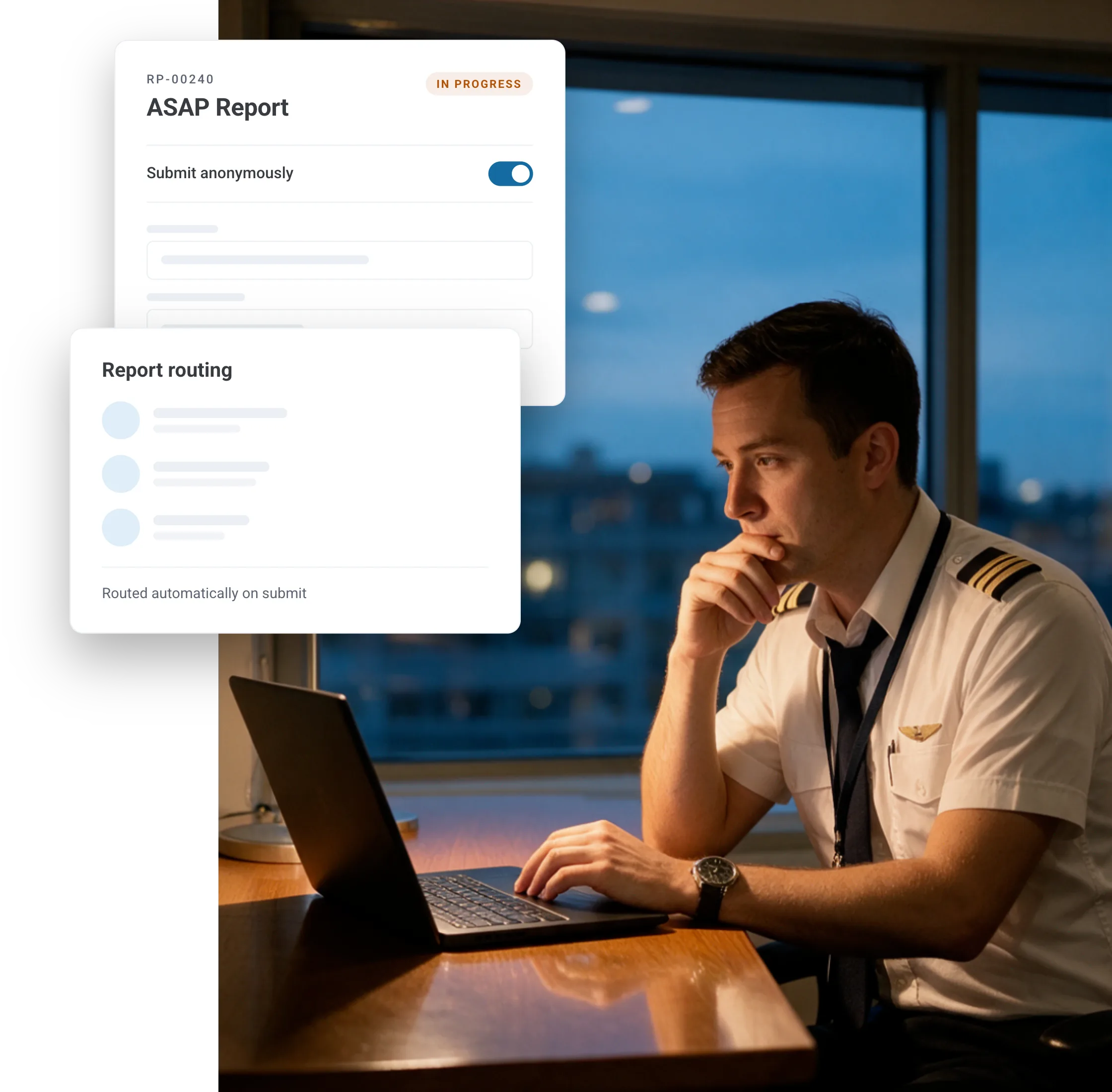
A first officer filing an ASAP report on a laptop at the end of a duty day, with the report's anonymous submission toggle and its routing shown beside

Frameworks

Structured around the standards operations are measured against

RISE is built so the evidence lines up with whichever framework you work under, wherever you operate. Which of these applies to your operation is a conversation worth having properly, rather than a question a website should answer.

Links go to the primary source. Verify any requirement against the current text of the regulation or standard.

Discover how RISE can empower your safety program

A guided walkthrough of how RISE handles reporting, evaluation, resolution and insight, with time to talk about how your own operation runs today.