Large Aircraft
Safety management for large aircraft operations
Large aircraft operated outside common carriage. Airline-scale equipment and a team small enough that many still have more than one job.
US Part 125
Large Aircraft
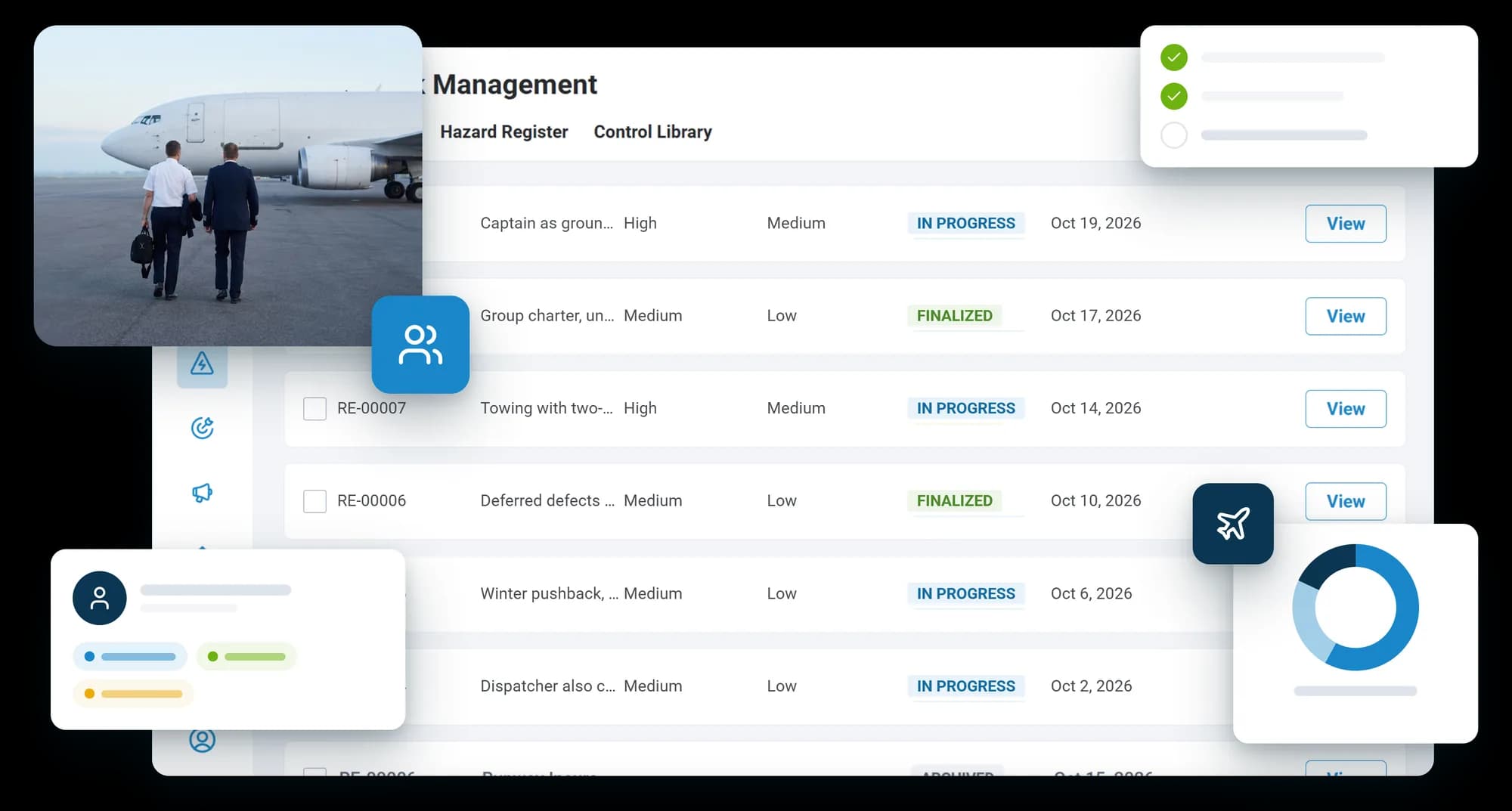
Large aircraft operated outside common carriage. Airline-scale equipment and a team small enough that many still have more than one job.
Accessible reporting
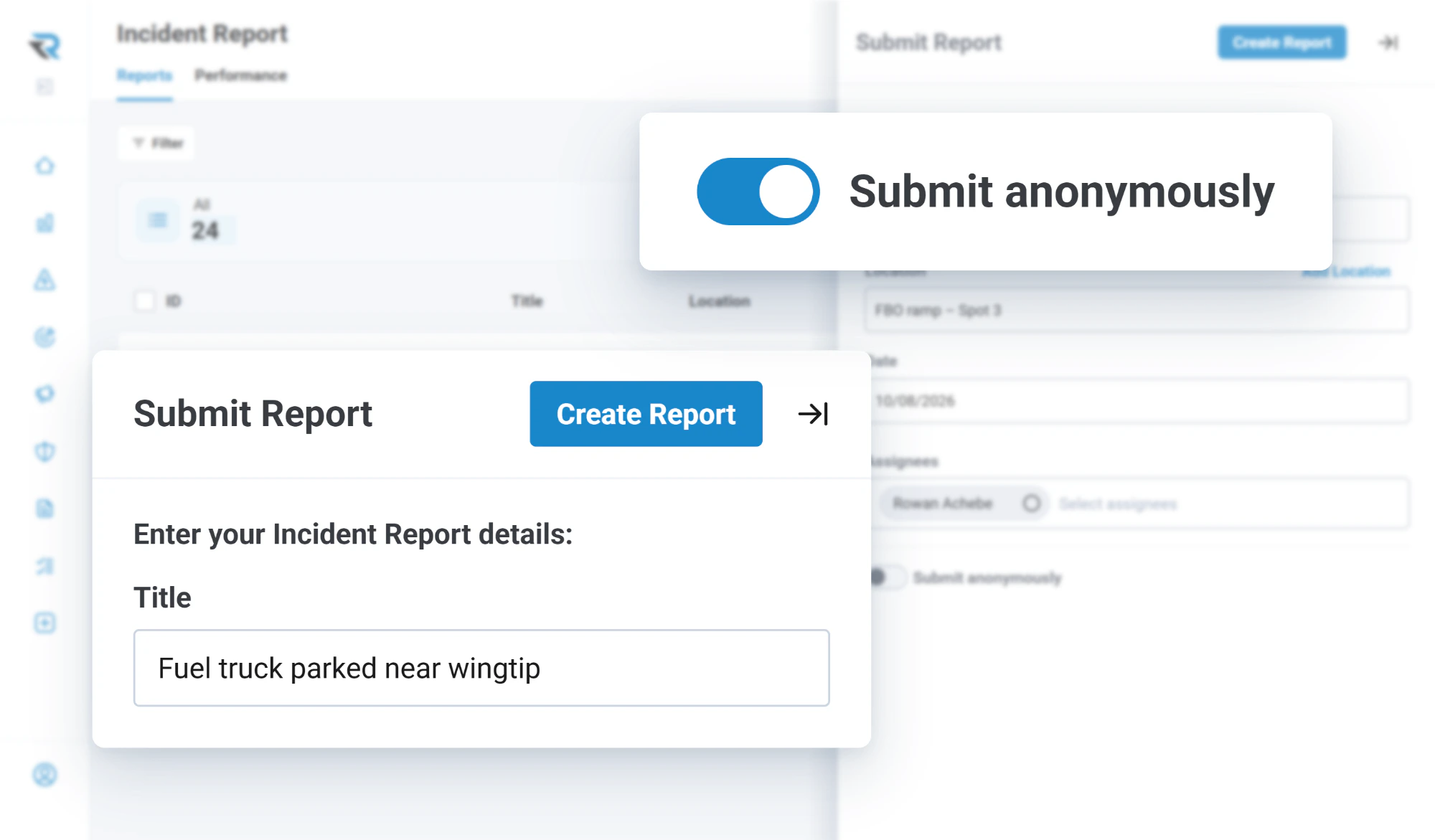
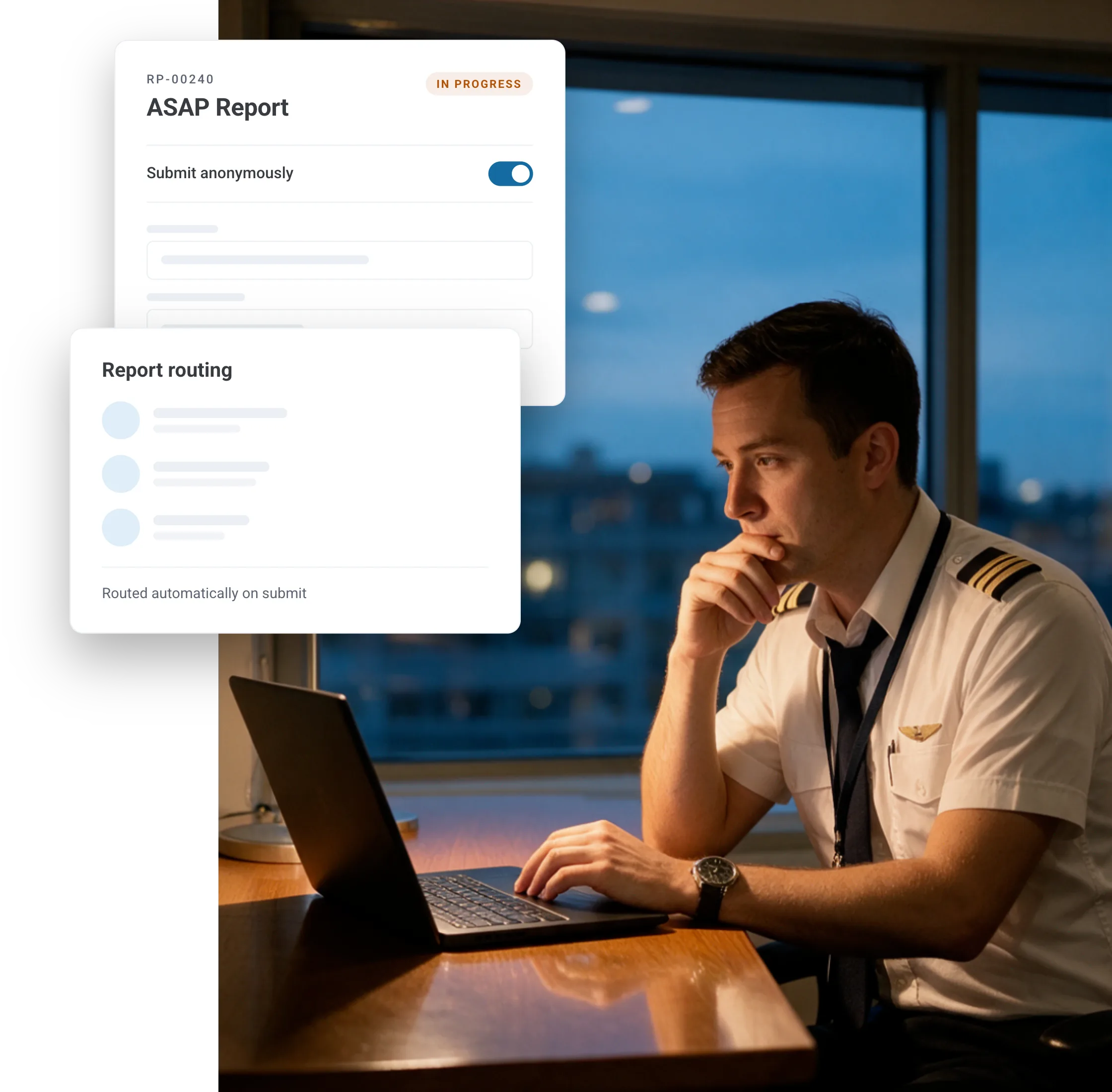
Raised from the flight deck, the hangar or the ramp, by crew and by maintenance, on whatever they are already carrying.
Structured evaluation
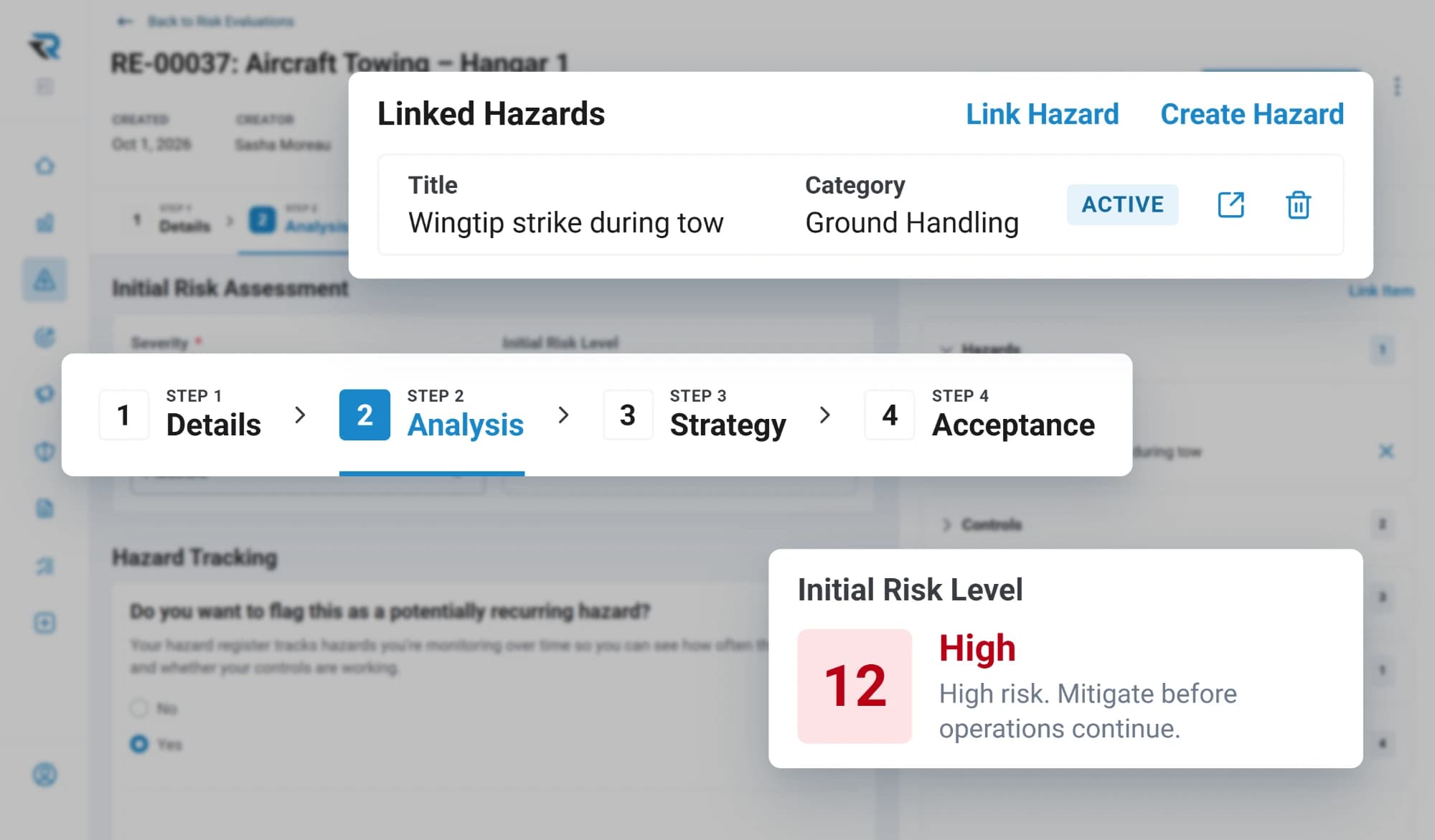
Every report goes through the same process: risk triaged, severity and probability assessed, a strategy set, and acceptance recorded by somebody with the standing to accept it.
Systematic resolution
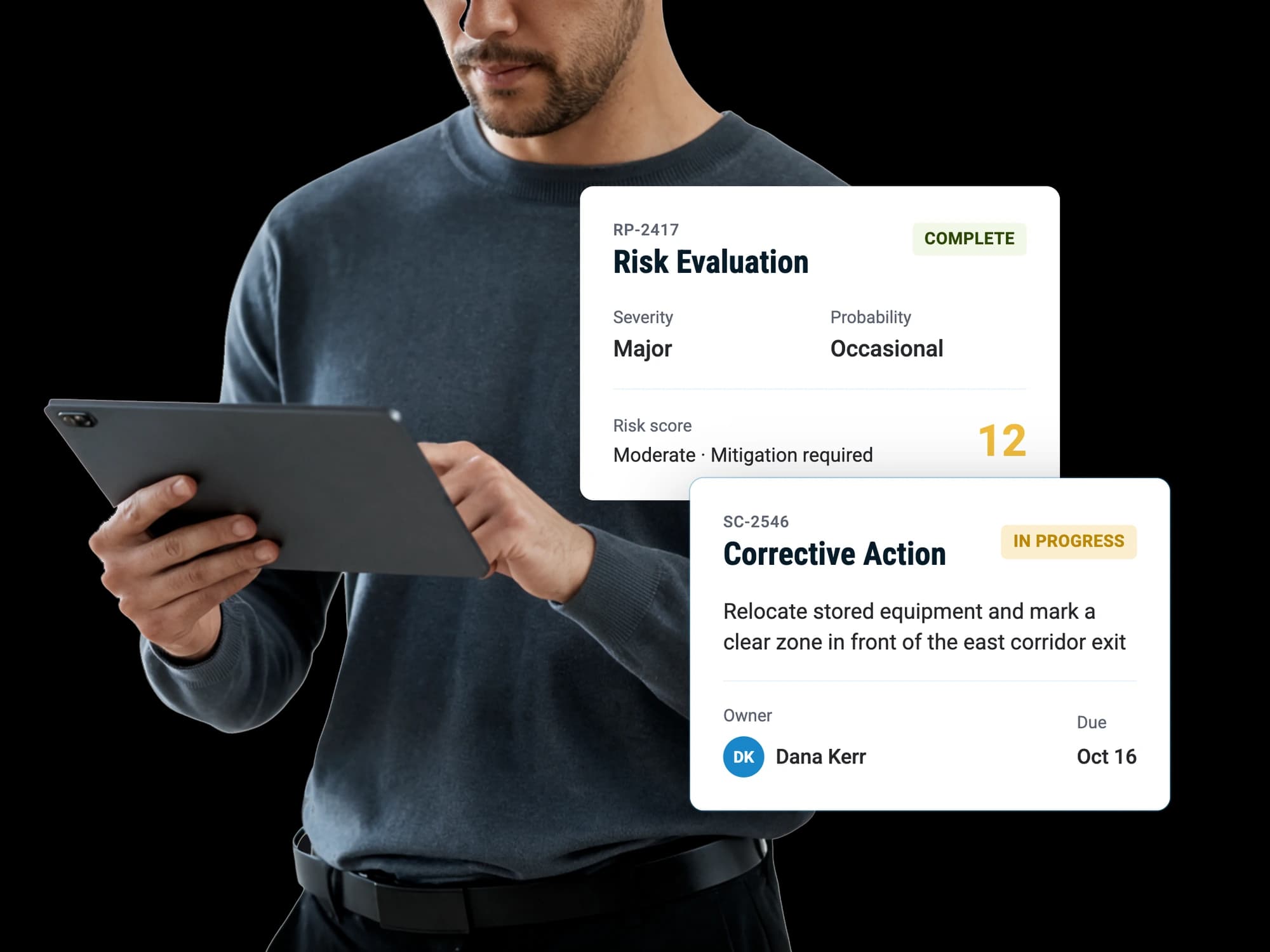
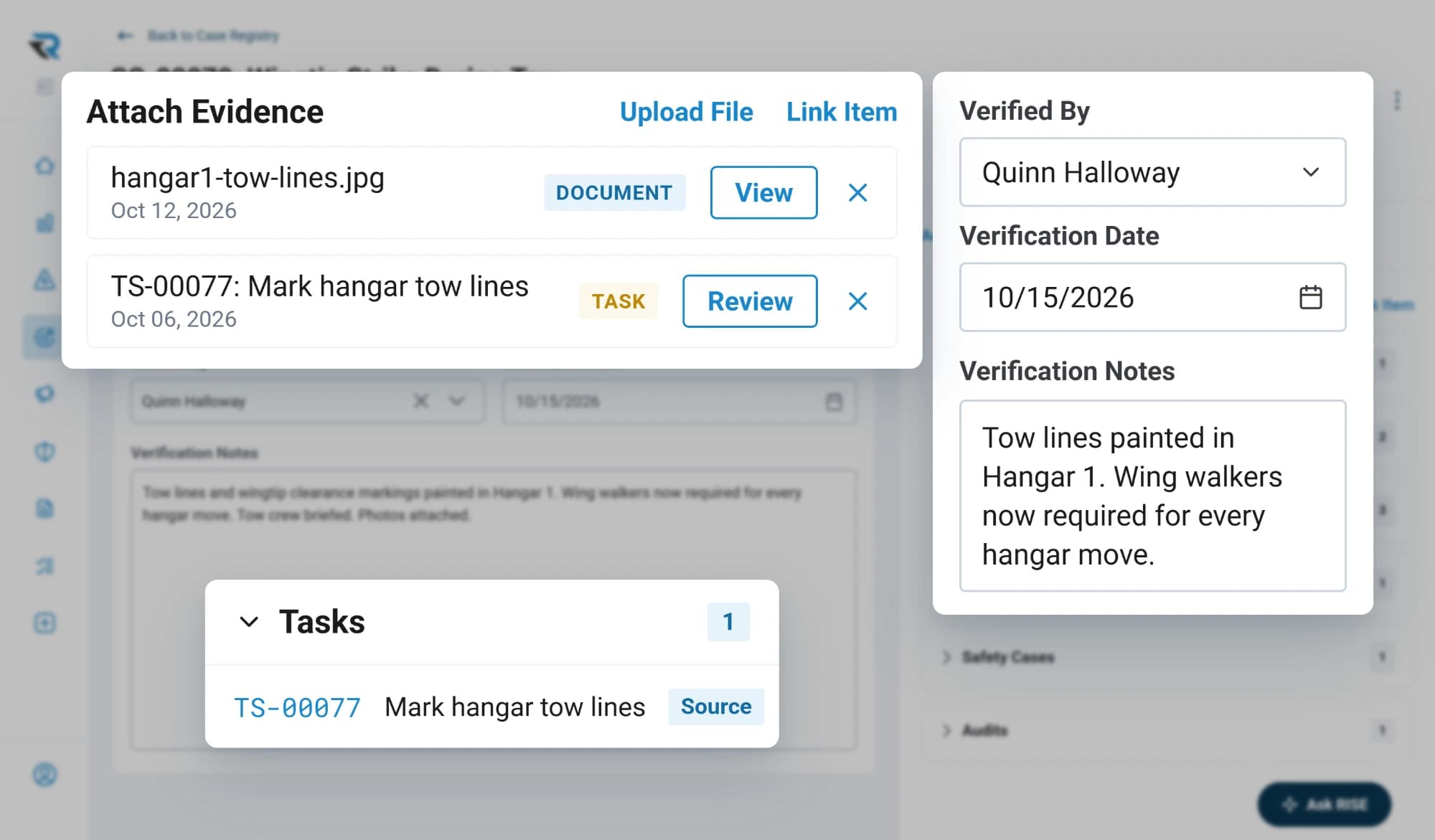
An owner, a date and an action plan, tracked to closure with verification before anything is called done.
Proactive insight
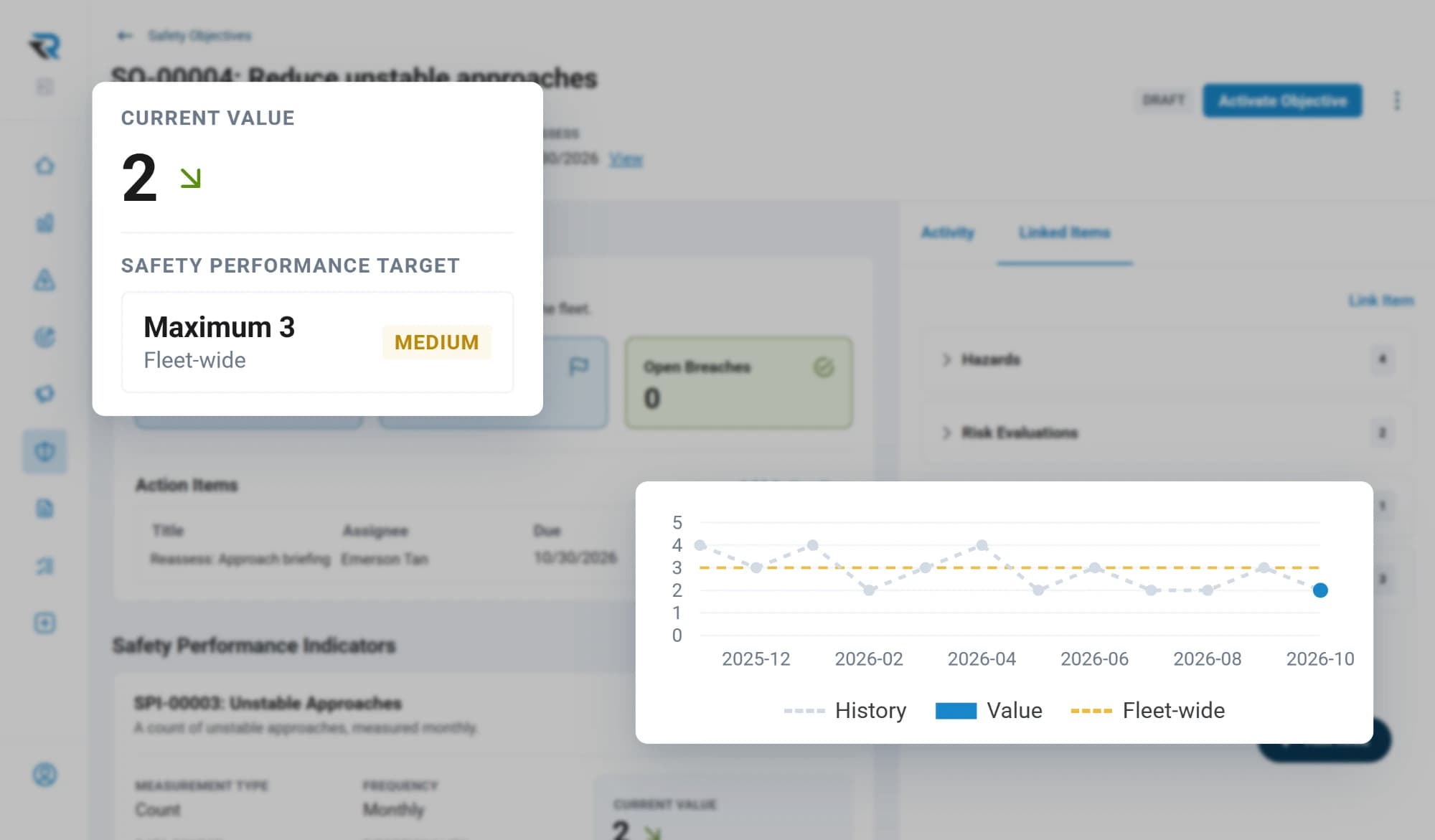
Rates by aircraft, crew, base and phase of operation, so the picture holds together across an operation that is bigger than its team.
The parts described above are the ones this operation meets first. This is the rest of what an account carries.
What the operation has committed to, and how it knows it is getting there.
Everything raised across the operation, by anybody, from wherever the work happens.
Judging what could go wrong, deciding what to do about it, and recording who accepted what.
Checking the controls are working, and driving what you find through to a verified closure.
Making sure the people doing the work know what was found and what changed because of it.
The parts that are not one step of the program but sit underneath all of them.
A free account with the ASAP report form in it. Add your team, change the form to suit your operation, and start collecting reports. No cost, and nothing to change if you ever want the rest of the platform.
Frameworks
RISE is built so the evidence lines up with whichever framework you work under, wherever you operate. Which of these applies to your operation is a conversation worth having properly, rather than a question a website should answer.
ICAO Annex 19
Safety Management, the international standard
Read the source
EASA
Safety management in the European Union
Read the source
Transport Canada
Civil aviation safety management
Read the source
CASA
Civil Aviation Safety Authority, Australia
Read the source
14 CFR Part 5
Safety Management Systems
Read the source
IS-BAO
International Standard for Business Aircraft Operations
Read the source
ARGUS
Operator rating and audit
Read the source
Wyvern
Operator standard and audit
Read the source
Links go to the primary source. Verify any requirement against the current text of the regulation or standard.
A guided walkthrough of how RISE handles reporting, evaluation, resolution and insight, with time to talk about how your own operation runs today.