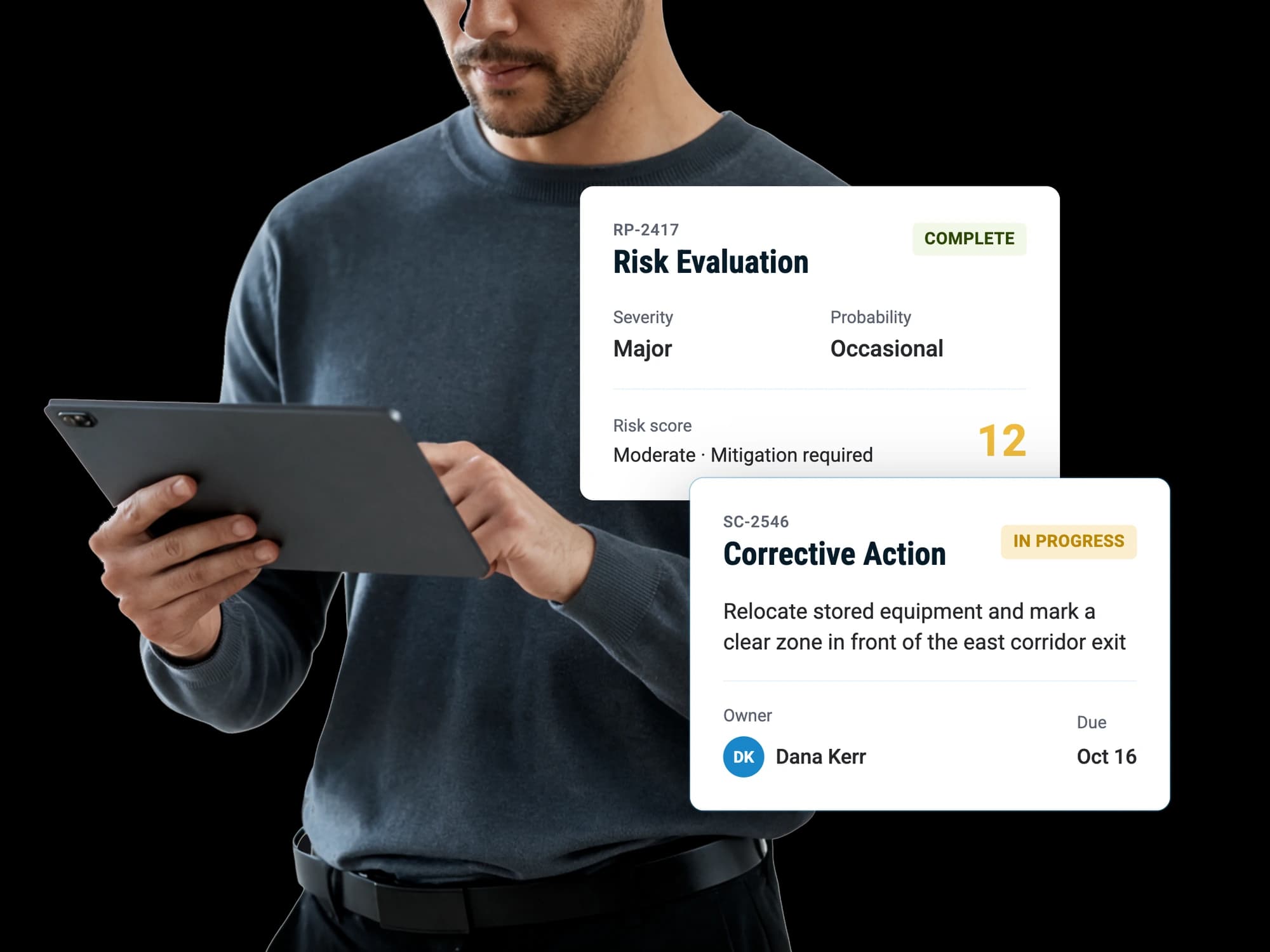
Charter operators
Safety management that keeps up with the schedule
Charter moves. Crews change, aircraft move between bases, and the safety program has to work in the gaps rather than in a quiet office afternoon.
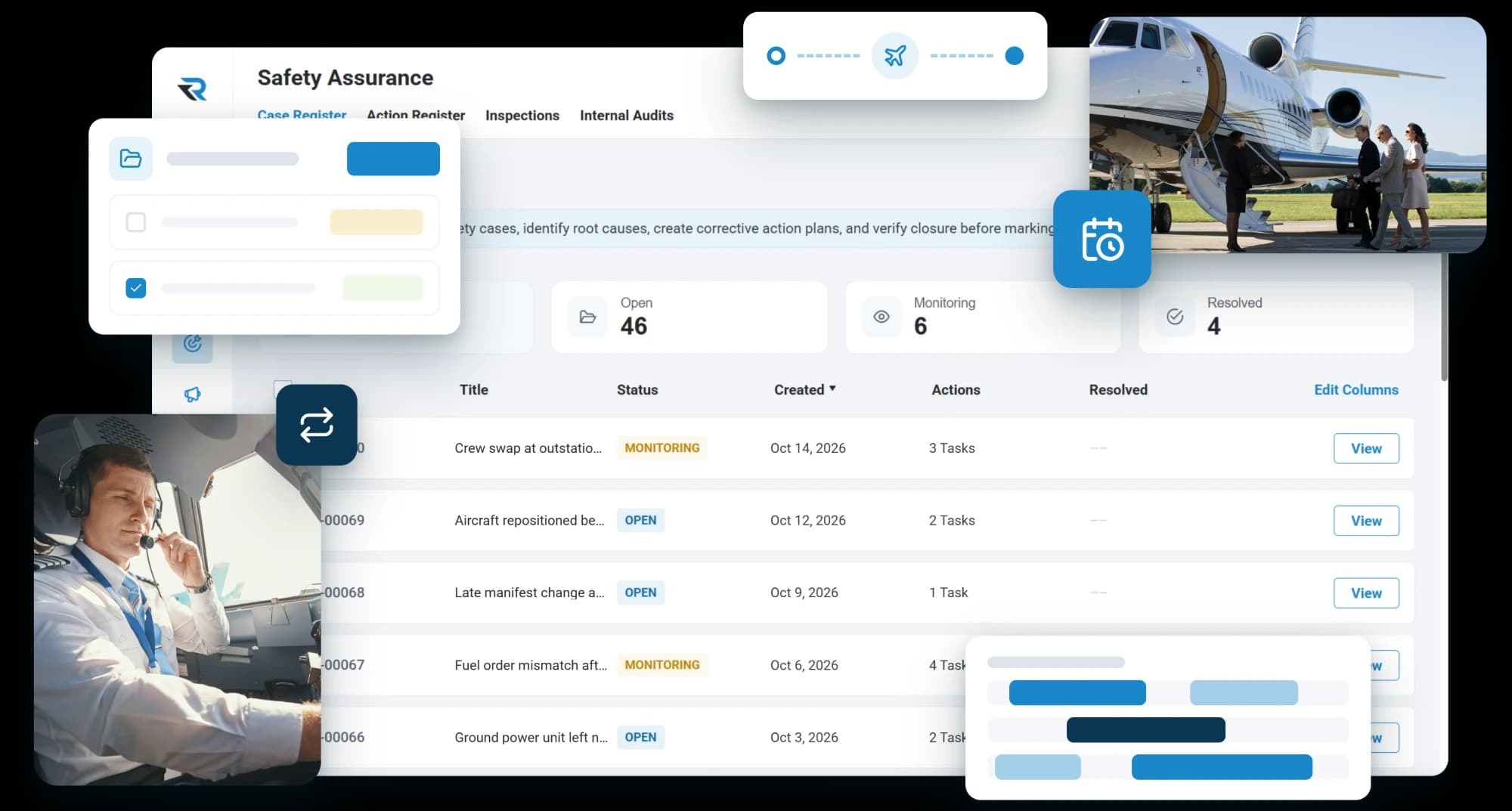
Charter operators
Charter moves. Crews change, aircraft move between bases, and the safety program has to work in the gaps rather than in a quiet office afternoon.
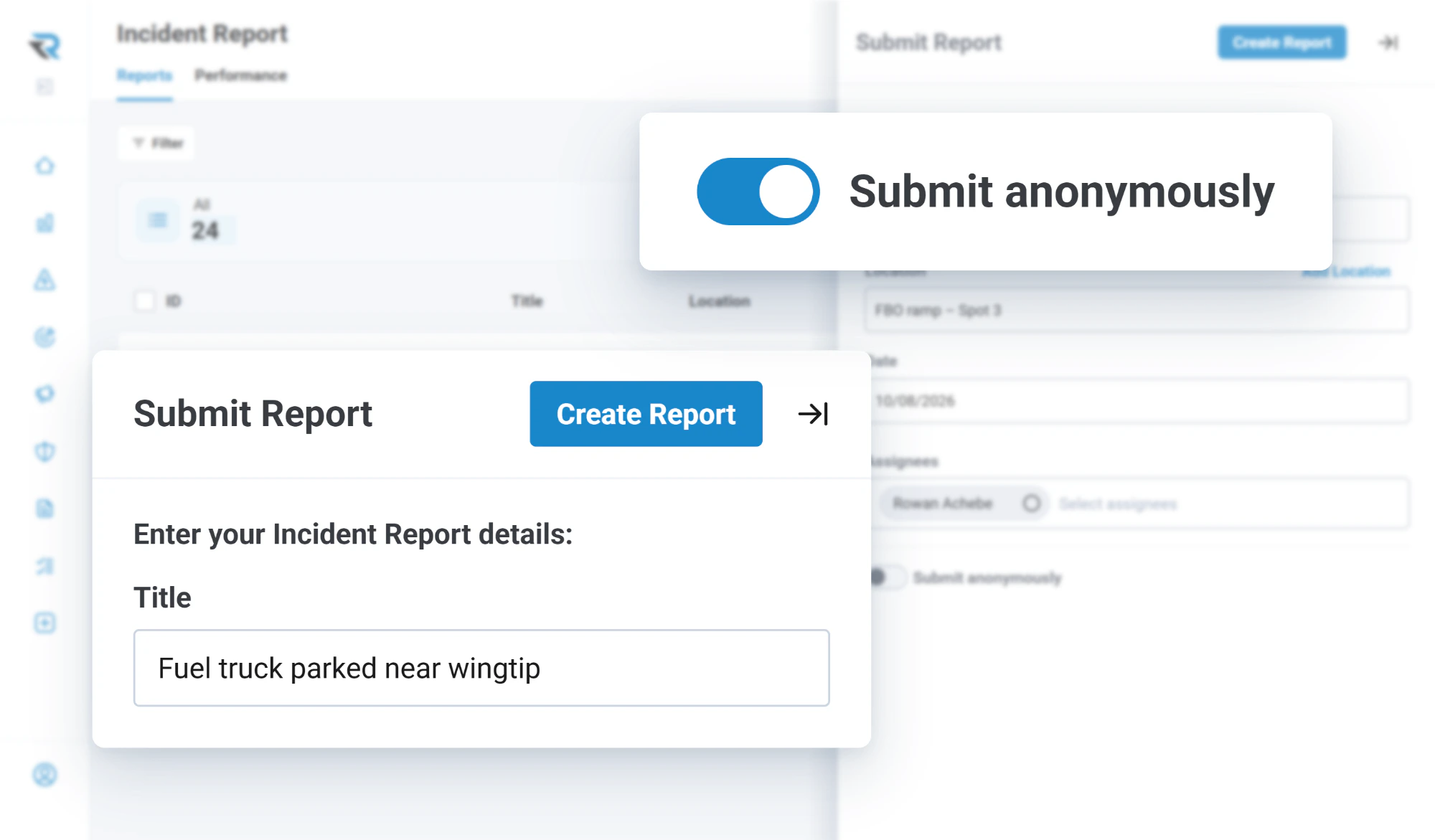
Accessible reporting
Raised from the ramp or the flight deck, on a phone, before the crew has walked back to the office.
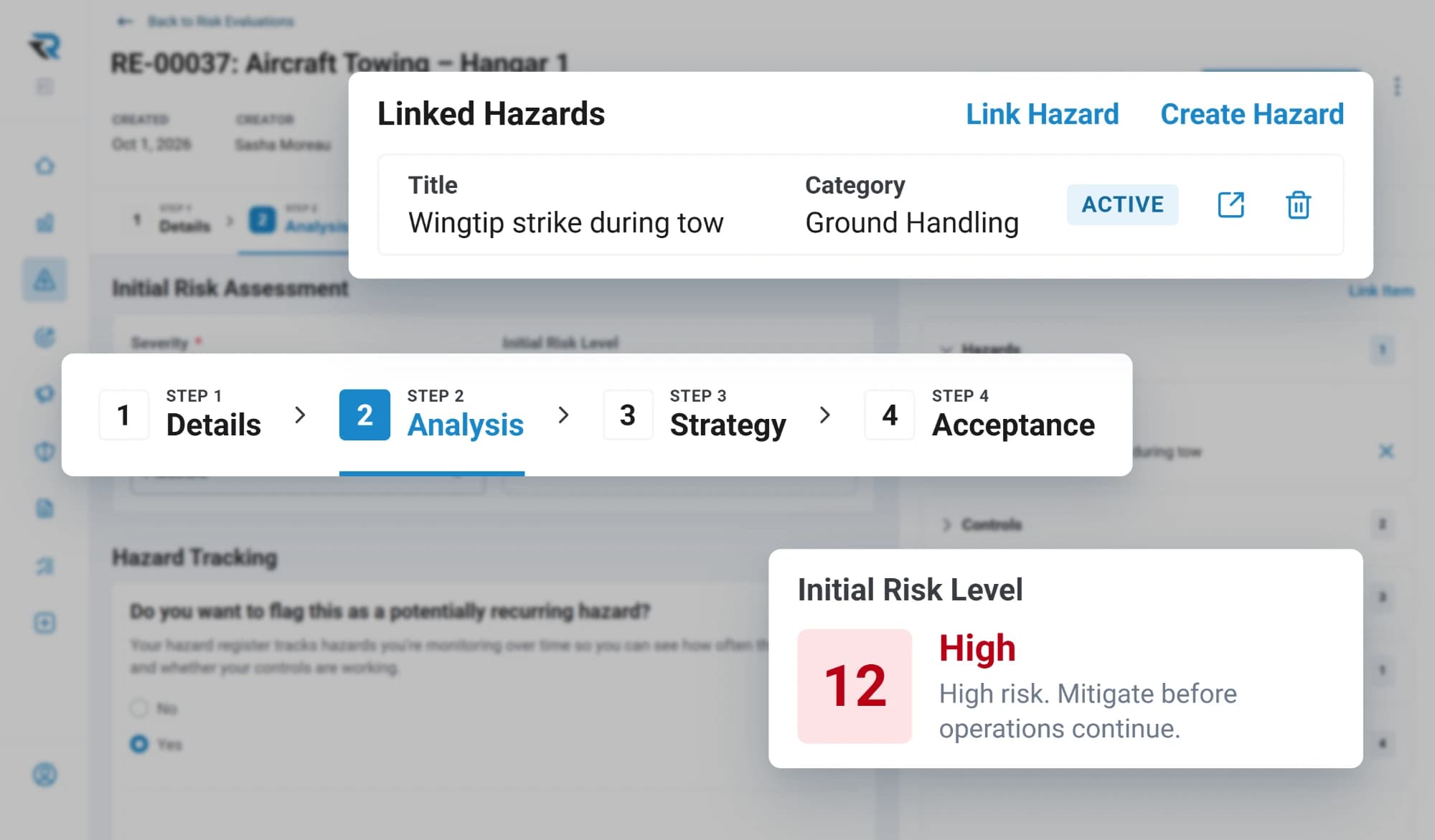
Structured evaluation
Every report goes through the same process: risk triaged, severity and probability assessed, a strategy set, and acceptance recorded as you go rather than reconstructed for an audit.
Systematic resolution
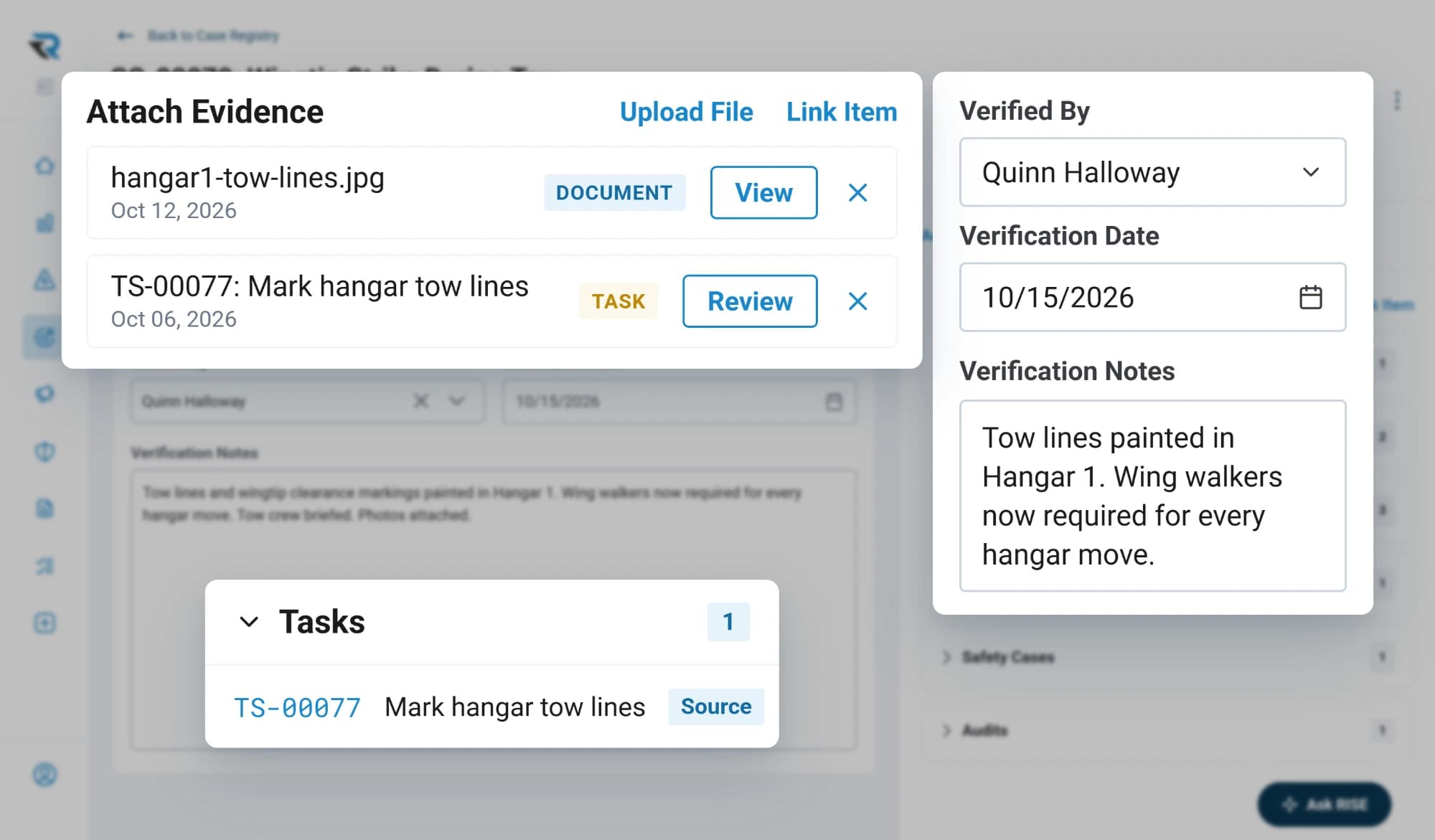
An owner, a date and an action plan, tracked to closure with effectiveness verified rather than assumed.
Proactive insight
Rates by aircraft, base, crew and phase of operation, so a recurring issue on one tail or at one station is visible while it is still a pattern.
The parts described above are the ones this operation meets first. This is the rest of what an account carries.
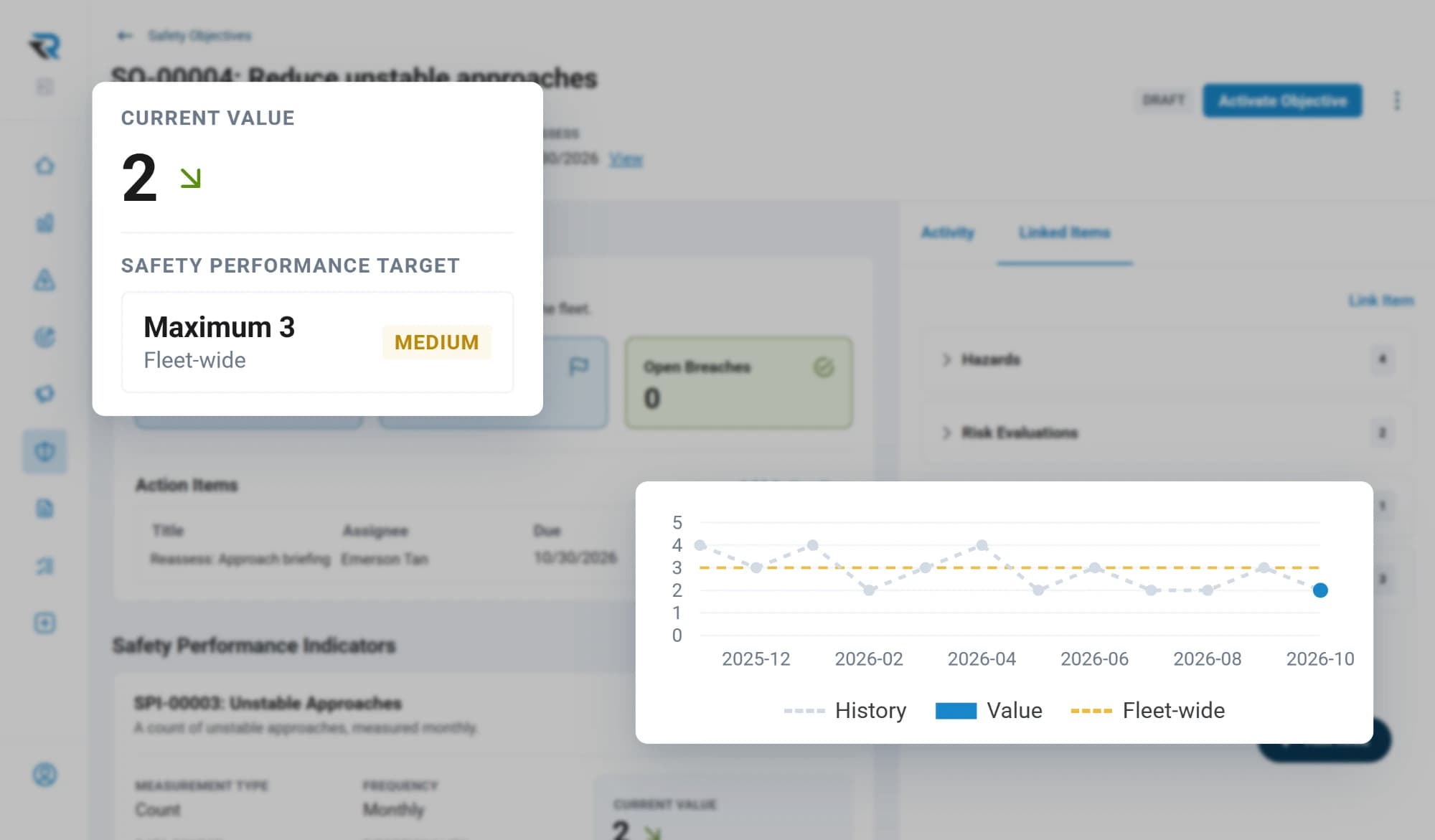
What the operation has committed to, and how it knows it is getting there.
Everything raised across the operation, by anybody, from wherever the work happens.
Judging what could go wrong, deciding what to do about it, and recording who accepted what.
Checking the controls are working, and driving what you find through to a verified closure.
Making sure the people doing the work know what was found and what changed because of it.
The parts that are not one step of the program but sit underneath all of them.
A pilot finishing a long duty day will not open a laptop, find a form, and log in. If filing a report takes longer than describing it to someone in the crew room, it goes in the crew room instead and never reaches the system.
A report filed at the aircraft remembers what one written up a week later does not, and the detail is usually the part that mattered.
People raise things they would not put their name to. A program that cannot receive those is missing the most useful reports.
Crews stop reporting when nothing appears to happen. Closing the loop is what keeps the next report coming.
Framework
14 CFR Part 5 is titled Safety Management Systems, and is organized into safety policy, safety risk management, safety assurance, and safety promotion.
RISE is built so the evidence for each of those falls out of the work rather than being assembled for it.
Read 14 CFR Part 5 at eCFRVerify any requirement against the current text of the regulation. Whether and how it applies to your certificate is worth talking through rather than reading off a page.
A guided walkthrough of how RISE handles reporting, evaluation, resolution and insight, with time to talk about how your own operation runs today.