· 6 min read
How SMS Improves Decision-Making, Not Just Compliance
By Michael Sidler, Founder, RISE

How SMS Improves Decision-Making, Not Just Compliance is a question many business aviation operators encounter as they move beyond viewing a Safety Management System as a regulatory requirement. In practice, an effective SMS is a structured decision-support framework. It helps organizations make informed, consistent, and defensible operational decisions under normal and abnormal conditions. Compliance is one outcome of a functioning SMS, but improved decision-making is the mechanism that produces safer and more resilient operations.
In business aviation, decisions are made daily by pilots, maintenance personnel, schedulers, managers, and executives. These decisions involve tradeoffs between safety, efficiency, cost, and operational pressure. An SMS provides a formal structure for identifying hazards, assessing risk, evaluating controls, and monitoring outcomes so that decisions are based on data and analysis rather than habit, intuition, or informal judgment alone.
What decision-making means in the context of an SMS
In a Safety Management System in business aviation, decision-making refers to how an organization determines acceptable risk and selects actions to manage that risk. This includes operational decisions such as whether to launch a flight, defer maintenance, accept a nonstandard procedure, or modify a process. It also includes management decisions such as allocating resources, approving changes, or prioritizing corrective actions.
Under 14 CFR Part 5 and ICAO Annex 19, organizations are expected to establish processes for hazard identification, risk assessment, and risk control. These processes exist to support decisions. The intent is not to document safety activity for its own sake, but to ensure that decisions are informed by a consistent understanding of risk and aligned with the organization’s safety objectives.
Why compliance alone is not enough
Compliance focuses on meeting prescribed requirements. It answers the question of whether an organization has implemented the required elements of an SMS. Decision-making focuses on how those elements are used in practice.
An operator can be compliant with Part 5 requirements and still struggle with inconsistent or reactive decisions. For example, hazard reports may be collected but not analyzed in a way that informs operational planning. Risk assessments may be completed as a formality without influencing whether a task proceeds or how it is controlled. In these cases, compliance exists, but decision quality does not improve.
A well-functioning SMS closes this gap by embedding risk-based thinking into everyday operations. This distinction is central to understanding the difference between a traditional safety program and an SMS, a topic explored in discussions comparing SMS to legacy compliance-driven approaches.
How SMS structures better operational decisions
Hazard identification as the starting point
Effective decision-making begins with understanding what can go wrong. SMS requires a systematic approach to hazard identification, including voluntary reporting, routine surveillance, audits, and data analysis. When hazards are captured consistently and categorized appropriately, they provide a factual basis for decision-making.
For example, repeated reports of unstable approaches at a specific airport indicate more than isolated pilot technique issues. They signal a potential systemic hazard related to terrain, procedures, or operational expectations. Recognizing this pattern allows leaders to make informed decisions about training, procedures, or operating limitations.
Risk assessment as a decision filter
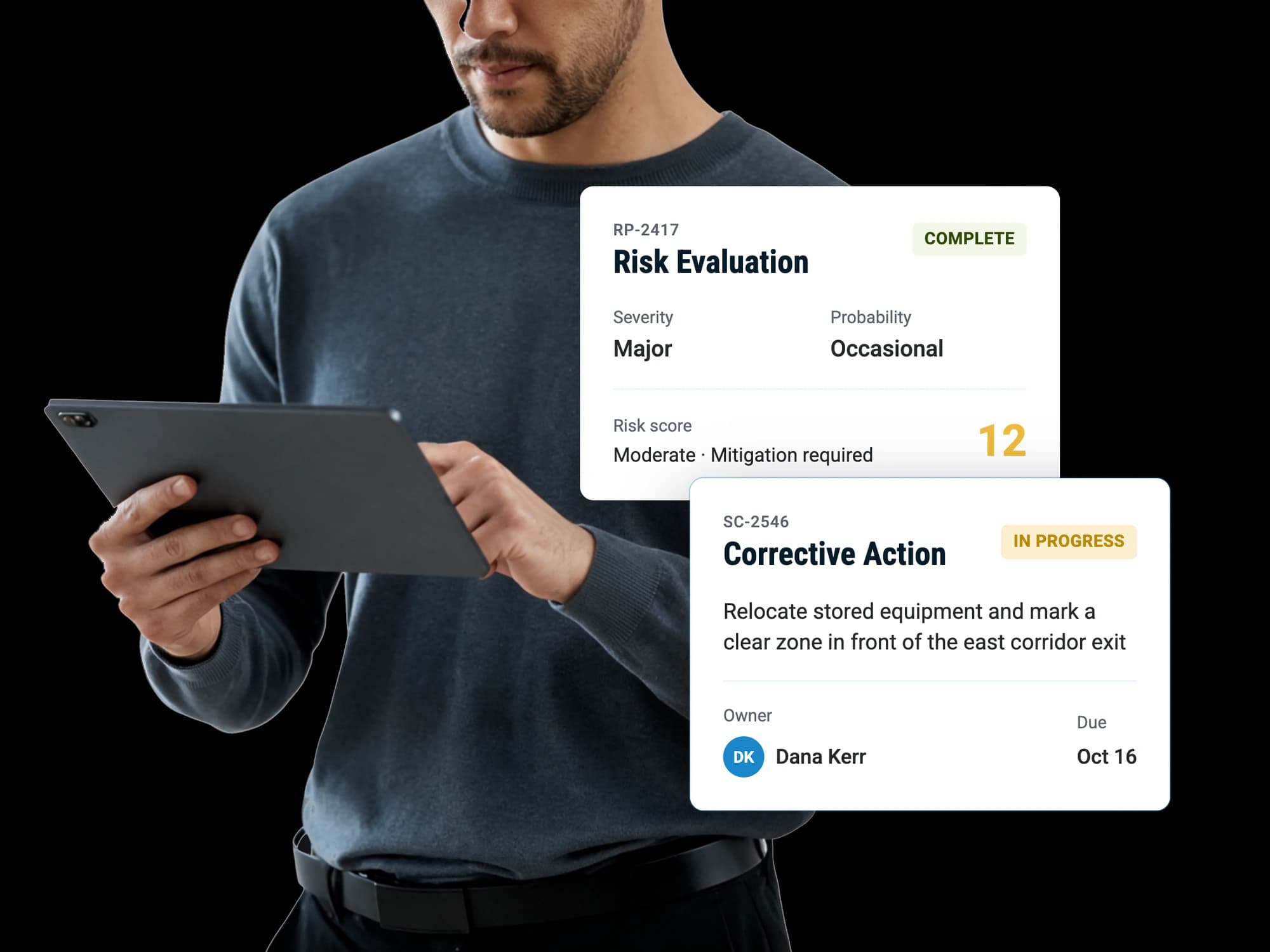
Risk assessment translates hazards into decision-relevant information. By evaluating severity and probability, organizations can prioritize actions and determine whether existing controls are sufficient.
In business aviation operations, this process often supports time-sensitive decisions. A flight crew may use a risk assessment process to evaluate weather, crew readiness, aircraft status, and mission complexity. Maintenance teams may assess the risk of deferring a discrepancy. Managers may evaluate the risk implications of a staffing change or schedule adjustment.
The value of this process lies in consistency. When risk is evaluated using a common framework, decisions are more predictable and defensible, even when different individuals are involved.
Risk controls and documented rationale
An SMS requires organizations to identify and implement risk controls when risk exceeds acceptable levels. These controls may include procedural changes, additional training, equipment upgrades, or operational limitations.
Equally important is documenting the rationale behind decisions. When an organization records why a risk was accepted or mitigated, it creates traceability. This documentation supports internal accountability and external oversight, including audits and regulatory reviews.
Why this matters in business aviation
Business aviation operates across diverse missions, aircraft types, and operating environments. Unlike large airlines, many operators rely on small teams where individuals hold multiple roles. This increases the importance of structured decision-making processes that do not depend on a single person’s experience or availability.
For Part 91 operators, SMS decision-making supports consistency and continuity, especially during personnel changes. For Part 135 operators, it directly supports regulatory expectations around operational control and risk management. For Part 145 repair stations, SMS-informed decisions help manage maintenance risk, human factors, and change management in technical environments.
Understanding how SMS applies differently across Part 91, 135, and 145 operations highlights how decision-making processes are tailored to operational scope while maintaining common principles.
Practical examples of SMS-driven decisions
Flight release and mission acceptance
An SMS-supported flight release decision considers more than basic legality. It integrates operational risk factors, recent hazard trends, and crew feedback. If recent reports indicate fatigue concerns or weather-related incidents on similar routes, leadership can adjust scheduling or impose additional controls.
Maintenance deferrals
Maintenance decisions often involve balancing operational impact with technical risk. An SMS provides a structured way to evaluate deferrals by considering failure consequences, operational exposure, and historical data. This reduces reliance on informal judgment and supports consistent outcomes.
Management of change
Changes to procedures, equipment, or organizational structure introduce new risks. SMS requires these changes to be assessed before implementation. This ensures decisions about change are proactive rather than reactive, reducing the probability of unintended consequences.
Common misunderstandings about SMS and decision-making
One common misunderstanding is that SMS slows down operations by adding bureaucracy. In reality, well-designed SMS processes streamline decisions by clarifying expectations and reducing uncertainty. When people know how risk will be evaluated, decisions are made more efficiently.
Another misunderstanding is that SMS decision-making is reserved for safety managers or executives. In practice, SMS is most effective when decision-making authority and risk awareness are distributed throughout the organization. Frontline personnel play a critical role in identifying hazards and applying controls.
Some organizations also assume that completing forms equates to making better decisions. Documentation supports decision-making, but it does not replace analysis or judgment. The quality of decisions depends on how information is interpreted and acted upon.
What good looks like when SMS supports decisions effectively
When SMS improves decision-making, several characteristics are consistently observed:
-
Decisions are based on documented risk assessments rather than informal assumptions.
-
Similar risks are treated consistently across departments and time periods.
-
Leadership can explain why a decision was made and how risk was considered.
-
Trends and data influence planning, training, and resource allocation.
-
Personnel feel empowered to raise concerns because they see those concerns influence outcomes.
These characteristics align closely with what auditors and regulators look for when evaluating an SMS program, particularly evidence that safety data informs real operational decisions.
The role of technology in supporting SMS decision-making
Technology does not replace judgment, but it can significantly enhance decision-making by improving data quality, accessibility, and analysis. Modern SMS platforms support centralized hazard reporting, standardized risk assessments, and trend monitoring across operations.
For decision-makers, this means information is available when needed and presented in a way that supports analysis. Historical data can be reviewed to understand whether a risk is isolated or systemic. Corrective actions can be tracked to verify effectiveness.
When technology is used appropriately, it reinforces SMS processes rather than driving them. The focus remains on using information to support sound decisions, not on the tool itself.
A forward-looking view of SMS and decision-making
As business aviation operations continue to evolve, the ability to make informed, risk-based decisions will become increasingly important. Regulatory frameworks such as Part 5 and ICAO Annex 19 establish expectations, but the true value of SMS lies in how it shapes organizational behavior.
Organizations that view SMS as a decision-support system rather than a compliance exercise are better positioned to manage complexity, adapt to change, and maintain safe operations over time. In this sense, improved decision-making is not a secondary benefit of SMS. It is the core outcome that enables compliance, resilience, and continuous improvement in business aviation.