· 6 min read
How SMS Encourages Honest Safety Conversations
By Michael Sidler, Founder, RISE

How SMS Encourages Honest Safety Conversations is a practical question many business aviation operators ask when first adopting a Safety Management System in business aviation. At its core, SMS is designed to create conditions where personnel can speak openly about safety concerns without fear of blame, retaliation, or misunderstanding. Honest safety conversations are not a soft cultural goal. They are a functional requirement for identifying hazards, understanding risk, and preventing accidents before they occur.
A Safety Management System in business aviation provides structure, clarity, and consistency for how safety information is shared. Rather than relying on informal conversations or isolated reports, SMS establishes clear expectations for reporting hazards, discussing risk, and acting on safety information. When implemented correctly, it shifts safety discussions from personal judgment to operational learning.
This matters because most safety issues are first observed by frontline personnel. Pilots, mechanics, instructors, and line staff often recognize early warning signs long before they escalate into incidents. SMS works when those observations are captured, discussed, and addressed systematically.
What Does “Honest Safety Conversations” Mean in an SMS Context?
Honest safety conversations refer to open, factual discussions about hazards, errors, near misses, and unsafe conditions without assigning blame or intent. In an SMS framework, these conversations are focused on understanding how and why a condition occurred rather than who caused it.
This approach aligns with FAA 14 CFR Part 5 and ICAO Annex 19 principles that emphasize reporting, analysis, and continuous improvement. The intent is to capture safety data early and use it to manage risk proactively.
Honest conversations do not mean ignoring accountability. Instead, SMS separates acceptable human error from willful violations or reckless behavior. This distinction is essential. Without it, personnel may withhold information out of concern that speaking up will lead to discipline rather than improvement.
Why This Matters in Business Aviation Operations
Business aviation operations often involve small teams, overlapping roles, and informal communication channels. While this can support efficiency, it can also discourage formal reporting. Personnel may hesitate to raise concerns because they do not want to disrupt relationships, question authority, or appear unprofessional.
In Part 91 environments, where SMS may be voluntary, the lack of formal reporting structures can further limit safety discussions. In Part 135, 145, 141, and 139 operations, SMS requirements exist, but the quality of safety conversations still varies widely based on implementation.
A Safety Management System in business aviation provides a shared language for safety. It establishes that reporting concerns is a professional responsibility, not a personal challenge to management or peers.
How SMS Structures Safety Conversations
SMS encourages honest safety conversations by defining clear processes for how safety information flows through the organization.
Key structural elements include:
-
Defined reporting channels that allow personnel to submit safety concerns consistently
-
Documented roles and responsibilities for reviewing and responding to reports
-
Formal risk assessment processes that focus on hazards rather than individuals
-
Feedback loops that show reporters how their input was used
These elements are often introduced when operators learn what is a Safety Management System in business aviation and how it differs from traditional safety programs. SMS replaces informal, personality driven discussions with repeatable, documented processes.
The Role of Safety Policy in Open Communication
Safety Policy sets the foundation for honest conversations. Under Part 5, operators are expected to define safety objectives, roles, and reporting expectations. When the policy clearly states that hazard reporting is encouraged and protected, it reduces uncertainty about speaking up.
Effective safety policy explains:
-
What should be reported
-
How reports are handled
-
How confidentiality is maintained when appropriate
-
How management supports non-punitive reporting
Without this clarity, personnel may assume that reporting creates personal risk. SMS removes that ambiguity by formalizing expectations.
Practical Examples From Real World Operations
Consider a pilot who notices recurring pressure to accept marginal weather due to scheduling constraints. In a weak safety culture, this concern might be discussed informally or not at all. In an SMS environment, the pilot can submit a hazard report that captures the operational context, not just the outcome.
That report can then be reviewed alongside scheduling data, weather trends, and prior reports. The conversation shifts from individual decision making to systemic risk. This is how SMS helps identify patterns that would otherwise remain hidden.
A similar example applies in Part 145 maintenance operations. A technician may observe that task interruptions are increasing error risk during inspections. SMS provides a formal mechanism to document this observation and discuss workload, staffing, or process design without assigning fault.
These examples align closely with guidance discussed in what makes a good hazard report in aviation and how SMS helps identify systemic risk patterns.
Common Misunderstandings That Undermine Honest Conversations
One common mistake is assuming that having a reporting form automatically creates openness. Reporting tools alone do not build trust. Personnel watch how reports are handled, how feedback is provided, and whether changes follow.
Another misunderstanding is treating SMS discussions as compliance exercises. When safety conversations feel performative or audit driven, participation declines. Personnel may submit minimal information or avoid reporting altogether.
Some operators also struggle to separate safety conversations from disciplinary processes. If personnel see safety reports used to support corrective action against individuals, trust erodes quickly.
These issues often arise when SMS is treated as a documentation requirement rather than an operational system, a distinction explored in safety management system vs traditional safety programs.
What Good Looks Like When SMS Is Working
When SMS encourages honest safety conversations effectively, several indicators are usually present.
Reports increase initially, especially near miss and hazard reports. This reflects improved visibility, not declining performance. Discussions during safety meetings focus on trends, contributing factors, and operational context.
Management responses are timely and transparent. Even when no immediate corrective action is required, feedback explains why and documents the decision.
Personnel across departments use similar language when discussing risk. This shared understanding reduces defensiveness and improves collaboration.
Auditors and regulators often recognize these traits during evaluations, as described in what auditors look for in an SMS program.
Differences Across Part 91, 135, and 145 Operations
In Part 91 operations, SMS adoption is often voluntary. Honest safety conversations depend heavily on leadership commitment. Without regulatory pressure, management behavior sets the tone.
Part 135 operators are required to implement SMS, but size and complexity vary. Smaller operators may rely on cross functional roles, making clarity and consistency even more important.
Part 145 repair stations often face production pressure and time constraints. SMS helps create space for safety discussions by formalizing reporting and review processes that might otherwise be informal or overlooked.
Understanding how SMS applies differently to Part 91, Part 135, and Part 145 operators helps tailor communication approaches without compromising core principles.
How Technology Supports Honest Safety Conversations
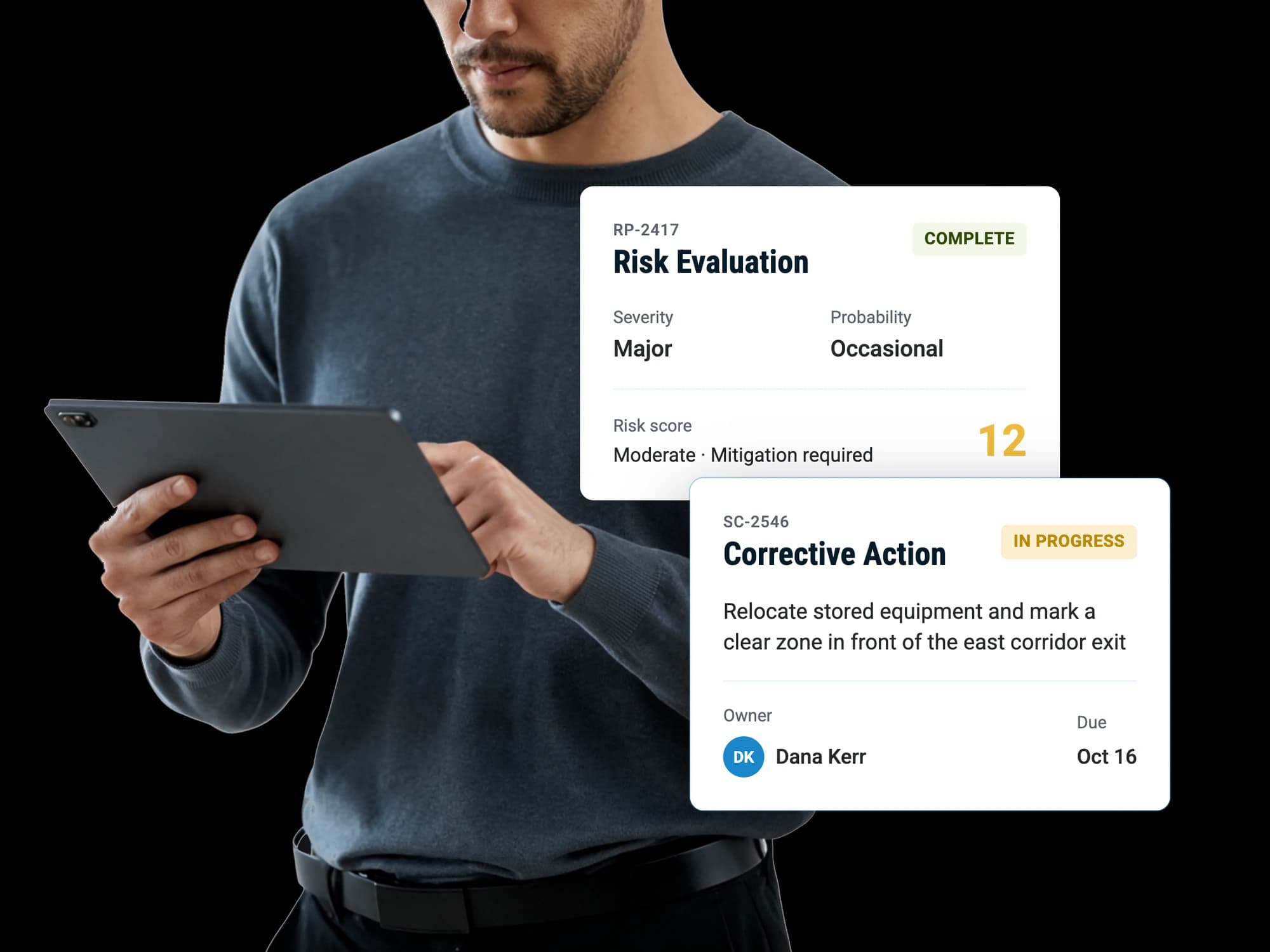
Modern SMS platforms support honest safety conversations by lowering barriers to reporting and improving visibility. Digital reporting tools make it easier to capture concerns in real time and attach relevant context.
Centralized data allows safety managers to identify trends and share insights without exposing individuals. Automated workflows help ensure reports are reviewed and addressed consistently.
Technology does not replace leadership or culture. It supports them by reinforcing structure, accountability, and transparency across the organization.
Looking Ahead
Honest safety conversations are not a byproduct of personality or goodwill. They are the result of deliberate system design. A Safety Management System in business aviation creates the conditions where personnel can speak openly, be heard, and see their input lead to improvement.
As SMS adoption continues to mature across the industry, operators that invest in clear processes, consistent follow through, and structured communication will gain better insight into their operational risk. Over time, this leads to stronger safety performance and more resilient operations.