· 7 min read
What Safety Culture Really Means in Business Aviation
By Michael Sidler, Founder, RISE

What safety culture really means in business aviation is often misunderstood. It is not a slogan, a training module, or a statement in a policy manual. In practical terms, safety culture describes how safety decisions are actually made day to day across an organization, especially when operational pressure, time constraints, or commercial considerations are present. It reflects whether safety principles are consistently applied when no one is watching, not just when audits or inspections are scheduled.
In business aviation, safety culture shows up in routine choices. It is visible in how hazards are reported, how deviations are addressed, and how leadership responds to uncomfortable information. A strong safety culture supports the objectives of a Safety Management System in business aviation by ensuring that policies and processes are used as intended, not treated as administrative requirements. A weak safety culture undermines even a well designed SMS by discouraging reporting, normalizing risk, or bypassing established controls.
This article explains what safety culture really means in business aviation, how it fits within the regulatory framework of FAA 14 CFR Part 5 and ICAO Annex 19, and how operators can recognize whether their safety culture is supporting or weakening their SMS.
What Is Safety Culture in an Aviation SMS Context
Safety culture refers to the shared values, beliefs, and behaviors that influence how an organization manages safety. Within a Safety Management System in business aviation, safety culture determines whether SMS processes are trusted, used, and sustained over time.
Under Part 5, operators are required to establish policies, processes, and accountability for managing safety risk. The regulation does not use the phrase safety culture directly, but it assumes its existence. Requirements related to reporting systems, non punitive treatment, management commitment, and continuous improvement only function when the underlying culture supports them.
ICAO Annex 19 explicitly recognizes safety culture as a foundational concept. It links organizational culture to the effectiveness of hazard identification, risk assessment, and safety assurance activities. In this context, safety culture is not separate from SMS. It is the environment in which SMS either works or fails.
Why Safety Culture Matters in Business Aviation
Business aviation presents unique challenges that make safety culture especially important. Operations are often small, decentralized, and highly customized. Decision making authority may be concentrated in a few individuals who wear multiple hats. This can make formal systems feel secondary to experience or judgment.
In Part 91 operations, SMS adoption is often voluntary, which increases the influence of culture. Without regulatory pressure, the effectiveness of an SMS depends almost entirely on leadership intent and daily behavior. In Part 135 and Part 145 operations, SMS requirements are mandatory, but compliance alone does not ensure safety performance. A compliant SMS with a weak safety culture may meet documentation requirements while failing to identify or control real operational risk.
Business aviation also operates under variable mission profiles, tight schedules, and customer expectations that can create pressure to accept risk. Safety culture determines how those pressures are managed. It influences whether crews feel supported when declining a flight, whether maintenance personnel raise concerns about schedule driven work, and whether safety staff can escalate issues without resistance.
How Safety Culture Shows Up in Daily Operations
Safety culture becomes visible through routine interactions, not formal statements. One of the clearest indicators is how hazard reporting is treated. In organizations with a healthy safety culture, reports are encouraged, reviewed promptly, and used to improve systems. Reporters receive feedback, and trends are discussed openly. In weaker cultures, reports are ignored, delayed, or used to assign blame.
Another indicator is how deviations and errors are handled. A positive safety culture distinguishes between acceptable human error, at risk behavior, and reckless behavior. It focuses on understanding why errors occurred rather than who made them. This approach supports learning and aligns with Part 5 expectations for safety assurance.
Leadership behavior is also critical. When managers bypass procedures to meet operational goals, they send a clear message that safety policies are optional. When leaders consistently follow SMS processes, even when inconvenient, they reinforce the credibility of the system.
These behaviors are often discussed in guidance on what auditors expect to see in an SMS program, where auditors look beyond documentation to assess whether processes are actually being used.
Common Misunderstandings About Safety Culture
One common misunderstanding is that safety culture is about attitude rather than structure. While attitudes matter, safety culture is shaped by systems. Reporting tools, investigation processes, and management review mechanisms all influence behavior. Expecting culture to improve without addressing system design is unrealistic.
Another misunderstanding is that safety culture is solely the responsibility of frontline personnel. In reality, safety culture is driven primarily by leadership decisions. Frontline behavior often reflects the incentives and constraints created by management.
Some operators also assume that a lack of reported hazards indicates a strong safety culture. In most cases, the opposite is true. Low reporting volumes often signal fear of consequences, lack of trust, or a belief that reporting does not lead to meaningful change. Guidance on what makes a good hazard report in aviation often highlights the need for a supportive reporting environment.
How Safety Culture Supports the Four Pillars of SMS
Safety culture influences each pillar of a Safety Management System in business aviation.
In Safety Policy, culture determines whether policies are taken seriously or treated as formalities. Clear accountability and visible leadership commitment are cultural indicators.
In Safety Risk Management, culture affects the quality of hazard identification and risk assessment. Open reporting and honest discussions enable more accurate risk evaluations.
In Safety Assurance, culture drives whether audits, investigations, and data analysis are used to improve operations or simply to demonstrate compliance. Organizations with strong cultures use safety data to identify systemic risk patterns rather than to close findings quickly.
In Safety Promotion, culture shapes how training and communication are received. When safety messages align with observed behavior, they reinforce learning. When they conflict, they lose credibility. This relationship is often explored in explanations of the four pillars of SMS for business aviation.
Differences Across Part 91, Part 135, and Part 145 Operations
While the principles of safety culture are consistent, their application varies by operational context.
Part 91 operators often rely heavily on informal communication and personal relationships. This can support strong safety cultures when trust is high, but it can also mask risk when concerns are handled privately rather than systematically.
Part 135 operators operate under stricter regulatory oversight. Safety culture in this environment influences how well SMS processes scale across crews, bases, and schedules. Consistency becomes a key challenge.
Part 145 repair stations face different cultural pressures related to production goals, staffing, and coordination with operators. Safety culture in maintenance organizations affects how discrepancies are documented, how shift handovers are managed, and how quality assurance functions independently of production.
Understanding how SMS applies differently to Part 91, Part 135, and Part 145 operators helps clarify how safety culture must adapt without losing its core principles.
What Good Safety Culture Looks Like in Practice
A strong safety culture in business aviation is observable. Reporting rates are appropriate for the size and complexity of the operation. Safety meetings focus on learning rather than blame. Corrective actions address root causes and are tracked to completion.
Leadership regularly reviews safety performance data and is willing to adjust operational practices based on findings. Safety staff have access to decision makers and are involved early in changes that affect risk.
Importantly, personnel trust the system. They believe that reporting concerns will lead to constructive outcomes. This trust is built over time through consistent actions, not statements.
How Technology Supports Safety Culture
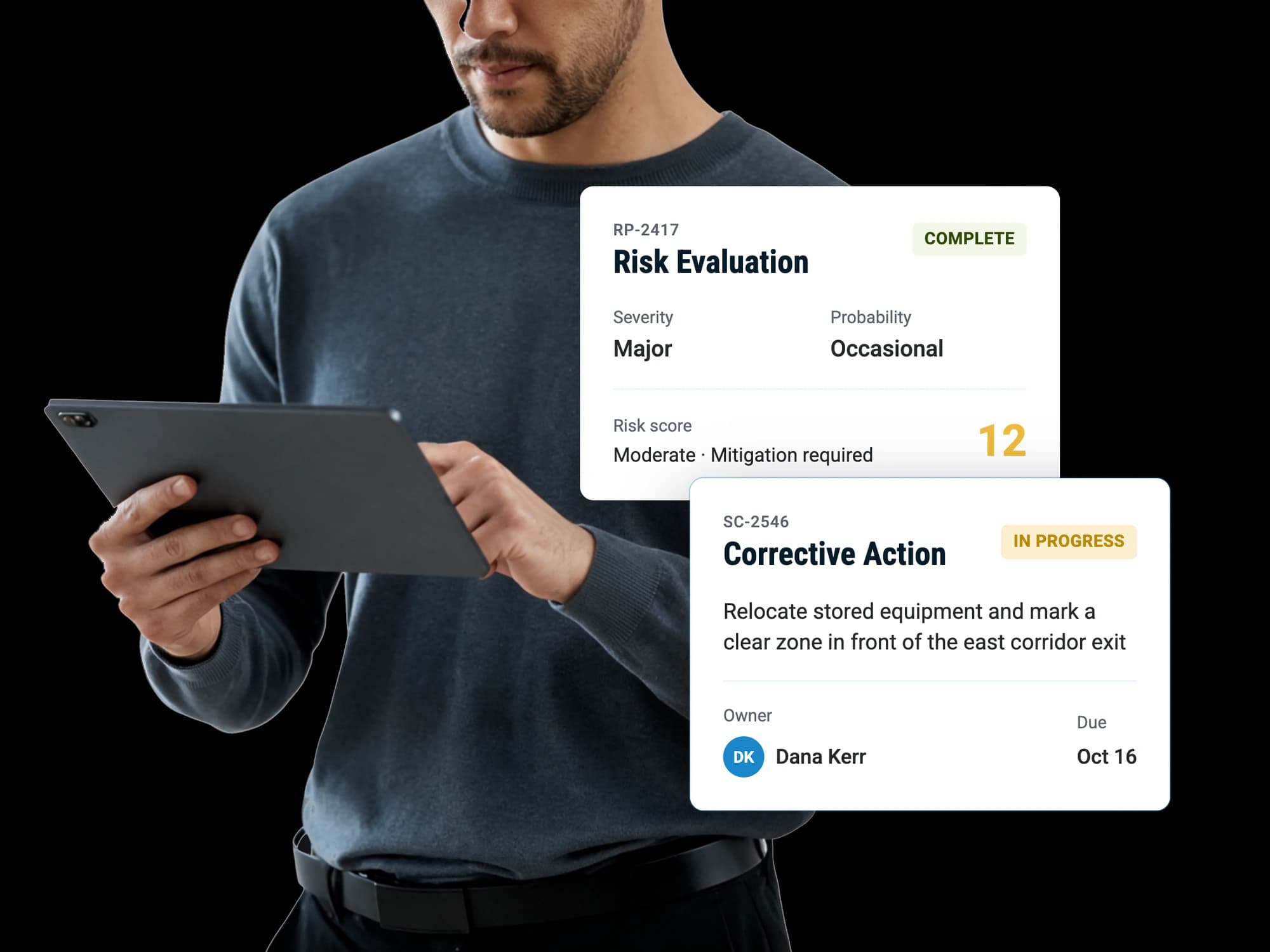
Technology does not create safety culture, but it can support it. Modern SMS platforms make reporting easier, improve data visibility, and reduce administrative burden. When reporting tools are accessible and feedback is timely, participation increases.
Data aggregation and trend analysis help organizations move from reactive responses to proactive risk management. When personnel see that reported information leads to tangible improvements, trust in the system grows.
Technology also supports consistency across distributed operations, which is particularly important in business aviation environments with multiple bases or contractors. However, technology must align with existing processes and be supported by leadership to have a positive cultural impact.
A Forward Looking Perspective on Safety Culture
Safety culture in business aviation is not static. It evolves with leadership changes, operational growth, and external pressures. Maintaining a strong safety culture requires ongoing attention, particularly as SMS processes mature.
As regulatory expectations and industry standards continue to emphasize data driven safety management, the role of culture will become more visible. Organizations that invest in aligning behavior, systems, and leadership intent will be better positioned to manage risk effectively.
Understanding what safety culture really means in business aviation helps operators move beyond compliance toward meaningful safety performance. When culture and SMS work together, safety becomes an integrated part of how the organization operates.