· 7 min read
What a Safety Manager Is Responsible for in Business Aviation
By Michael Sidler, Founder, RISE

What a Safety Manager is responsible for in business aviation is often misunderstood. The role is not limited to writing manuals, managing reports, or preparing for audits. In a properly functioning Safety Management System in business aviation, the Safety Manager is responsible for designing, maintaining, and continuously improving the processes that allow safety risks to be identified, assessed, controlled, and monitored across the operation.
Under FAA 14 CFR Part 5 and aligned with ICAO Annex 19 principles, the Safety Manager is the focal point for the SMS. This individual ensures the system operates as intended, that safety data flows to the right decision makers, and that safety risk management is integrated into everyday operations. The Safety Manager supports leadership, but does not replace leadership accountability for safety.
In business aviation environments that are often lean and fast-moving, the Safety Manager’s responsibilities must be clearly defined to avoid confusion, gaps, or overreliance on a single individual. Understanding these responsibilities is essential for Safety Managers themselves, Accountable Executives, and anyone evaluating whether their SMS is functioning effectively.
What Is the Role of a Safety Manager in an SMS?
A Safety Manager is the person designated by the organization to manage the day-to-day operation of the Safety Management System. This role exists to ensure that safety processes are established, followed, measured, and improved over time.
In FAA Part 5 terms, the Safety Manager supports the Accountable Executive by administering the SMS framework. This includes hazard identification, risk assessment, safety assurance activities, safety promotion, and documentation control. ICAO Annex 19 similarly describes the Safety Manager as the individual responsible for the implementation and maintenance of the SMS, with authority to act independently of operational pressures.
The Safety Manager does not own safety outcomes alone. The role is one of coordination, facilitation, and oversight. Operational managers remain responsible for safety performance within their areas, while the Safety Manager ensures the system captures, evaluates, and responds to safety information consistently.
This distinction is foundational and is often misunderstood, particularly in smaller business aviation operations.
Why the Safety Manager Role Matters in Business Aviation
Business aviation operations face unique challenges compared to large airline environments. Smaller teams, multiple roles per person, varying mission profiles, and limited administrative resources all increase the risk that safety responsibilities become informal or fragmented.
Without a clearly defined Safety Manager role, Safety Management Systems in business aviation tend to drift into one of two failure modes. Either the SMS becomes a paperwork exercise with little operational relevance, or safety oversight becomes entirely reactive, driven by events rather than data.
The Safety Manager provides structure and continuity. This role ensures that safety activities continue regardless of personnel changes, operational tempo, or audit cycles. The Safety Manager also serves as the central point of contact for regulators, auditors, and SMS consultants, which is particularly important in Part 135, Part 145, and Part 139 environments.
A well-defined Safety Manager role helps ensure that safety decisions are made using evidence rather than assumptions.
Core Responsibilities of a Safety Manager
Managing Hazard Identification and Reporting
One of the primary responsibilities of the Safety Manager is to ensure the organization has an effective hazard identification process. This includes establishing reporting channels, maintaining confidentiality where appropriate, and ensuring personnel understand how and when to report hazards.
The Safety Manager does not investigate every report personally. Instead, they ensure reports are reviewed, categorized, and routed to the appropriate subject matter experts. They also monitor reporting trends to identify systemic issues rather than isolated events.
This responsibility directly supports the principles described in discussions of what makes a good hazard report in aviation and how hazard data feeds broader risk management activities.
Facilitating Safety Risk Management
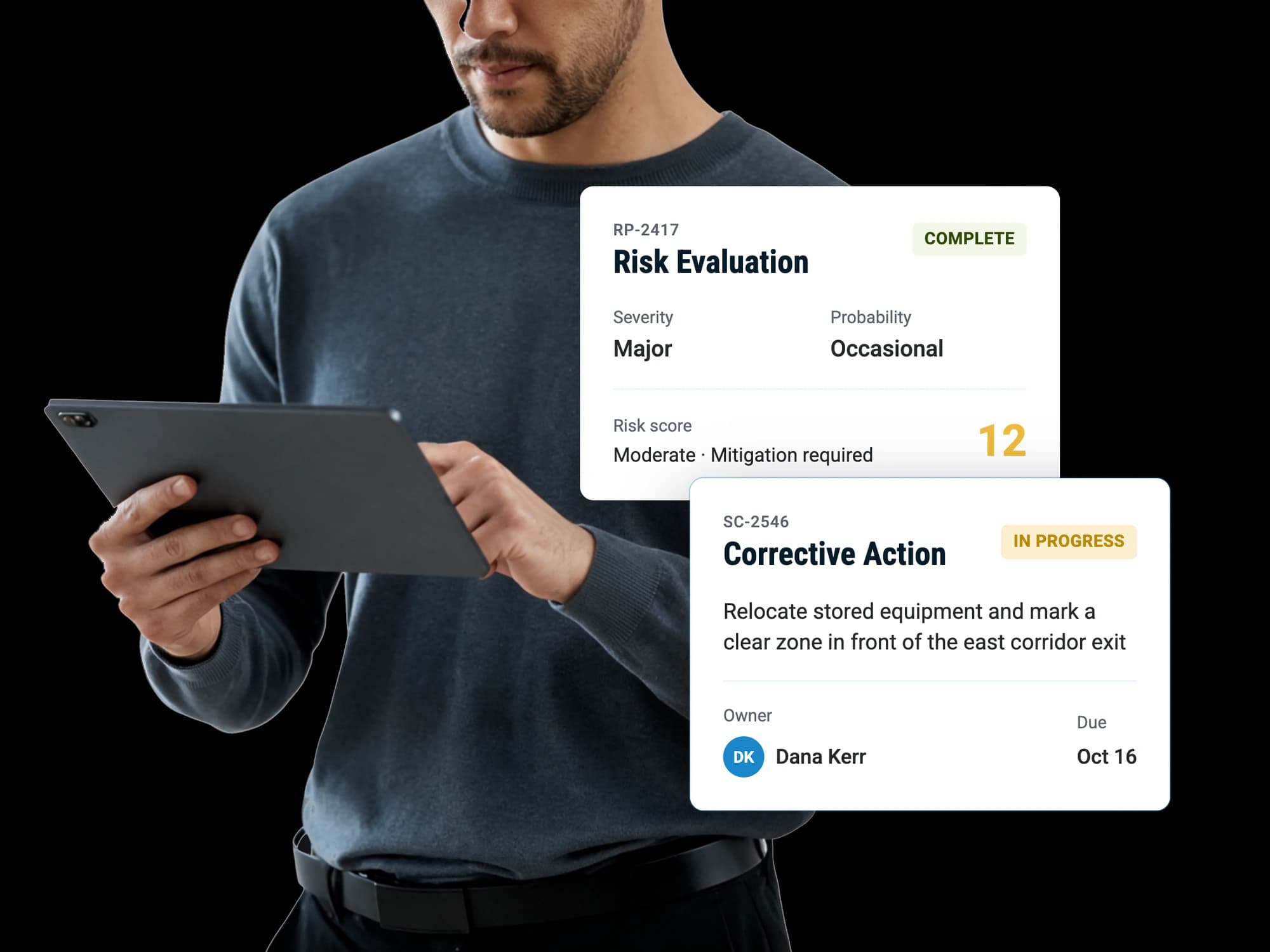
Safety risk management is a structured process for analyzing identified hazards and determining appropriate risk controls. The Safety Manager ensures that risk assessments are conducted consistently and using defined criteria.
In practice, this means:
-
Ensuring hazards are evaluated for severity and probability
-
Verifying that risk acceptance authority is applied correctly
-
Documenting risk decisions and associated mitigations
-
Tracking residual risk over time
The Safety Manager facilitates this process but does not unilaterally accept risk on behalf of the organization unless specifically authorized. In most operations, risk acceptance authority remains with operational leadership or the Accountable Executive.
Overseeing Safety Assurance Activities
Safety assurance focuses on verifying that risk controls are effective and that the SMS is functioning as intended. The Safety Manager is responsible for coordinating safety assurance activities such as internal audits, evaluations, performance monitoring, and management reviews.
This includes tracking corrective actions, monitoring safety performance indicators, and identifying emerging trends. The Safety Manager ensures that safety assurance findings are communicated to leadership and that follow-up actions are completed.
This responsibility aligns closely with what auditors look for in an SMS program, particularly evidence that the SMS is actively monitored rather than static.
Supporting Safety Promotion and Training
Safety promotion ensures that personnel understand their roles within the SMS and remain engaged over time. The Safety Manager coordinates safety training, communication, and promotional activities.
This does not require constant formal training sessions. In business aviation, safety promotion often includes safety briefings, newsletters, lessons learned, and feedback loops that show personnel their reports lead to action.
The Safety Manager ensures these efforts are documented and aligned with SMS objectives, without turning safety promotion into a compliance-only exercise.
Maintaining SMS Documentation and Records
Another key responsibility is maintaining accurate and current SMS documentation. This includes manuals, procedures, forms, risk registers, corrective action records, and safety meeting minutes.
The Safety Manager ensures documentation reflects how the operation actually functions, not how it is assumed to function. This responsibility becomes increasingly important during organizational changes, which are common in business aviation environments.
How Responsibilities Vary by Operating Rule
Part 91 Operations
For Part 91 operators, SMS is not universally mandated, but many choose to implement one due to customer expectations, insurance considerations, or safety culture goals. In these environments, the Safety Manager role is often part-time or combined with another position.
Responsibilities remain largely the same, but the scale and formality may be reduced. The key risk in Part 91 operations is underestimating the effort required to maintain an effective SMS over time.
Part 135 Operators
Part 135 operators face regulatory SMS requirements with defined timelines and oversight. The Safety Manager role in these organizations is more formal and often subject to regulatory review.
Responsibilities include ensuring compliance with FAA-approved SMS implementation plans, managing required documentation, and supporting regulatory inspections. The Safety Manager must balance operational demands with regulatory expectations while maintaining SMS integrity.
This distinction is often discussed in explanations of how SMS applies differently to Part 91, Part 135, and Part 145 operators.
Part 145 Repair Stations
In Part 145 environments, the Safety Manager must coordinate safety processes across maintenance activities, human factors, and quality systems. This role often overlaps with quality assurance, but the responsibilities remain distinct.
The Safety Manager focuses on hazard identification, risk management, and safety performance, while quality focuses on compliance with technical standards. Confusing these roles is a common mistake.
Common Misunderstandings About the Safety Manager Role
A frequent misconception is that the Safety Manager is responsible for safety outcomes alone. This leads to unrealistic expectations and undermines leadership accountability.
Another misunderstanding is equating the Safety Manager role with administrative tasks. While documentation is part of the role, the primary responsibility is ensuring safety processes function effectively.
Finally, some organizations assume that assigning a Safety Manager automatically creates an SMS. Without leadership support, defined authority, and active participation from operational managers, the Safety Manager cannot succeed.
What Good Looks Like in Practice
In a mature Safety Management System in business aviation, the Safety Manager operates with clear authority, defined responsibilities, and access to leadership.
Hazard reports are reviewed promptly, risk decisions are documented and traceable, and safety performance trends are discussed regularly at the management level. The Safety Manager is seen as a facilitator and advisor, not a gatekeeper or obstacle.
When implemented correctly, the Safety Manager role enables proactive risk management rather than reactive compliance.
How Technology Supports the Safety Manager Role
Modern SMS platforms can significantly support the Safety Manager by centralizing data, standardizing workflows, and improving visibility into safety trends.
Technology can automate reporting intake, risk tracking, corrective action monitoring, and performance dashboards. This allows the Safety Manager to focus on analysis and coordination rather than manual administration.
However, technology does not replace the need for sound judgment, leadership engagement, and a clear understanding of SMS principles. Tools support the system, but people remain responsible for decisions.
Looking Ahead
As business aviation operations continue to evolve, the Safety Manager role will become increasingly important. Regulatory expectations, customer requirements, and operational complexity all demand a structured approach to safety.
Understanding what a Safety Manager is responsible for in business aviation helps organizations set realistic expectations, assign appropriate authority, and build Safety Management Systems that are sustainable and effective over time.