· 6 min read
The Rise of the Fractional Safety Manager in Aviation
By Michael Sidler, Founder, RISE

The rise of the fractional safety manager in aviation reflects a practical response to how Safety Management Systems in business aviation are being implemented today. As SMS expectations expand across Part 91, 135, 145, 141, and 139 operations, many operators find themselves required to manage formal safety processes without the scale or budget to support a full-time, in-house safety professional. A fractional safety manager fills this gap by providing structured SMS oversight, regulatory knowledge, and operational support on a part-time or contract basis.
In business aviation, this role has grown alongside the maturation of SMS itself. Operators are no longer asking whether they need an SMS. They are asking how to manage one effectively with limited resources. The fractional safety manager has emerged as one answer, particularly for smaller flight departments, growing charter operators, repair stations, and training organizations that need consistency, expertise, and independence without permanent staffing.
At its core, the fractional safety manager model is not new. Aviation has long relied on designated roles, consultants, and shared services to meet regulatory and operational needs. What is new is the formalization of SMS requirements and the expectation that safety oversight be continuous, data-driven, and documented. That shift has made ad hoc or informal safety roles increasingly difficult to sustain.
What Is a Fractional Safety Manager?
A fractional safety manager is an experienced aviation safety professional who assumes responsibility for all or part of an operator’s Safety Management System on a part-time or contract basis. The scope of responsibility is defined by agreement and may include program design, ongoing administration, compliance monitoring, safety assurance activities, and support during audits or inspections.
Unlike a traditional consultant who may focus on setup or one-time deliverables, a fractional safety manager is embedded in the operator’s ongoing safety processes. They typically participate in safety meetings, review hazard reports, manage risk assessments, track corrective actions, and provide regular reporting to management. In many cases, they act as the named safety manager or designated SMS point of contact.
Fractional safety managers are often used where the workload justifies professional oversight but does not require a full-time position. This is common in single-aircraft or small-fleet Part 91 departments, early-stage Part 135 certificate holders, Part 145 repair stations with limited staff, and flight training organizations building SMS maturity over time.
Why Fractional Safety Management Matters in Business Aviation
Business aviation presents unique challenges for SMS implementation. Operations are diverse, staffing is lean, and safety responsibilities are frequently layered onto existing management roles. In many cases, the individual responsible for safety also serves as a chief pilot, director of operations, or maintenance manager.
While this approach may be workable initially, it often leads to gaps as the SMS grows. Reporting volume increases. Data analysis becomes more complex. Assurance activities such as audits, trend monitoring, and management review require sustained attention. Independence can also become an issue when the same individual is responsible for both operational decision-making and safety oversight.
The fractional safety manager addresses these challenges by providing dedicated focus and separation of duties. This model aligns with the intent behind Safety Management Systems in business aviation, where proactive hazard identification, risk management, and continuous improvement depend on consistency and objectivity rather than availability.
For operators transitioning from informal safety programs to formal SMS structures, the fractional approach also reduces risk. It allows organizations to meet regulatory and industry expectations without overcommitting resources before the SMS is fully established.
How Fractional Safety Managers Support SMS Requirements
Under FAA 14 CFR Part 5, operators are expected to establish and maintain processes for hazard identification, risk assessment, safety assurance, safety promotion, and management accountability. While the regulation does not prescribe staffing models, it does assume that these processes are actively managed.
A fractional safety manager typically supports these requirements by:
-
Maintaining the hazard reporting system and ensuring reports are reviewed and addressed in a timely manner
-
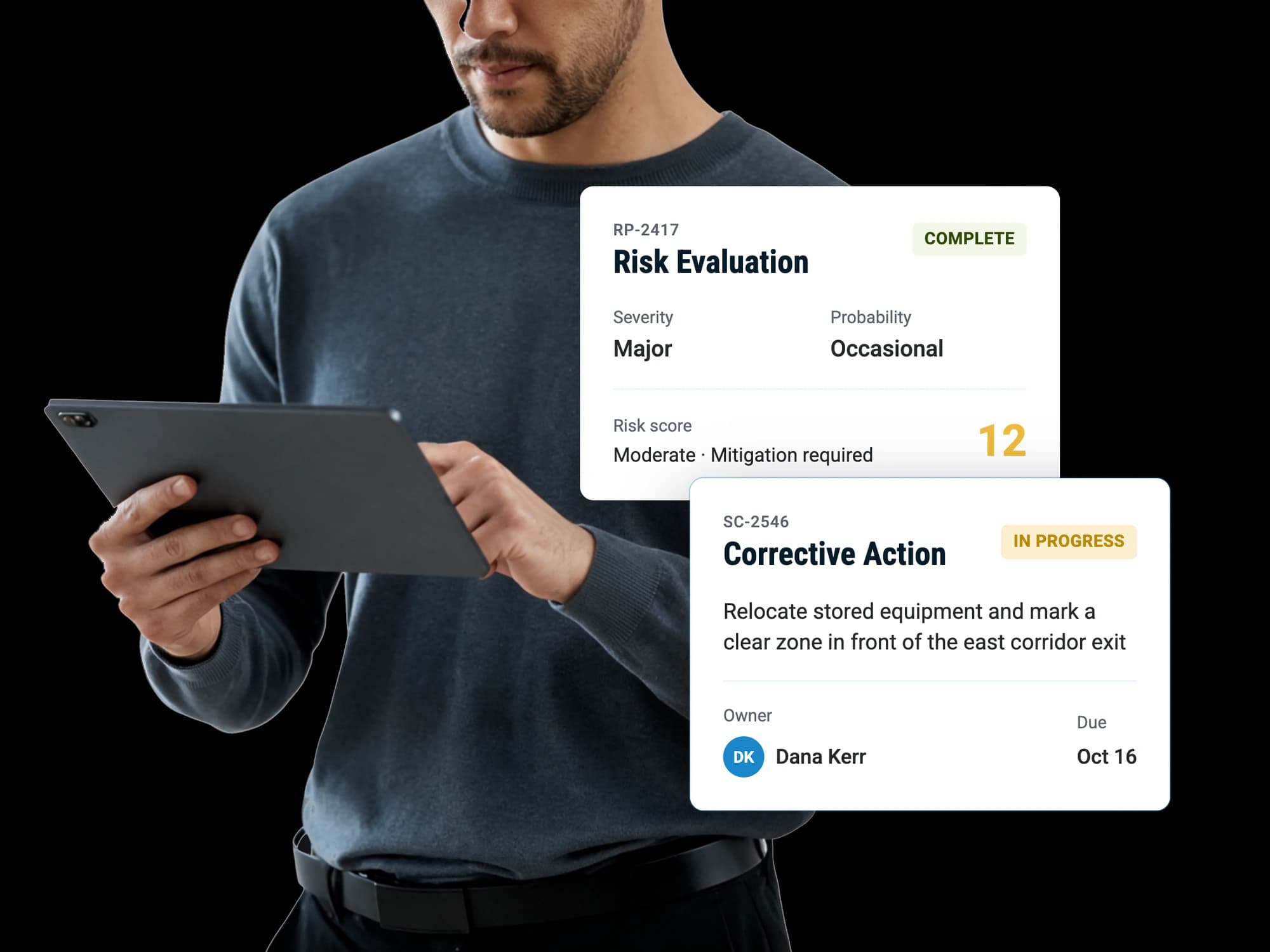
Facilitating risk assessments and documenting risk acceptance decisions
-
Tracking corrective actions and monitoring effectiveness
-
Supporting internal audits, evaluations, and management reviews
-
Maintaining SMS documentation and records
-
Providing safety performance summaries to accountable executives
In Part 135 operations, where SMS is required, this role often becomes central to demonstrating compliance during FAA oversight. In Part 91 environments, the focus is usually on alignment with industry standards, insurance expectations, and client requirements. Part 145 repair stations and Part 141 training organizations may see the fractional safety manager as a bridge between regulatory expectations and operational realities.
Operators evaluating this model often reference guidance found in discussions around what a Safety Management System in business aviation actually requires and how SMS applies differently to Part 91, Part 135, and Part 145 operators.
How This Works in Real-World Operations
In practice, the fractional safety manager model varies widely based on operator size and complexity. A small Part 91 flight department may engage a fractional safety manager for a few hours per month to review reports, update documentation, and provide quarterly briefings. A growing Part 135 operator may require weekly involvement, participation in safety meetings, and ongoing coordination with operations and maintenance.
For a Part 145 repair station, the fractional safety manager may focus heavily on human factors reporting, internal audits, and corrective action tracking. In training environments, the emphasis often shifts toward safety promotion, instructor reporting, and trend analysis related to student operations.
What these arrangements have in common is continuity. The fractional safety manager is not simply delivering a manual or checklist. They are maintaining the system over time. This continuity is critical to demonstrating that SMS processes are active and effective rather than theoretical.
Common Misunderstandings About Fractional Safety Managers
One common misunderstanding is that a fractional safety manager replaces internal accountability. In reality, accountability remains with the operator and its leadership. The fractional safety manager supports the system but does not assume operational authority or management responsibility unless explicitly defined.
Another misconception is that fractional safety management is a temporary shortcut. While some operators use the model during startup or transition periods, many retain fractional support long term. For smaller organizations, this can be a sustainable approach that balances expertise with cost control.
There is also confusion between consultants and fractional managers. Consultants often deliver discrete projects such as SMS implementation or audit preparation. Fractional safety managers are involved in day-to-day SMS administration and long-term oversight.
Finally, some operators assume that fractional safety management limits SMS maturity. In practice, maturity depends on leadership engagement, data quality, and follow-through, not employment status. A well-integrated fractional safety manager can support a highly effective SMS when roles and expectations are clear.
What Good Fractional Safety Management Looks Like
When implemented correctly, fractional safety management is structured, transparent, and integrated into normal operations. Roles and responsibilities are clearly documented. Communication channels are established. The safety manager has access to necessary data, personnel, and decision-makers.
Good implementations show evidence of:
-
Regular safety reviews and documented management involvement
-
Timely closure of hazard reports and corrective actions
-
Meaningful safety performance indicators and trend analysis
-
Clear linkage between reported hazards and operational changes
Auditors and regulators are less concerned with whether a safety manager is full time or fractional than with whether the SMS functions as intended. This perspective aligns closely with guidance on what auditors look for in an SMS program.
How Technology Supports Fractional Safety Management
Modern SMS platforms play a significant role in enabling the fractional safety manager model. Centralized systems allow safety professionals to review reports, manage risk assessments, and monitor trends without being physically present. Shared dashboards, automated notifications, and standardized workflows reduce administrative burden and improve visibility.
For fractional managers supporting multiple operators, technology also helps maintain consistency while respecting organizational differences. Secure access controls, role-based permissions, and configurable processes allow each SMS to remain tailored while following common best practices.
The use of SMS software does not eliminate the need for professional judgment, but it does support scalability. This is particularly important as reporting volumes increase and operators seek to move from reactive compliance to proactive risk management.
Looking Ahead
The rise of the fractional safety manager in aviation reflects broader changes in how safety oversight is delivered. As Safety Management Systems in business aviation continue to evolve, flexibility in staffing models will remain important. Fractional safety management offers a way to align regulatory intent, operational reality, and resource constraints.
For many operators, this approach provides a practical path to sustainable SMS oversight. As expectations around data, assurance, and accountability continue to grow, the fractional safety manager is likely to remain a key part of the aviation safety landscape.