· 4 min read
SMS Key Element No. 2: Safety Policy and Objectives
By Michael Sidler, Founder, RISE

A Safety Policy Isn’t Just Paperwork. It’s Your Compass.
A Safety Management System (SMS) without a clear, living safety policy is like flying without a compass. You may stay airborne, but you're not moving with intention. The safety policy is what gives your SMS purpose and direction. It’s more than a document for audits or regulatory checkboxes, it’s a public statement of your organization’s values and priorities. And when it’s woven into the way your team operates, it becomes the anchor for every safety decision made across the company.
"The power of a safety policy isn’t just in what it says, it’s in how it’s used."
The power of a safety policy isn’t just in what it says, it’s in how it’s used. When a policy is actively referenced, reinforced, and aligned with real goals, it becomes the foundation for a proactive safety culture. It guides decision-making on the flight line, in the hangar, and in the boardroom. But without that visibility, even the most thoughtful safety policies fade into irrelevance.
Why This Element Sets the Course
An effective safety policy turns abstract values into operational direction. It answers key questions: How do we operate? What do we prioritize? What does success actually look like here?
More importantly, it lays the groundwork for setting measurable, realistic safety objectives. Those objectives aren’t pulled from thin air, they’re built on the commitments outlined in the policy. When the two are connected, the SMS gains both clarity and momentum.
But that connection only happens when the policy is present in the day-to-day work of your team. If it’s buried in a manual or posted on a wall without reinforcement, the message quickly becomes background noise. A strong policy is one that people can point to in real decisions, and one that helps everyone understand why certain actions or standards matter.
When Safety Policy and Objectives Fall Flat
It’s common to see safety policies that check the compliance box but fail to make an impact. They may be well-written, but they exist in isolation, unseen and unused after initial rollout. In those cases, objectives often suffer the same fate. They either become too vague to drive action (“improve safety”), or too narrow to reflect the complexity of operational risk (“reduce runway incursions by 10%”).
Without real connection to current hazards, trends, or behaviors, these objectives drift out of relevance. And when teams stop engaging with the goals, the policy that supports them begins to fade as well. Over time, the SMS loses its grip, not because people don’t care about safety, but because the guiding framework no longer feels useful or applicable.
"A strong safety policy isn’t theoretical, it’s reflected in the way your team works."
What It Looks Like When It Works
A strong safety policy isn’t theoretical, it’s reflected in the way your team works.
You’ll see it in how new employees are trained, not just on what the policy says, but how it shows up in actual scenarios they’ll face. You’ll see it in how leaders frame decisions, reference priorities, and respond to reports. You’ll see it in quarterly reviews, where objectives tied to your real risks are revisited and recalibrated, using actual data on reporting rates, mitigation timelines, training participation, and audit results.
In these environments, the policy doesn’t need to be constantly reintroduced. It’s already embedded in the way people think, speak, and act. It influences behavior. It sets expectations. And it creates accountability.
Making Policy Part of Daily Operations
For your policy and objectives to hold long-term value, they need to be reinforced across the operation.
This doesn’t require a huge transformation, it just takes consistent alignment. When safety objectives are built into onboarding, reinforced through training, reviewed in team planning sessions, and referenced in performance conversations, they become part of the fabric of how your team works.
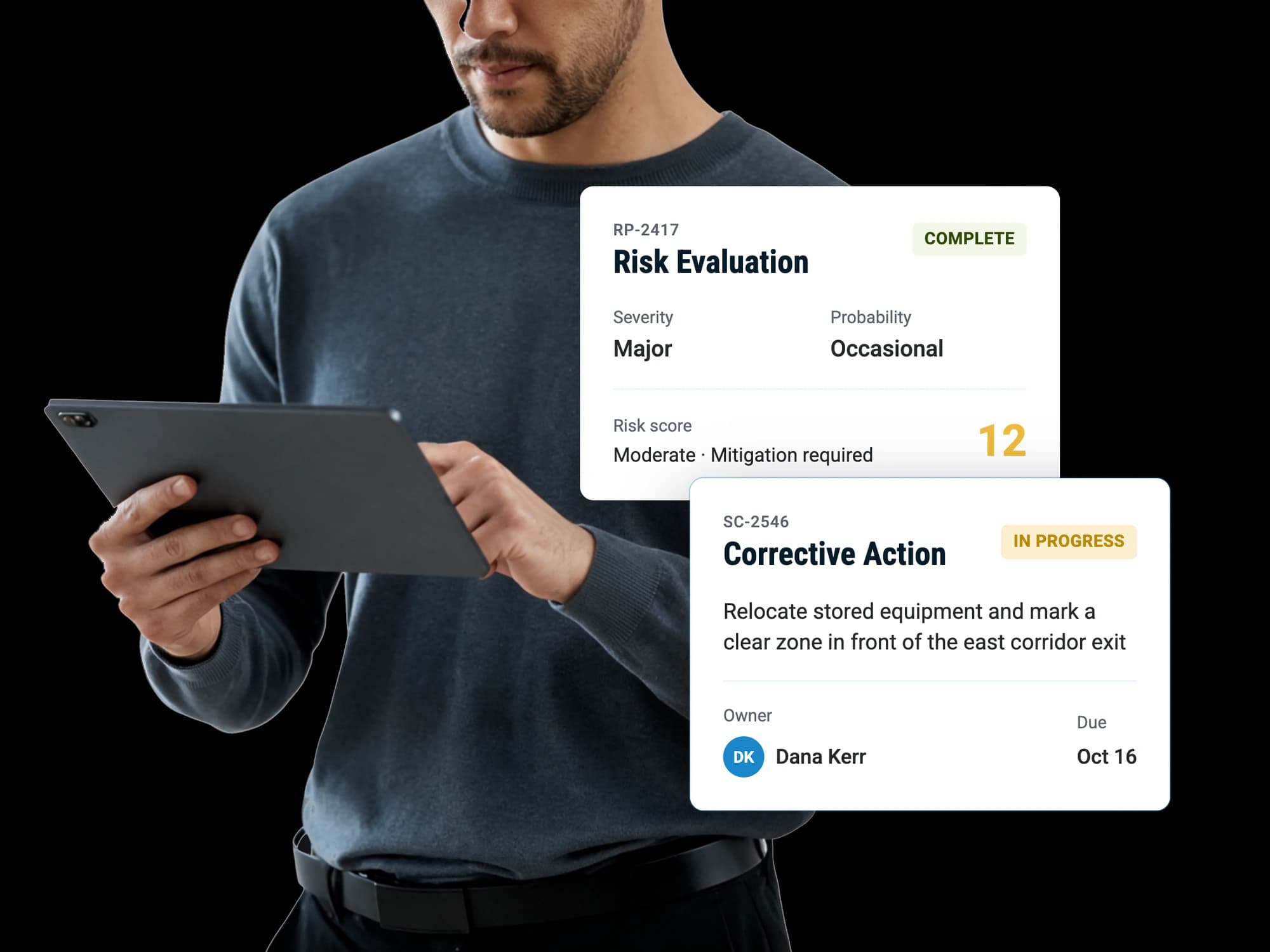
And with the right tools, it becomes even easier. RISE helps operators connect their policy to real-world actions, linking safety objectives or safety advisories to specific pilots, airports, aircraft, or risk questions. So when an issue arises in a report, the relevant parts of your policy appear in context. That context helps your team apply the policy, not just remember it.
Final Thought
A safety policy shouldn’t sit on a shelf. It should shape how your operation functions, day in, day out. And your objectives shouldn’t feel like guesses. They should serve as measurable indicators of progress, helping you understand where your safety efforts are succeeding and where they need more attention.
When policy is clear and objectives are meaningful, alignment happens. People understand what’s expected. Leaders know how to respond. And your SMS becomes more than a system, it becomes a culture.
Ready to turn your policy into real operational impact?
Explore how RISE can help. Book a demo or start your free trial today.