· 5 min read
How Safety Managers Use Data to Drive Real Change
By Michael Sidler, Founder, RISE

How Safety Managers Use Data to Drive Real Change is a practical question faced daily across business aviation. Safety data, when used correctly, allows Safety Managers to move beyond reacting to individual events and instead influence decisions, behaviors, and systems that reduce risk over time. In a mature Safety Management System in business aviation, data is the mechanism that connects reporting, analysis, and leadership action.
Effective use of safety data is not about generating dashboards or satisfying audit checklists. It is about identifying where risk is emerging, understanding why controls are weakening, and providing decision-makers with credible information they can act on. When data is poorly defined or misunderstood, it creates noise rather than insight. When it is structured and reviewed consistently, it becomes one of the most powerful tools available to a Safety Manager.
This article explains how Safety Managers use data to drive real operational change, why it matters in business aviation, and what good practice looks like under FAA 14 CFR Part 5 and ICAO Annex 19.
What “Safety Data” Means in an SMS Context
In an SMS, safety data refers to information generated through formal safety processes rather than informal observation alone. This includes hazard reports, incident and accident reports, risk assessments, audit findings, corrective actions, safety performance indicators, and management review outputs.
Under 14 CFR Part 5, data supports both Safety Risk Management and Safety Assurance. It provides evidence that hazards are being identified, risks are being assessed, and controls are effective. ICAO Annex 19 reinforces this by emphasizing data-driven safety performance and continuous improvement across the organization.
Safety data is not limited to numerical values. Narrative descriptions, trend observations, and operational context are equally important. A single well-documented hazard report can be more valuable than dozens of poorly categorized entries.
Why Data-Driven Safety Matters in Business Aviation
Business aviation operates in a dynamic environment with small teams, variable mission profiles, and limited margins for error. Unlike large airlines, business aviation operators often lack large datasets or dedicated analytics staff. This makes disciplined data use even more important.
For Part 91 operators, safety data often serves as an early warning system rather than a compliance artifact. For Part 135 operators, data must demonstrate regulatory compliance and operational control. For Part 145 repair stations, maintenance-related data helps identify human factors, procedural gaps, and recurring technical issues.
Across all operating types, leadership decisions about staffing, training, scheduling, and procedures increasingly rely on credible safety information. A Safety Management System in business aviation that cannot translate data into insight will struggle to influence those decisions.
How Safety Managers Turn Raw Data Into Insight
Establishing Consistent Data Inputs
Real change starts with consistent inputs. Safety Managers define what information is required, how it is submitted, and how it is categorized. This includes standardized hazard categories, severity and probability scales, and clear reporting expectations.
Without consistency, trend analysis becomes unreliable. For example, fatigue-related hazards recorded under multiple categories may never appear significant, even if they are operationally critical.
Separating Signal From Noise
Not all reported data represents risk. Safety Managers review incoming information to distinguish between isolated anomalies and meaningful patterns. This requires operational knowledge and judgment, not automated scoring alone.
A single bird strike may not indicate systemic risk. Repeated wildlife hazards at the same airport, reported across multiple crews, likely do. Data allows the Safety Manager to justify further investigation or mitigation.
Connecting Hazards to Operational Context
Data becomes actionable when it is connected to real operations. Safety Managers correlate reports with routes, aircraft types, maintenance activities, weather patterns, or crew schedules. This contextualization helps leadership understand where controls are failing and why.
This is where internal linking to foundational concepts like what constitutes a Safety Management System in business aviation and the four pillars of SMS becomes valuable for readers building their understanding.
Practical Examples of Data Driving Change
Revising Procedures Based on Trend Data
An operator notices an increase in unstable approach reports during specific missions. Data review shows common contributing factors including late runway changes and crew workload. The response is not disciplinary action but procedural clarification, targeted training, and coordination with dispatch.
Improving Maintenance Practices
A Part 145 repair station tracks repeat discrepancies following specific inspections. Data analysis identifies inconsistent task execution rather than equipment failure. The result is revised task cards and focused recurrent training.
Adjusting Scheduling and Fatigue Controls
Fatigue reports alone rarely drive change. When fatigue data is combined with duty length, time of day, and mission type, patterns emerge. Management can then adjust scheduling policies with objective justification.
Common Mistakes in Using Safety Data
Treating Data as an Audit Requirement
When data is collected solely to satisfy auditors, it rarely influences operations. Safety Managers must position data review as a management tool, not an inspection artifact. This misunderstanding is frequently highlighted in discussions about what auditors look for in an SMS program.
Overreliance on Lagging Indicators
Accidents and incidents are lagging indicators. Waiting for them to drive change means the system has already failed. Effective Safety Management Systems in business aviation emphasize hazard trends, near misses, and assurance findings.
Failing to Close the Loop
Data without follow-up erodes trust. When reports disappear into a system without feedback or visible action, reporting quality declines. Safety Managers ensure that actions and outcomes are communicated appropriately.
What “Good” Looks Like in a Data-Driven SMS
In a well-functioning SMS, data is reviewed routinely, not reactively. Safety Managers provide concise summaries to leadership that explain what is changing, why it matters, and what decisions may be required.
Good practice includes documented trend reviews, management meeting minutes referencing safety data, and evidence that mitigations are adjusted based on performance. Data supports decision-making without overwhelming leaders with unnecessary detail.
This approach aligns closely with ICAO Annex 19 expectations for safety performance monitoring and continuous improvement.
Differences Across Part 91, 135, and 145 Operations
Part 91 operators often use data to inform internal decision-making rather than external reporting. The focus is on learning and prevention. Part 135 operators must demonstrate formal processes and documented oversight. Data supports regulatory compliance and operational control. Part 145 repair stations rely heavily on maintenance and human factors data to manage technical risk.
Understanding how SMS applies differently across operating types is essential when designing data collection and review processes.
How Technology Supports Data-Driven Safety
Modern SMS platforms help Safety Managers organize, categorize, and retrieve safety data efficiently. Automation reduces administrative burden, allowing more time for analysis and engagement with operations.
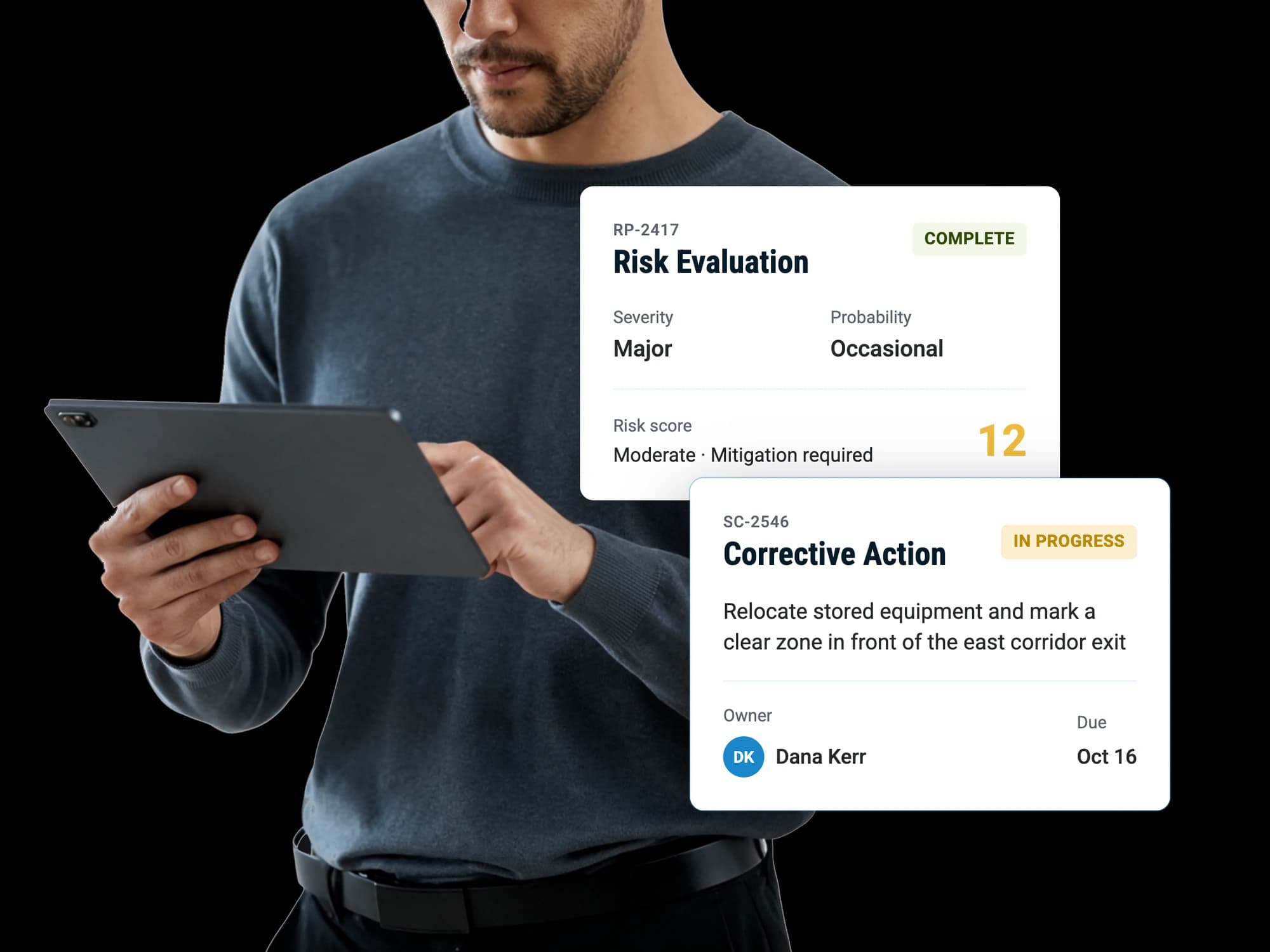
Technology supports trend visualization, corrective action tracking, and management review documentation. However, software does not replace professional judgment. The value comes from how Safety Managers interpret and use the information.
This distinction is often misunderstood when evaluating aviation SMS software, where functionality must support, not drive, safety decision-making.
Looking Ahead
As regulatory expectations evolve and operations grow more complex, the role of data in safety management will continue to expand. Safety Managers who understand how to translate information into insight will be better positioned to influence real change.
A Safety Management System in business aviation succeeds when data informs action, leadership listens, and the organization learns continuously. That outcome depends less on the volume of data collected and more on how thoughtfully it is used.