· 6 min read
How Safety Culture Starts with Leadership Decisions
By Michael Sidler, Founder, RISE

How Safety Culture Starts with Leadership Decisions is a practical question for business aviation operators because safety culture is shaped less by written policy and more by the daily decisions made by leadership. In a Safety Management System in business aviation, culture is not a separate initiative or training program. It is the cumulative result of what leaders prioritize, fund, question, accept, and tolerate over time.
From a regulatory perspective, both FAA 14 CFR Part 5 and ICAO Annex 19 place responsibility for the effectiveness of an SMS squarely on management. While safety managers may coordinate the system, leadership decisions determine whether the SMS functions as intended or becomes a compliance exercise with limited operational value. Safety culture, therefore, starts well before hazard reports or risk assessments are completed. It begins with how leaders define accountability, allocate authority, and respond when safety information challenges operational goals.
What Is Safety Culture in a Business Aviation SMS?
Safety culture refers to the shared values, beliefs, and behaviors that influence how safety is managed within an organization. In business aviation, this includes how flight crews, maintenance personnel, dispatch, and leadership perceive risk, report hazards, and make decisions under operational pressure.
Within a Safety Management System in business aviation, safety culture is reflected in how consistently the four SMS pillars are applied:
-
Safety Policy sets expectations and accountability.
-
Safety Risk Management defines how risks are identified and controlled.
-
Safety Assurance evaluates whether controls are working.
-
Safety Promotion reinforces learning and communication.
Culture is not measured solely by attitudes or survey results. It is observed through decisions such as whether hazard reports lead to action, whether risk acceptance authority is respected, and whether schedule or cost pressures override documented safety controls.
Why Leadership Decisions Matter More Than Messaging
Leadership commitment to safety is often expressed through statements, manuals, or meetings. While these are important, culture is shaped more powerfully by decisions that affect operations.
Examples of leadership decisions that influence safety culture include:
-
Whether safety reports are treated as operational intelligence or administrative burdens.
-
Whether risk mitigation actions are resourced and tracked to completion.
-
Whether individuals are supported when they raise uncomfortable safety concerns.
-
Whether management follows established risk acceptance processes or bypasses them when convenient.
In business aviation, leadership often has direct involvement in operations, especially in smaller Part 91 and Part 135 organizations. This proximity means that leadership behavior is highly visible. Crews and technicians quickly recognize when stated safety priorities conflict with actual decisions.
Regulatory Expectations for Leadership Under Part 5
FAA 14 CFR Part 5 establishes that the accountable executive is responsible for ensuring the SMS is properly implemented and functioning. This responsibility cannot be delegated away through policy statements or organizational charts.
Key leadership responsibilities under Part 5 include:
-
Establishing safety policy and objectives that align with operational realities.
-
Assigning clear authority and accountability for safety decisions.
-
Ensuring hazards are identified and risks are assessed using defined processes.
-
Providing resources necessary to implement risk controls and corrective actions.
-
Reviewing safety performance and responding to trends or deficiencies.
ICAO Annex 19 reinforces these concepts by emphasizing management commitment and accountability as foundational elements of an effective SMS. While the terminology may vary slightly between frameworks, the expectation is consistent: leadership decisions must actively support the SMS.
How Safety Culture Differs Across Operator Types
Safety culture challenges vary by operational context, even though the underlying principles remain the same.
Part 91 Operators
In Part 91 operations, SMS adoption is often voluntary. Leadership decisions determine whether the SMS is treated as a strategic risk management tool or an administrative add on. Culture issues often arise when informal decision making conflicts with documented processes.
Part 135 Operators
For Part 135 operators, SMS requirements are mandated. Leadership decisions often focus on balancing compliance, operational efficiency, and safety performance. Culture suffers when SMS processes are implemented to satisfy audits rather than to inform real world decisions.
Part 145 Repair Stations
In maintenance organizations, safety culture is closely tied to error reporting, procedural compliance, and production pressure. Leadership decisions around staffing, shift scheduling, and corrective action follow up strongly influence whether technicians feel supported in reporting issues.
Understanding these differences is essential when applying consistent leadership principles across diverse operational environments. This distinction is often discussed when examining how SMS applies differently to Part 91, Part 135, and Part 145 operators.
What Leadership Decisions Look Like in Daily Operations
Safety culture becomes visible through routine operational choices rather than exceptional events.
Practical examples include:
-
A decision to delay a flight or release until a hazard is assessed and mitigated.
-
Approval of additional training after trend data indicates a recurring risk.
-
Reinforcing reporting expectations after a near miss rather than waiting for an incident.
-
Accepting operational constraints when mitigations cannot be implemented effectively.
These decisions signal to the organization whether the SMS is a living system or a set of documents. Over time, patterns emerge. Personnel learn what behaviors are rewarded, ignored, or discouraged.
Common Leadership Mistakes That Undermine Safety Culture
Several recurring leadership behaviors weaken safety culture, even when an SMS exists on paper.
One common issue is treating the safety manager as the owner of safety rather than as a coordinator of the system. When leadership disengages from safety reviews or risk acceptance decisions, the SMS loses authority.
Another issue is inconsistent application of risk controls. When leaders approve deviations without documented justification, personnel learn that processes are optional.
A third mistake is focusing on lagging indicators only. Waiting for incidents or audit findings before taking action discourages proactive reporting and weakens trust in the system.
Finally, failing to close the loop on reported hazards signals that reporting does not lead to meaningful change. This erodes participation and undermines Safety Risk Management.
What Good Safety Leadership Looks Like in Practice
Effective safety leadership in business aviation is characterized by consistency, visibility, and follow through.
Leaders who support a healthy safety culture:
-
Participate in safety reviews and management meetings.
-
Respect defined risk acceptance authority and escalation processes.
-
Ask questions about trends, not just isolated events.
-
Ensure corrective actions are tracked and verified.
-
Communicate decisions and the reasoning behind them.
When implemented correctly, safety culture supports operational decision making rather than competing with it. This aligns with the intent behind the four pillars of SMS explained for business aviation, where leadership involvement is essential to system effectiveness.
How Technology Supports Leadership Accountability
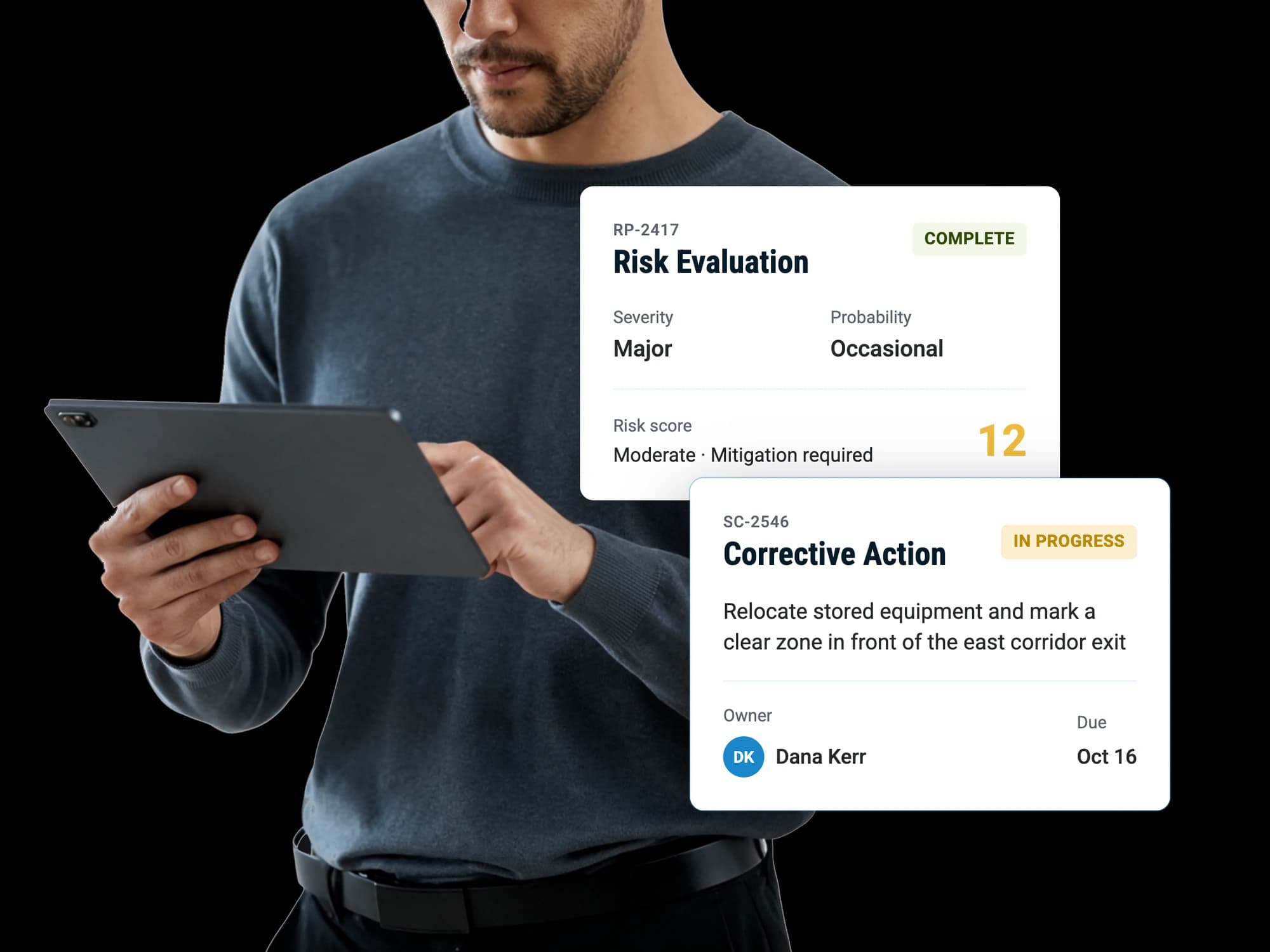
Modern SMS platforms support leadership decisions by improving visibility and traceability. Technology does not create safety culture, but it can reinforce disciplined decision making.
Examples of technology support include:
-
Dashboards that summarize risk trends and safety performance indicators.
-
Structured workflows that define roles, responsibilities, and approval authority.
-
Audit trails that document decisions and corrective actions.
-
Reporting tools that make it easier to capture and analyze safety data.
These tools help leaders fulfill their Part 5 responsibilities by providing timely information and reducing reliance on informal or undocumented processes. When leaders engage with these systems regularly, it reinforces the importance of consistent decision making.
Safety Culture as an Outcome of Leadership Choices
In a Safety Management System in business aviation, safety culture is not implemented directly. It emerges from leadership decisions applied consistently over time. Policy statements and training programs set expectations, but daily operational choices determine whether those expectations are met.
As regulatory oversight continues to emphasize accountability and performance, leadership involvement becomes increasingly visible to auditors and regulators. Operators that understand this relationship are better positioned to build resilient, effective SMS programs that support both safety and operational goals.