· 2 min read
Beyond Compliance: The Digital Transformation of Aviation SMS
By Michael Sidler, Founder, RISE

Why Digital Safety Matters Now
Aircraft technology has evolved rapidly, but the way many organizations manage safety has not. Too often, reports still live in binders, spreadsheets, inboxes, and offline folders. Data exists, but it is not connected, searchable, measurable, or usable.
The future of aviation safety is not more documentation. It is smarter, integrated systems that turn safety data into action.
Digital SMS tools are reshaping how operators prevent incidents, protect their people, and prove compliance, not through more paperwork, but through clarity, transparency, and accountability.
The future of aviation safety isn’t more paperwork. It’s smarter, faster, connected systems powered by digital tools.
How Digital SMS Ecosystems Strengthen Safety Assurance
Safety has always been the priority in aviation. What has changed is the way organizations achieve it.
Real-time hazard captureMobile and online reporting tools allow crews and staff to submit issues in seconds. This shortens the gap between identifying a hazard and beginning mitigation.
Analytics that accelerate learningPlatforms convert raw reports into trends and Safety Performance Indicators (SPIs). Risk patterns become visible early, enabling corrective action before damage occurs.
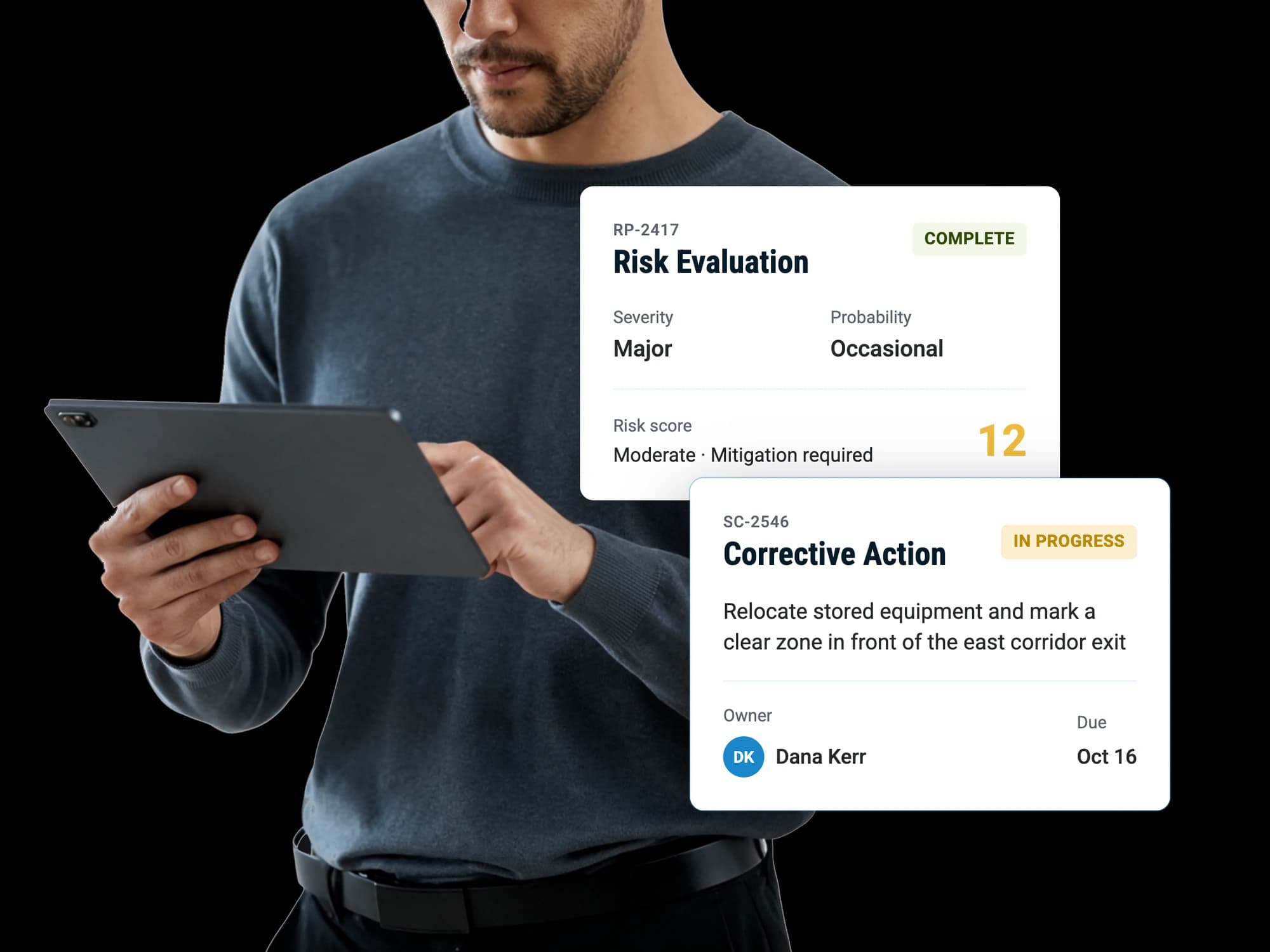
Standardized compliance across the organizationDigital workflows ensure every report follows a consistent lifecycle, including assignment, investigation, resolution, and follow-up, creating an evidence trail that satisfies FAA and ICAO audit requirements.
A digital SMS transforms reporting volume into risk intelligence.
Operational Efficiency and ROI
Digital transformation strengthens safety and improves business performance at the same time.
Reduced administrative workloadAutomated reminders, task assignments, recurrences, and corrective action tracking allow teams to spend less time managing spreadsheets and more time solving problems.
Transparent organizational healthFlight operations, maintenance, dispatch, and ground personnel gain a shared view of risk and status. Communication becomes coordinated rather than siloed.
Effortless audit preparationInstead of scrambling to pull records during inspections, compliance becomes a natural output of daily activity. Documentation is already organized, timestamped, and accessible.
As operations expand, cloud-based systems scale without increasing paperwork or staff burden.
The Horizon: Intelligent, Integrated Systems
Aviation is entering a new era where technology supports smarter safety decisions rather than simply recording them.
Predictive maintenance and risk detectionAI analyzes operational data to identify failing trends in equipment, procedures, and human factors before they trigger disruptions.
System-to-system synchronizationSafety reporting, scheduling systems, flight data monitoring, training records, and operational tools work as one ecosystem, eliminating blind spots.
Forecasting future challengesPredictive analytics offer visibility into seasonal hazards, recurring risks, and high-impact operational patterns, helping leaders act early instead of react late.
Technology will not replace human expertise. It strengthens it by giving aviation professionals better information earlier in the decision cycle.
Digital tools exist to amplify human expertise, giving your team the situational awareness they need to lead with confidence.
Final Thought
The aviation industry is at a turning point. As operational complexity increases, paper and legacy solutions cannot support the level of safety, transparency, and speed that modern flight departments, MROs, schools, and airfield operations require.
RISE believes digital systems and AI are not the future of aviation safety. They are the present necessity.
Operators who adopt digital transformation today are not just complying with regulations. They are building safer teams, smarter operations, and stronger organizations for the decade ahead.
Book a demo to see how RISE helps operators embed safety education into daily operations, without adding friction.