· 6 min read
Why Safety Management Systems Matter for Corporate and Private Operators
By Michael Sidler, Founder, RISE

Why Safety Management Systems matter for corporate and private operators can be summarized in one sentence: a Safety Management System provides a structured, repeatable way to identify risk, manage operational complexity, and make informed safety decisions before events turn into incidents or accidents. In business aviation, where operations are often customized, resource constrained, and decentralized, this structure becomes increasingly important.
A Safety Management System in business aviation is not about adding paperwork or meeting a theoretical standard. It is about understanding how real-world operations actually function and ensuring that risks are identified, assessed, and addressed consistently across the organization. For many corporate and private operators, SMS fills the gap between informal safety practices and a disciplined, auditable safety process that scales with the operation.
As regulatory expectations evolve and operational environments become more complex, SMS has moved from being a concept associated only with airlines to a practical management framework used by flight departments, charter operators, maintenance organizations, training providers, and airports.
What Is a Safety Management System in Business Aviation?
A Safety Management System is a formal, organization-wide approach to managing safety risk. It integrates policies, procedures, accountabilities, and data-driven decision-making into day-to-day operations. In business aviation, SMS applies the same core principles used in larger commercial operations, but at a scale appropriate for corporate and private environments.
Under Federal Aviation Administration 14 CFR Part 5, SMS is structured around four core components: Safety Policy, Safety Risk Management, Safety Assurance, and Safety Promotion. These components are aligned with international standards established by International Civil Aviation Organization Annex 19, which promotes a proactive, systems-based approach to aviation safety.
For business aviation operators, SMS is not a single program or department. It is a management framework that defines how safety decisions are made, how hazards are identified, how risk is evaluated, and how the organization verifies that controls remain effective over time.
Why SMS Matters Specifically in Corporate and Private Operations
Corporate and private aviation operations differ significantly from scheduled airline environments. Flights are often mission-driven rather than route-driven. Crews may fly irregular schedules. Maintenance may be in-house, outsourced, or shared across fleets. Decision-making authority is frequently concentrated among a small leadership team.
These characteristics create unique risk management challenges. Informal communication and experience-based judgment can work well in small operations, but they do not always scale or provide continuity when personnel change. A Safety Management System in business aviation provides a common structure that supports consistent decision-making regardless of who is on duty or which mission is being flown.
SMS also supports organizational resilience. When an operation expands, adds aircraft, introduces new routes, or changes maintenance arrangements, the SMS provides a framework to evaluate risk before changes are implemented rather than after issues arise.
Regulatory Context Across Different Operator Types
SMS requirements and expectations vary depending on the type of operation.
Part 135 operators are subject to formal SMS requirements under Part 5, with defined timelines and oversight expectations. These operators must demonstrate that their SMS is active, documented, and effective.
Part 145 repair stations are also subject to SMS requirements, with a focus on hazard identification, risk management, and internal evaluation of maintenance processes.
Part 91 operators are not universally required to implement SMS, but many adopt it voluntarily due to customer expectations, insurance considerations, and alignment with industry standards. For complex Part 91 flight departments, SMS often becomes a practical necessity rather than a regulatory obligation.
Part 141 training organizations and Part 139 airports each apply SMS concepts in ways tailored to their operational scope, emphasizing hazard reporting, trend analysis, and continuous improvement.
Understanding how SMS applies differently across these operational contexts is essential for building a system that is both compliant and practical.
How SMS Works in Day-to-Day Operations
In practical terms, a Safety Management System in business aviation connects routine activities into a coherent safety process.
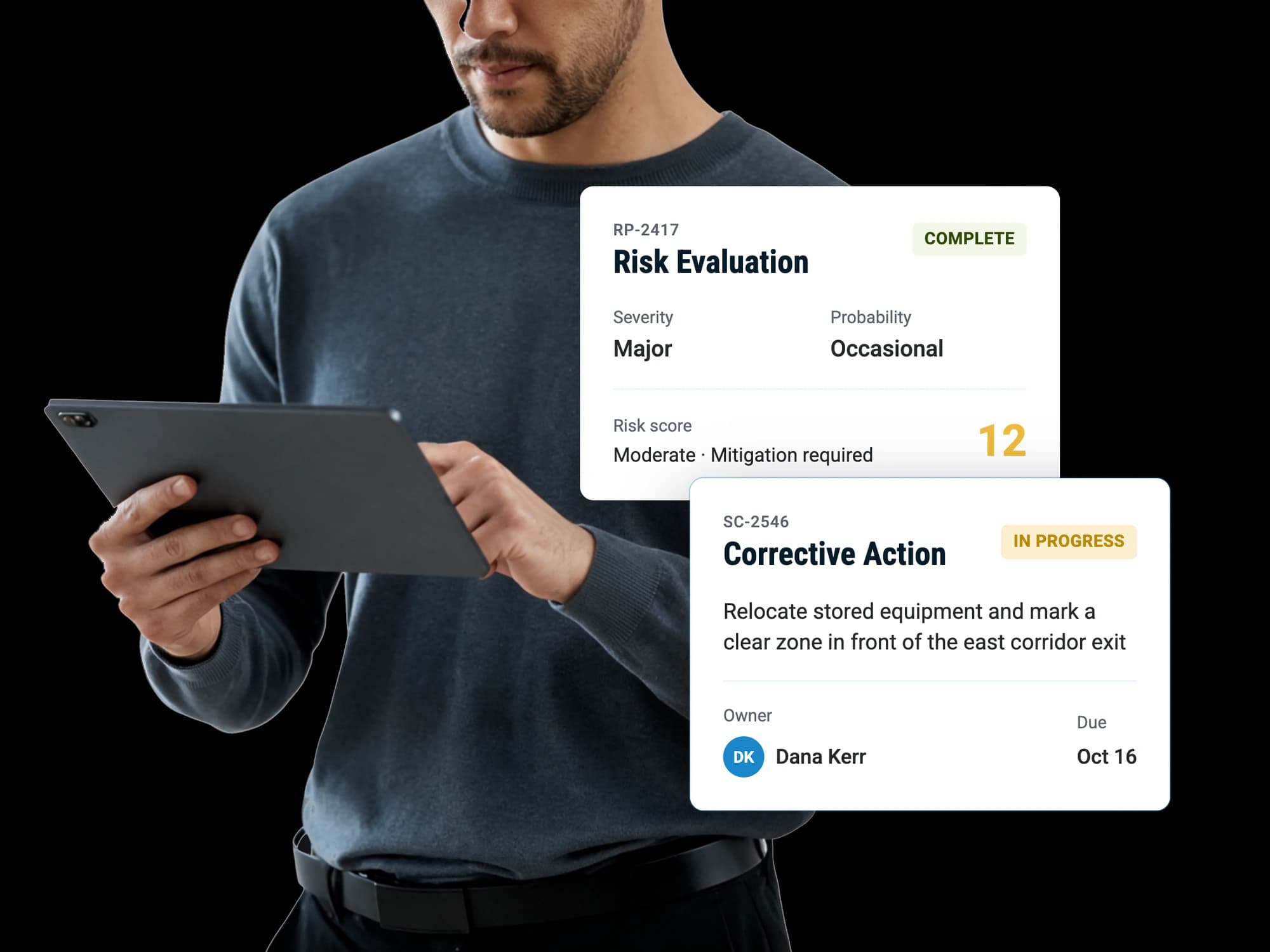
A pilot submits a hazard report after observing a recurring runway lighting issue at a destination airport. That report enters a hazard registry where it is assessed for severity and probability. Mitigations are identified, such as revised arrival procedures or additional briefing requirements. Over time, data from multiple reports is reviewed to determine whether the risk is increasing, stable, or declining.
Maintenance discrepancies, procedural deviations, and training observations follow similar paths. The value of SMS comes from the consistency of this process. Each report is handled using the same criteria, reviewed by the appropriate authority, and tracked to closure.
This structured approach allows leadership to see patterns that would otherwise remain isolated anecdotes. It also provides traceability, showing how safety decisions were made and why specific actions were taken.
Common Misunderstandings About SMS
One common misunderstanding is that SMS replaces regulatory compliance. In reality, SMS complements compliance by providing insight into how well procedures actually work in practice.
Another misconception is that SMS is primarily a reporting system. While reporting is a critical input, SMS also includes risk assessment, assurance activities, and safety promotion. Without these elements, reporting alone does not improve safety outcomes.
Some operators assume that SMS requires a full-time Safety Manager to be effective. While dedicated safety leadership is valuable, many business aviation operators successfully implement SMS with shared responsibilities supported by clear processes and appropriate tools.
Finally, there is a belief that SMS only becomes useful after an incident occurs. A well-functioning SMS focuses on identifying hazards and managing risk before adverse events happen.
What Good SMS Implementation Looks Like
A mature Safety Management System in business aviation is characterized by consistency, clarity, and credibility.
Hazard reports are easy to submit and are reviewed promptly. Risk assessments use defined criteria rather than subjective judgment alone. Safety objectives are measurable and linked to operational realities. Management reviews safety data regularly and documents decisions.
Good SMS implementation also shows evidence of learning. Procedures evolve based on feedback. Training addresses observed gaps. Risk controls are adjusted when conditions change.
Importantly, a well-implemented SMS does not overwhelm the organization. Documentation is sufficient to support understanding and oversight, but not excessive. Processes align with how the operation actually functions.
The Role of Technology in Supporting SMS
Technology plays a supporting role in modern SMS implementation. Digital reporting tools reduce friction for frontline personnel. Centralized data repositories enable trend analysis across aircraft, crews, and time periods.
Modern SMS platforms help standardize risk scoring, track mitigations, and document management review. They also support audit readiness by maintaining clear records of hazards, assessments, and corrective actions.
Technology does not replace judgment or leadership. Instead, it provides visibility and consistency, allowing safety personnel and executives to focus on decision-making rather than administrative tasks.
How SMS Aligns With Industry Standards and Expectations
SMS frameworks used in business aviation align closely with international standards such as ICAO Annex 19. This alignment supports interoperability across operators, regulators, and auditors.
For organizations operating internationally or working with multiple regulatory authorities, this consistency reduces friction and supports a common understanding of safety performance.
It also positions operators to adapt more easily to future regulatory changes, as SMS principles tend to remain stable even as specific requirements evolve.
A Forward-Looking Perspective on SMS in Business Aviation
The role of the Safety Management System in business aviation continues to expand. As data availability increases and operational environments become more complex, SMS provides a foundation for informed decision-making.
For corporate and private operators, SMS is increasingly viewed as a core management function rather than a compliance exercise. It supports safe operations, organizational learning, and sustainable growth.
Understanding why Safety Management Systems matter for corporate and private operators begins with recognizing that safety is managed most effectively when it is structured, proactive, and integrated into everyday operations.