· 6 min read
Integrating SMS with Daily Operations Software
By Michael Sidler, Founder, RISE

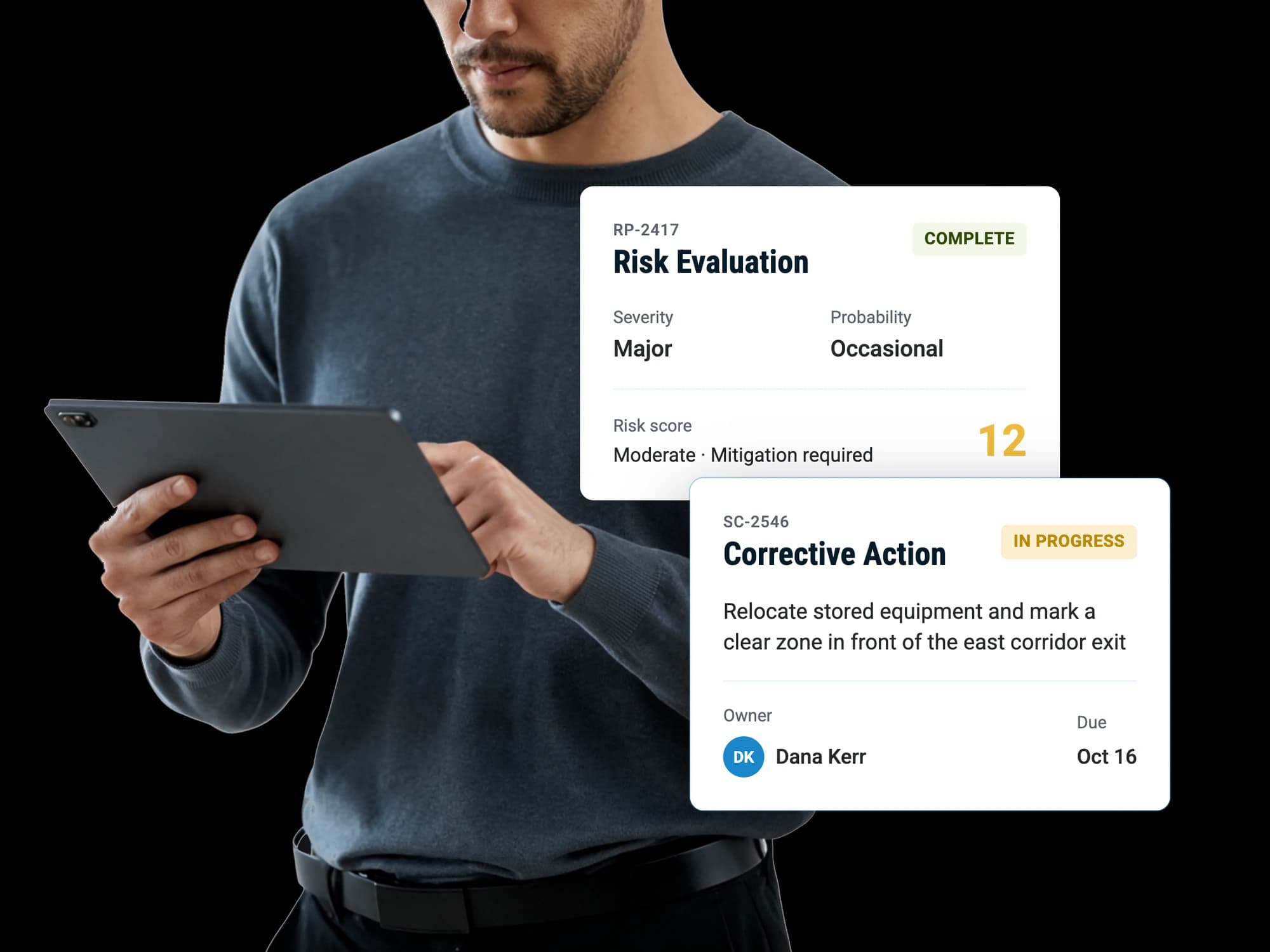
Integrating SMS with daily operations software is about ensuring that safety information is captured, shared, and acted on as part of normal operational activity. In a Safety Management System in business aviation, this integration allows hazard identification, risk assessment, and safety assurance to occur using the same systems that crews, maintenance personnel, and managers already rely on to plan and conduct work. When implemented correctly, SMS is not a separate administrative process but a layer that connects safety oversight to operational reality.
For business aviation operators, integration does not mean that an SMS replaces operational systems. It means that safety data flows alongside scheduling, dispatch, maintenance tracking, training records, and other operational tools so that safety decisions are informed by current, accurate information. This approach aligns with FAA 14 CFR Part 5 expectations that an SMS be embedded in how the organization manages risk, rather than operating as a parallel reporting exercise.
What Does “Integrating SMS with Daily Operations Software” Mean?
Integration in this context refers to the structured exchange of information between an SMS and the software systems used to manage daily operations. These may include flight scheduling, crew management, maintenance tracking, training management, and document control systems. The goal is to reduce manual data transfer, improve accuracy, and ensure that safety-related decisions reflect actual operating conditions.
In a Safety Management System in business aviation, integration typically supports three core functions. First, it improves hazard identification by allowing safety reports to reference real operational data such as aircraft, routes, or maintenance events. Second, it supports risk management by providing context for risk assessments, including exposure and frequency. Third, it strengthens safety assurance by enabling trend analysis across operational and safety datasets.
This concept is foundational to understanding what a Safety Management System in business aviation is intended to achieve, particularly when contrasted with traditional safety programs that rely heavily on manual reporting and retrospective analysis.
Why Integration Matters in Business Aviation
Business aviation operations are dynamic and often resource constrained. Flight departments may operate with small teams where individuals perform multiple roles. In this environment, safety processes that require duplicate data entry or separate systems are less likely to be used consistently. Integration helps ensure that SMS activities fit naturally into existing workflows.
From a regulatory perspective, FAA 14 CFR Part 5 emphasizes that safety risk management and safety assurance processes be based on data and be continuously applied. ICAO Annex 19 similarly stresses the importance of data-driven safety oversight and the use of information systems to support hazard identification and risk monitoring. Without integration, operators risk creating gaps between what is planned operationally and what is assessed from a safety standpoint.
For Part 135 operators, this is especially relevant as SMS requirements become more explicit and oversight increasingly focuses on how safety processes are applied in day-to-day operations. Part 91 operators implementing a voluntary SMS face similar challenges, particularly when demonstrating that safety processes are active and meaningful rather than purely documentary. Part 145 repair stations must also consider how maintenance tracking and quality systems interface with hazard reporting and corrective action tracking.
Key Concepts That Support Integration
Data Consistency and Traceability
Integrated systems allow safety reports, risk assessments, and corrective actions to reference the same identifiers used in operational systems. This may include aircraft tail numbers, work order numbers, or crew positions. Consistency improves traceability, which is critical during audits and internal evaluations.
Timeliness of Safety Information
When safety reporting tools are connected to daily operations software, hazards can be reported closer to the time of occurrence. This supports proactive risk management, a core expectation under both FAA Part 5 and ICAO Annex 19.
Reduced Administrative Burden
Integration reduces the need for manual re-entry of information. This not only saves time but also reduces the probability of errors, which can undermine confidence in safety data.
How Integration Works in Real-World Operations
In practice, integration often occurs through defined data exchanges rather than full system mergers. For example, a safety report may pull basic flight or maintenance information from an operational system, allowing the reporter to focus on describing the hazard rather than entering background data. Similarly, safety managers may be able to view trends that combine operational activity levels with reported hazards.
Consider a corporate flight department operating under Part 91. When a flight crew submits a hazard report related to runway conditions at a frequently used airport, integration allows the safety manager to see how often that airport is used, under what conditions, and by which aircraft. This context supports a more informed risk assessment and helps determine whether the issue represents a systemic risk.
In a Part 145 repair station, integration may allow maintenance discrepancies or quality findings to be linked to safety reports and corrective actions. Over time, this helps identify patterns related to specific processes, shifts, or equipment types, supporting the safety assurance function.
These practical examples align closely with concepts discussed in guidance on how SMS applies differently to Part 91, Part 135, and Part 145 operators, where the nature of operations drives how safety processes should be implemented.
Common Mistakes and Misunderstandings
One common mistake is assuming that integration is primarily a technical exercise. While technical capability is important, effective integration starts with process design. Operators must first define how safety information should flow through the organization and who is responsible at each step.
Another misunderstanding is believing that integration eliminates the need for human judgment. Integrated systems support decision-making, but they do not replace the need for trained personnel to assess risk and determine appropriate controls. FAA Part 5 is clear that accountability and responsibility remain with the organization.
Some operators also attempt to integrate too much too quickly. Overly complex integrations can create confusion and reduce user adoption. A phased approach that prioritizes high value data exchanges is generally more effective.
What Good Integration Looks Like
When integration is implemented correctly, safety activities are visible and accessible without disrupting operations. Personnel can submit safety reports using familiar systems, and safety managers can access relevant operational context without assembling information from multiple sources.
Good integration supports the four pillars of SMS without drawing attention to itself. Safety policy is reflected in how systems are configured and used. Safety risk management benefits from accurate, current data. Safety assurance is strengthened through meaningful trend analysis. Safety promotion is supported by credible data that can be shared with personnel.
Auditors and regulators typically look for evidence that safety data is used actively, not just collected. Integrated systems make it easier to demonstrate this during oversight activities, a point often emphasized when discussing what auditors look for in an SMS program.
The Role of Technology in Supporting Integration
Technology enables integration through standardized data structures, secure data exchange, and user-friendly interfaces. Modern SMS platforms are designed to work alongside operational systems rather than replace them. This reflects an understanding that operators already rely on established tools to manage flights, maintenance, and personnel.
From an SMS perspective, technology should support consistency, accessibility, and analysis. It should allow safety managers to see the relationship between operational activity and safety outcomes without requiring extensive manual effort. Importantly, technology should be adaptable, recognizing that business aviation operations vary widely in size and complexity.
This approach aligns with broader discussions about what to look for in aviation SMS software, where flexibility and integration capability are increasingly important considerations.
Differences Across Regulatory Contexts
While the principles of integration are consistent, the emphasis may differ by regulatory context. Part 135 operators often focus on demonstrating compliance and ongoing operational control, making integration with scheduling and training systems particularly valuable. Part 91 operators may prioritize usability and voluntary reporting to support a strong safety culture. Part 145 repair stations typically emphasize integration with maintenance and quality systems to support both safety and regulatory compliance.
In all cases, the underlying expectation remains the same. The Safety Management System in business aviation should reflect how the organization actually operates, supported by systems that make safety oversight practical and sustainable.
A Forward-Looking Perspective
As business aviation operations continue to adopt more digital tools, the opportunity to integrate SMS with daily operations software will continue to grow. Operators that approach integration thoughtfully, with a focus on process and people as much as technology, are better positioned to realize the full value of their SMS.
Ultimately, integration supports the intent of FAA 14 CFR Part 5 and ICAO Annex 19 by embedding safety management into everyday decision-making. When safety information moves seamlessly alongside operational data, SMS becomes a natural part of how the organization manages risk, rather than an additional requirement to be managed separately.