· 6 min read
How to Implement an SMS Without Hiring a Full-Time Safety Manager
By Michael Sidler, Founder, RISE

How to Implement an SMS Without Hiring a Full-Time Safety Manager
Implementing a Safety Management System in business aviation does not automatically require hiring a full-time Safety Manager. Many operators successfully establish, maintain, and continuously improve an SMS by assigning responsibilities across existing roles, using structured processes, and leveraging appropriate tools. This approach is common in smaller flight departments, maintenance organizations, flight schools, and airports where staffing levels do not justify a dedicated safety position.
The key requirement is not a job title, but accountability. FAA 14 CFR Part 5 and ICAO Annex 19 require that safety responsibilities are clearly defined, risks are managed systematically, and safety performance is monitored and improved over time. How those responsibilities are assigned is flexible, provided the system functions as intended.
This article explains how to implement an SMS without hiring a full-time Safety Manager, what regulators expect to see, and what effective implementation looks like in real-world business aviation operations.
What Does It Mean to “Implement an SMS” in Business Aviation?
A Safety Management System in business aviation is a formal, organization-wide approach to managing safety risk. It includes documented processes for hazard identification, risk assessment, safety assurance, safety promotion, and safety policy. These elements are commonly referred to as the four pillars of SMS.
Implementing an SMS means more than writing manuals or completing checklists. It means establishing repeatable processes that operate continuously, regardless of staffing size. Regulators and auditors are less concerned with who performs the tasks and more concerned with whether those tasks are performed consistently and effectively.
In practice, implementation involves:
-
Defining safety roles and responsibilities
-
Establishing methods for hazard reporting and risk management
-
Monitoring safety performance
-
Ensuring leadership oversight and accountability
-
Demonstrating continuous improvement
These functions can be distributed across existing personnel when properly structured.
Why This Question Matters for Business Aviation Operators
Business aviation operations often operate with lean teams. Corporate flight departments, Part 135 charter operators, Part 145 repair stations, and Part 141 flight schools frequently rely on personnel who already hold multiple responsibilities. Requiring a full-time Safety Manager is often impractical, especially for smaller or mid-sized organizations.
FAA guidance under Part 5 allows flexibility in how SMS roles are assigned, particularly for smaller operators. ICAO Annex 19 similarly emphasizes scalability. The system must be appropriate to the size, complexity, and risk profile of the operation.
Understanding how to implement an SMS without adding a full-time position allows operators to meet regulatory expectations while maintaining operational efficiency.
Who Is Responsible for SMS If There Is No Safety Manager?
In an SMS without a full-time Safety Manager, responsibility is shared, but accountability remains clearly defined.
Accountable Executive The Accountable Executive retains ultimate responsibility for the SMS. This role is required under Part 5 and must have authority over resources and operational decisions. Even without a Safety Manager, the Accountable Executive must ensure the SMS is implemented and functioning.
SMS Coordinator or Focal Point Many operators designate an SMS Coordinator. This is often a Director of Operations, Chief Pilot, Maintenance Manager, or Quality Manager. The role focuses on coordination, not ownership. The coordinator ensures processes are followed, data is reviewed, and issues are escalated appropriately.
Operational Personnel Pilots, mechanics, instructors, and line staff are responsible for identifying hazards, reporting safety concerns, and following established procedures. SMS depends on participation from the entire organization.
Management Oversight Department leaders play a role in risk acceptance, corrective action approval, and safety performance monitoring. SMS is integrated into existing management structures rather than isolated within a single role.
How SMS Roles Can Be Integrated Into Existing Positions
One of the most common misconceptions is that SMS tasks require constant daily attention. In reality, many SMS activities are periodic or event-driven.
Examples include:
-
Monthly or quarterly safety meetings
-
Review of hazard reports as they are submitted
-
Periodic risk assessments
-
Scheduled internal evaluations or audits
-
Annual management review of safety performance
These tasks can be distributed across roles without overwhelming any one individual, provided expectations are clearly documented and supported by leadership.
For example:
-
A Chief Pilot may oversee operational hazard reviews
-
A Maintenance Manager may handle maintenance-related risk assessments
-
An Office Manager may assist with recordkeeping or training tracking
-
The Accountable Executive may chair management safety reviews
This distributed model aligns well with guidance discussed in resources that explain how SMS applies differently to Part 91, Part 135, and Part 145 operators.
What Regulators and Auditors Expect to See
Auditors and inspectors do not look for job titles. They look for evidence that SMS processes exist and are functioning.
Common expectations include:
-
Clear documentation of SMS roles and responsibilities
-
A working hazard reporting system
-
Evidence that hazards are evaluated and mitigated
-
Records of safety meetings or management reviews
-
Demonstrated leadership involvement
-
Evidence of corrective actions being tracked and closed
An operator without a Safety Manager can meet these expectations if the system is structured and followed. This aligns with what auditors look for in an SMS program, particularly for smaller organizations.
Common Mistakes When Implementing SMS Without a Safety Manager
Operators often struggle not because of staffing limitations, but because of unclear structure.
Common issues include:
-
Assigning SMS responsibility without authority
-
Treating SMS as a paperwork exercise
-
Allowing hazard reports to go unreviewed
-
Failing to document decisions or risk acceptance
-
Overcomplicating processes beyond the scale of the operation
Another frequent mistake is assuming that SMS software alone replaces leadership involvement. Technology supports SMS, but it does not manage safety on its own.
What “Good” Looks Like in a Lean SMS Implementation
A well-implemented SMS without a full-time Safety Manager has several recognizable characteristics.
First, safety responsibilities are clearly defined and understood. Personnel know who reviews hazards, who approves mitigations, and how issues are escalated.
Second, processes are simple and repeatable. Hazard reporting is accessible. Risk assessments are consistent. Meetings follow a standard agenda.
Third, leadership is visibly engaged. Management participates in reviews, signs off on risk decisions, and allocates resources when needed.
Finally, the system produces useful information. Trends are identified, risks are addressed proactively, and lessons learned are shared.
This practical approach reflects the principles described in foundational discussions of what a Safety Management System in business aviation actually is.
How Technology Supports SMS Without Expanding Staff
Modern SMS platforms can significantly reduce the administrative burden associated with SMS implementation. While technology does not replace accountability, it enables consistency and visibility.
Common areas where technology helps include:
-
Centralized hazard reporting
-
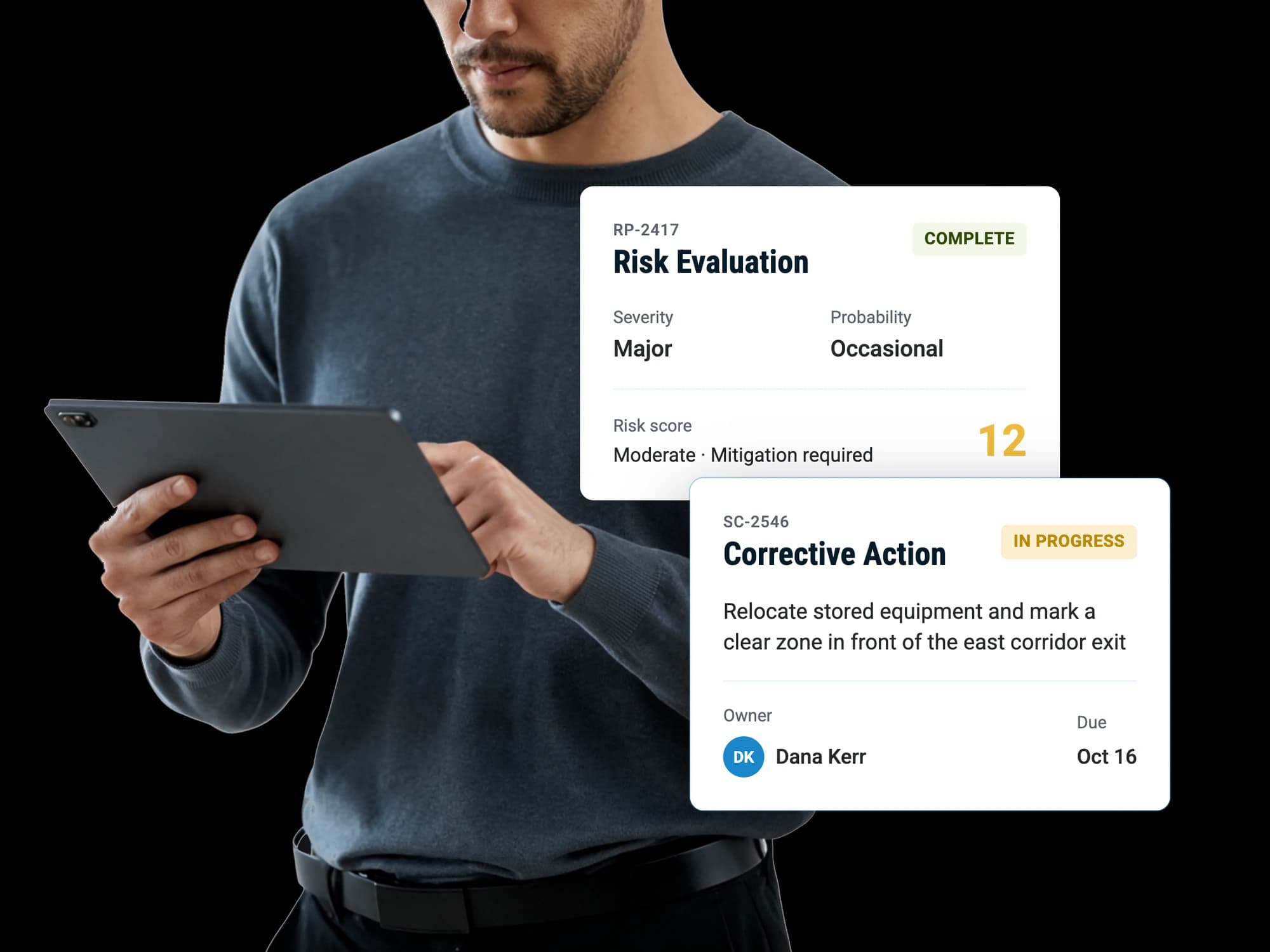
Standardized risk assessment workflows
-
Automated reminders and task tracking
-
Trend analysis and reporting
-
Secure recordkeeping for audits and reviews
By reducing manual tracking and paperwork, technology allows existing staff to focus on decision-making rather than administration. This is especially valuable for operators implementing SMS without dedicated safety personnel, as discussed in evaluations of what to look for in aviation SMS software.
Differences Across Part 91, 135, and 145 Operations
While the principles are consistent, implementation details vary by regulatory scope.
Part 91 Operators SMS may be voluntary, but expectations are increasingly driven by industry standards and customer requirements. Flexibility is high, but documentation and leadership involvement remain critical.
Part 135 Operators Part 5 compliance is mandatory for most certificate holders. Defined roles, documented processes, and ongoing oversight are required, even if responsibilities are shared.
Part 145 Repair Stations Maintenance-focused SMS places greater emphasis on human factors, error reporting, and corrective action tracking. Integration with quality systems is common and often effective.
Understanding these differences helps operators tailor SMS implementation appropriately without adding unnecessary complexity.
Looking Ahead: Sustainable SMS Without Dedicated Staffing
Implementing an SMS without hiring a full-time Safety Manager is both practical and acceptable when done correctly. The key is intentional design. Responsibilities must be assigned, processes must be followed, and leadership must remain engaged.
As regulatory expectations continue to evolve, particularly under Part 5 and international standards, operators that build scalable, role-based SMS structures will be better positioned to adapt. A well-designed system grows with the operation and does not depend on a single individual to function.
When SMS is treated as a management system rather than a job role, it becomes sustainable, effective, and aligned with the realities of business aviation.