· 6 min read
How SMS Supports Operational Leadership, Not Policing
By Michael Sidler, Founder, RISE

A common concern among aviation leaders is that a Safety Management System creates oversight that feels disciplinary or intrusive. This concern often comes from experiences with traditional compliance programs where safety oversight was closely tied to enforcement actions. In practice, a well designed Safety Management System in business aviation serves a very different purpose. It exists to support operational leadership by improving decision making, visibility, and accountability across the organization, not to police individuals.
When implemented correctly, SMS gives leaders the information they need to understand how operations are actually conducted, where risk is emerging, and whether existing controls remain effective. It shifts safety from a reactive function focused on finding fault to a proactive management system focused on sustaining safe operations over time. This distinction is foundational to how SMS is intended to work under FAA 14 CFR Part 5 and ICAO Annex 19.
What Is Meant by “Policing” in an Aviation Context?
In aviation organizations, “policing” usually refers to safety oversight that is primarily compliance driven and punitive in nature. This model focuses on identifying deviations from procedures, assigning blame, and correcting behavior through discipline or retraining. While compliance and accountability remain necessary, this approach often discourages open reporting and limits management’s ability to see emerging risk.
Traditional safety programs relied heavily on this model. Incident reviews were often triggered only after something went wrong. Information flowed upward slowly, if at all. Frontline personnel learned that reporting issues could expose them to scrutiny rather than lead to meaningful improvement.
SMS was designed specifically to address these limitations.
How SMS Is Intended to Function Under Part 5 and ICAO Annex 19
FAA 14 CFR Part 5 defines SMS as a formal, top down, organization wide approach to managing safety risk and assuring the effectiveness of safety risk controls. ICAO Annex 19 reinforces this concept by emphasizing safety as a management responsibility, not a standalone compliance activity.
In both frameworks, SMS is centered on four key functions: hazard identification, risk management, safety assurance, and safety promotion. None of these functions are intended to be punitive. Instead, they are structured to give leadership accurate, timely information so they can make informed operational decisions.
This management focus is a recurring theme in regulatory guidance and is often misunderstood when SMS is implemented using older safety program mindsets.
Why This Matters in Business Aviation
Business aviation operations often operate with smaller teams, flatter organizational structures, and tighter resource constraints than large commercial airlines. Leaders are frequently involved directly in day to day operations. This makes clarity around the role of SMS especially important.
If SMS is perceived as a policing tool, participation drops quickly. Hazard reports decline, safety discussions become guarded, and leadership loses visibility into real operational risk. Conversely, when SMS is clearly positioned as a leadership support system, it becomes a practical tool for managing growth, complexity, and change.
This is particularly relevant for Part 91 operators transitioning to more structured operations, Part 135 operators preparing for or maintaining certification, and Part 145 repair stations balancing production pressure with safety oversight.
How SMS Supports Operational Leadership
Improving Decision Quality
At its core, SMS provides structured information to decision makers. Hazard reports, risk assessments, trend data, and audit findings are collected in a consistent format. This allows leadership to see patterns that are not visible through individual events.
Instead of reacting to isolated incidents, leaders can evaluate whether risk controls remain appropriate as operations evolve. This supports decisions related to staffing, training, procedures, scheduling, and resource allocation.
Clarifying Accountability Without Assigning Blame
SMS distinguishes between accountability and blame. Accountability means that roles, responsibilities, and decision authority are clearly defined. Blame focuses on individual fault.
Under SMS, leadership accountability is explicit. Accountable Executives retain responsibility for ensuring the SMS functions effectively. Managers are responsible for managing risk within their areas of control. Individuals are expected to follow procedures and report hazards.
When errors occur, the focus shifts to understanding why existing controls did not prevent the outcome, not who should be punished. This systems based approach is a fundamental departure from policing models.
Supporting Proactive Risk Management
SMS enables leadership to address risk before it results in an incident. Hazard identification processes capture concerns related to operations, maintenance, human factors, and organizational issues.
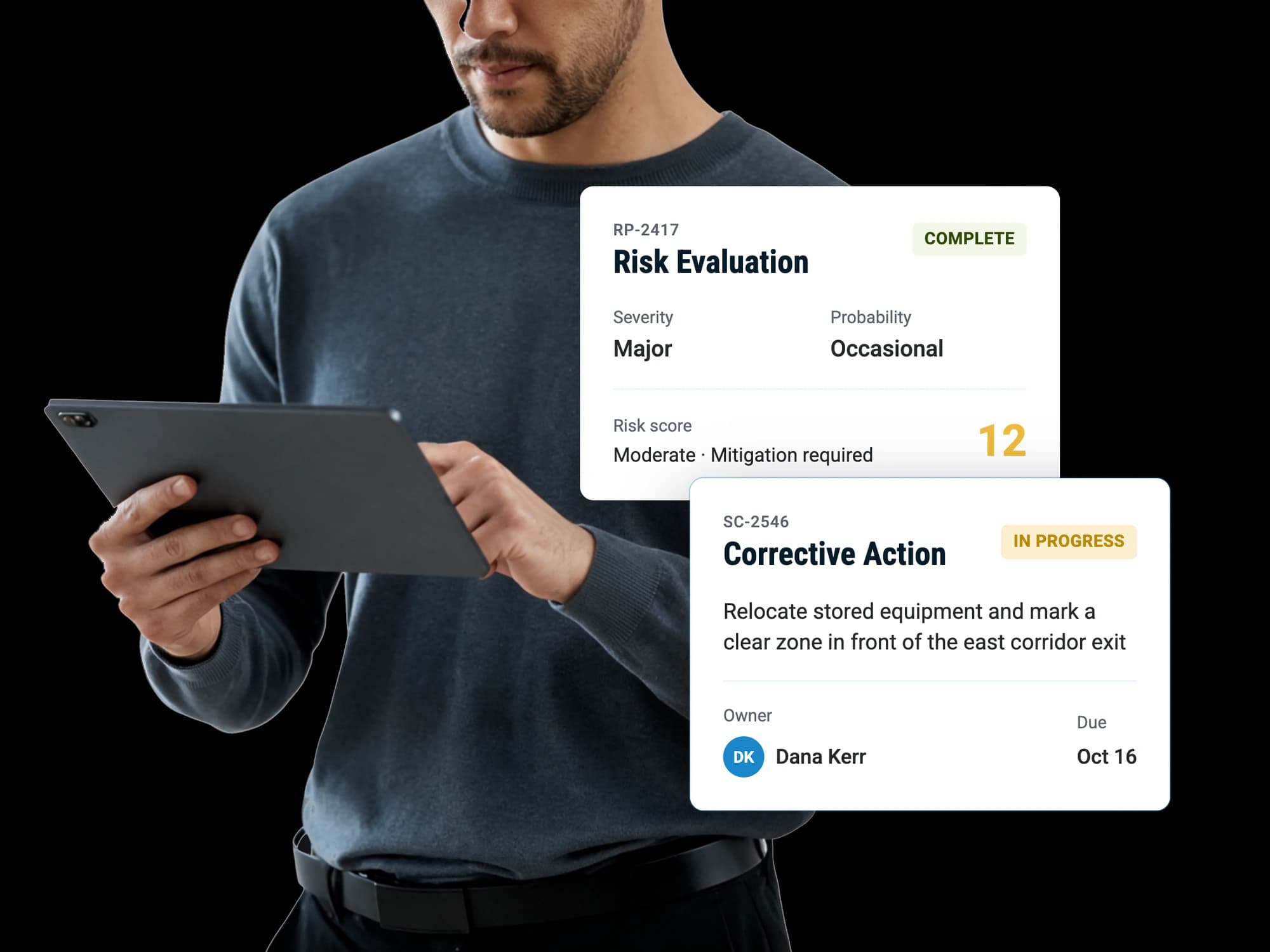
Risk assessments provide a structured method for evaluating severity and probability. Leaders can then approve, modify, or reject proposed risk controls based on operational realities. This keeps safety decisions aligned with how the operation actually functions.
Real World Examples in Business Aviation
Consider a Part 135 operator experiencing an increase in unstable approach reports. In a policing model, individual pilots might be counseled or disciplined. Under SMS, leadership reviews aggregated data to determine contributing factors.
The analysis may reveal scheduling pressures, training gaps, or procedural ambiguity. Leadership can then address these systemic issues through changes to policies, training programs, or operational guidance.
In a Part 145 environment, repeated tool control discrepancies may initially appear to be technician errors. SMS trend analysis might instead identify workflow design issues or inadequate storage solutions. Corrective actions then focus on improving the system rather than penalizing individuals.
Common Misunderstandings About SMS and Policing
“SMS Means We Stop Enforcing Standards”
SMS does not eliminate discipline or accountability. Intentional noncompliance, reckless behavior, and willful violations still require appropriate action. SMS provides a framework for distinguishing between acceptable human error and unacceptable behavior.
Clear policies defining just culture principles help leadership apply consistent responses while maintaining trust.
“SMS Is Owned by the Safety Manager”
Another common mistake is treating SMS as the responsibility of a single role. While Safety Managers play a key coordinating function, SMS is a management system owned by leadership.
When SMS is delegated entirely to safety staff, it becomes disconnected from operational decision making. Effective SMS integrates safety data into normal management processes.
“SMS Slows Down Operations”
When implemented poorly, SMS can feel bureaucratic. When implemented correctly, it improves efficiency by reducing surprises, rework, and reactive responses. Leadership gains confidence that risks are understood and managed appropriately.
What Good Looks Like When SMS Is Working
A mature Safety Management System in business aviation exhibits several consistent characteristics. Leadership routinely reviews safety data alongside operational metrics. Decisions are documented and traceable to risk assessments. Personnel report hazards without fear of inappropriate reprisal.
Safety discussions focus on system performance rather than individual fault. Changes to operations are evaluated through formal management of change processes. SMS outputs are used to guide training, resource allocation, and procedural updates.
Auditors and regulators see evidence that SMS is embedded in management decision making, not operating as a parallel compliance program.
How Technology Supports Leadership Focused SMS
Modern SMS platforms support this leadership role by centralizing safety information and making it accessible to decision makers. Dashboards provide visibility into trends and outstanding risks. Workflow tools ensure that hazards, assessments, and corrective actions are reviewed at the appropriate management level.
Automation reduces administrative burden and helps ensure consistency. When technology is aligned with SMS principles, it reinforces management ownership rather than creating additional layers of oversight.
The goal of SMS technology is to enable leadership to see and act, not to monitor or discipline individuals.
Differences Across Part 91, 135, and 145 Operations
The leadership support role of SMS remains consistent across regulatory environments, but implementation details vary.
Part 91 operators often use SMS to formalize risk management as operations grow in complexity. Part 135 operators rely on SMS to demonstrate regulatory compliance and manage operational scale. Part 145 repair stations use SMS to balance safety assurance with production demands.
In each case, SMS supports leadership by providing structured insight into operational risk, regardless of certificate type.
Looking Ahead
As SMS adoption continues across business aviation, organizations that treat SMS as a leadership tool gain long term benefits. They develop better situational awareness, stronger safety culture, and more resilient operations.
When SMS is understood and implemented as intended, it reinforces leadership authority rather than undermining it. It provides a disciplined way to manage safety risk without reverting to policing models that limit transparency and effectiveness.
This alignment between SMS and operational leadership is essential for sustaining safe, efficient aviation operations over time.