· 6 min read
How Mobile Reporting Improves Hazard Visibility
By Michael Sidler, Founder, RISE

How Mobile Reporting Improves Hazard Visibility is a question many operators begin asking once they move beyond a paper-based Safety Management System in business aviation. The short answer is that mobile reporting increases the number, timeliness, and operational relevance of hazard information available to safety personnel. When reporting tools are accessible at the point of work, hazards are identified earlier, documented more accurately, and linked more clearly to real operational conditions.
In practical terms, mobile reporting reduces the friction between observing a hazard and reporting it. That reduction directly improves hazard visibility across flight operations, maintenance, training, and ground handling environments. Over time, this visibility supports more effective safety risk management and safety assurance, both of which are central expectations under FAA 14 CFR Part 5 and aligned with ICAO Annex 19 principles.
What is mobile hazard reporting in an SMS context?
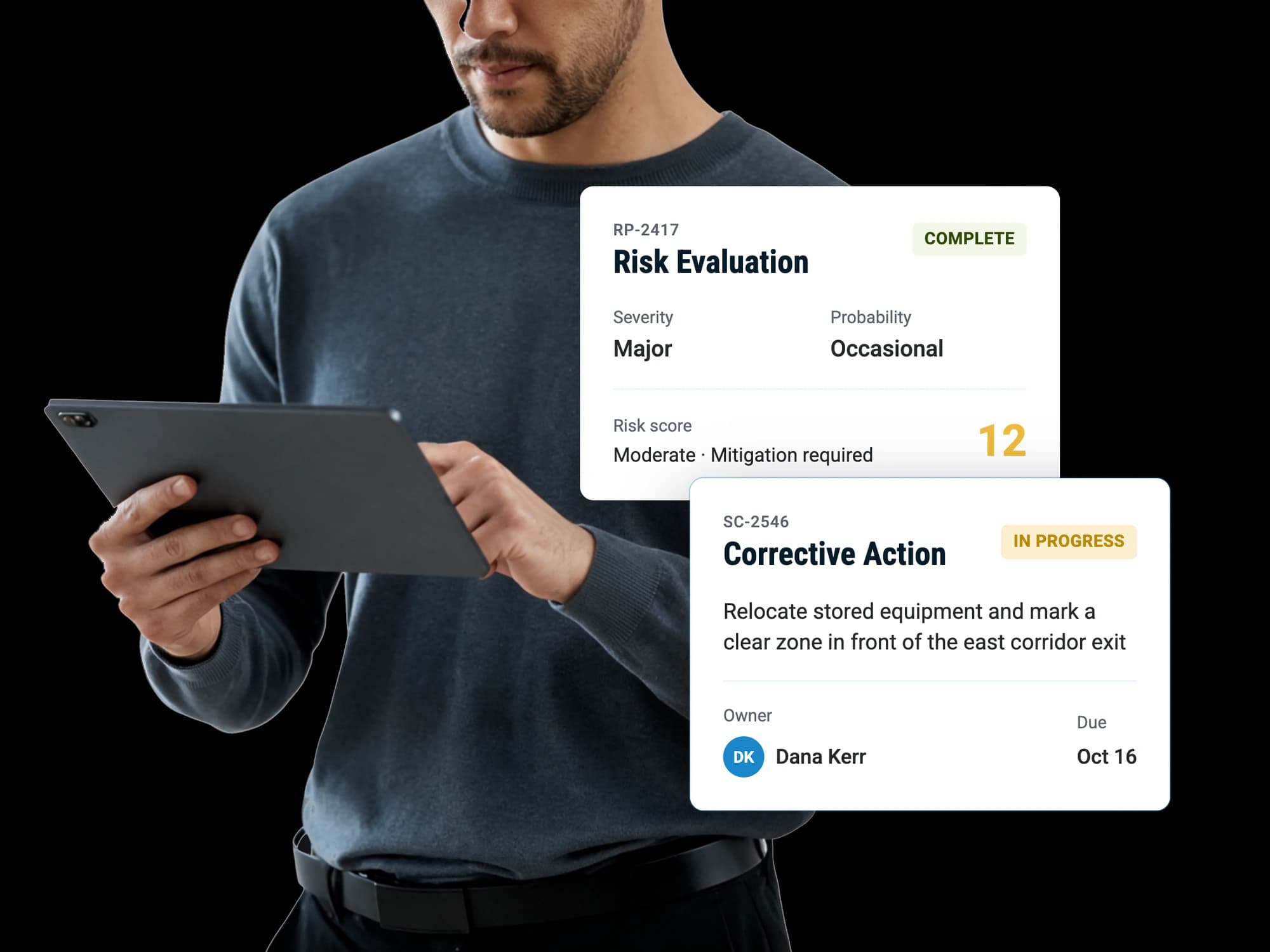
Mobile hazard reporting refers to the ability for personnel to submit safety reports using smartphones or tablets rather than fixed workstations or paper forms. In a Safety Management System in business aviation, this typically includes hazard reports, incident reports, safety observations, and sometimes operational risk assessments.
The key distinction is not the device itself, but the timing and context of reporting. Mobile reporting allows hazards to be documented during or immediately after an operational activity, rather than hours or days later. This preserves detail that is often lost when reports are delayed or reconstructed from memory.
From an SMS perspective, mobile reporting is a reporting channel, not a separate program. It supports the same objectives as any other hazard reporting method, namely identifying hazards, assessing risk, and supporting corrective action.
Why hazard visibility matters in business aviation
Hazard visibility is the degree to which safety hazards are known, understood, and tracked within an organization. In business aviation, many hazards are operationally subtle. They may involve scheduling pressure, informal procedures, environmental conditions, or human factors that are not captured in formal event data.
Unlike large airline operations, business aviation environments often involve smaller teams, variable missions, and less standardized operating contexts. This makes early hazard identification especially important. When hazards remain unreported or poorly described, safety managers are forced to rely on lagging indicators such as incidents, audit findings, or external observations.
FAA Part 5 emphasizes proactive hazard identification and risk management. ICAO Annex 19 similarly stresses the importance of data-driven safety oversight. Mobile reporting directly supports these objectives by increasing the volume and quality of hazard data available for analysis.
How mobile access changes reporting behavior
One of the most significant effects of mobile reporting is behavioral. When reporting tools are easy to access, personnel are more likely to report hazards that might otherwise seem too minor or inconvenient to document.
In traditional reporting systems, a pilot or technician may notice a hazard but delay reporting until returning to a desk. By then, the urgency may have passed, details may be forgotten, or the report may feel like extra administrative work. Mobile reporting reduces these barriers by allowing reports to be submitted while the context is still fresh.
This change in behavior often results in an increase in low-level hazard reports. While this can initially feel overwhelming to safety staff, it is generally a sign of improved hazard visibility rather than increased risk. Many operators see this shift as an early indicator of a maturing reporting culture, a concept explored further in discussions about what makes a good hazard report in aviation.
Practical examples from real-world operations
In flight operations, mobile reporting allows pilots to document hazards such as confusing NOTAM information, marginal runway conditions, or operational pressure related to schedule changes. These reports are often submitted shortly after landing, while details are still clear.
In maintenance environments, technicians can report hazards related to tooling availability, documentation discrepancies, or workspace constraints directly from the hangar floor. This is particularly relevant for Part 145 repair stations, where environmental and procedural hazards may not result in immediate incidents but can contribute to latent risk.
For training organizations under Part 141, instructors can document hazards related to student readiness, aircraft availability, or syllabus constraints during daily operations. Airports operating under Part 139 may use mobile reporting to capture airfield condition issues or ground vehicle interactions in real time.
Across all of these contexts, the common benefit is that hazards are captured closer to their source. This supports more accurate risk assessment and more targeted corrective actions.
Mobile reporting and Part 91, 135, and 145 differences
While the underlying principles are consistent, mobile reporting can play different roles depending on the regulatory environment.
For Part 135 operators, where SMS is required, mobile reporting supports formal compliance with Part 5 expectations for hazard identification and data collection. It can help demonstrate that reporting systems are accessible and actively used across the operation.
For Part 91 operators, mobile reporting often supports voluntary SMS programs. In these environments, ease of use is particularly important, as participation is driven more by culture than regulatory mandate. Mobile access can help sustain engagement without adding administrative burden.
For Part 145 repair stations, mobile reporting can bridge the gap between maintenance activities and safety oversight. It supports the identification of human factors and process-related hazards that may not surface through traditional quality assurance processes alone. This distinction is discussed further in explanations of how SMS applies differently to Part 91, Part 135, and Part 145 operators.
Common misunderstandings about mobile reporting
One common misconception is that mobile reporting is primarily about speed. While faster reporting is a benefit, the more important factor is context. Reports submitted closer to the time and place of the hazard tend to include more relevant operational detail.
Another misunderstanding is that mobile reporting automatically improves safety outcomes. In reality, it improves visibility. The safety benefit comes from how the organization analyzes, prioritizes, and responds to the information received. Without clear processes for review and follow-up, increased reporting can lead to frustration or disengagement.
Some operators also assume that mobile reporting will lead to excessive or low-quality reports. While report volume often increases initially, this typically stabilizes as reporting norms develop and feedback loops are established. Clear guidance on what constitutes a useful hazard report helps manage this transition.
What good implementation looks like
When mobile reporting is implemented effectively, several characteristics are typically present. First, reporting tools are easy to access and do not require extensive training. Personnel understand when and how to submit reports without needing constant reminders.
Second, reports are reviewed in a timely manner. Even when immediate corrective action is not required, acknowledgment and feedback are provided. This reinforces the value of reporting and supports a positive safety culture.
Third, hazard data from mobile reports is integrated into broader SMS processes. Reports inform risk assessments, safety assurance activities, and management reviews. Trends are analyzed over time rather than treated as isolated events.
These elements align with what auditors often look for in an SMS program, particularly evidence that reporting systems are actively used and effectively managed.
The role of technology in supporting hazard visibility
Technology supports mobile reporting by enabling secure access, standardized data capture, and centralized analysis. Modern SMS platforms often allow reports to include structured fields, free-text descriptions, and supporting context such as location or operational phase.
Importantly, technology should support the SMS, not define it. Mobile reporting tools are most effective when they align with established SMS processes and organizational expectations. They should reinforce, rather than replace, the safety management framework described in foundational discussions of what a Safety Management System in business aviation entails.
From a regulatory perspective, neither FAA Part 5 nor ICAO Annex 19 mandates specific technologies. However, both frameworks emphasize effective hazard identification and data management. Mobile reporting is one way to support these objectives in complex, distributed operational environments.
Looking ahead
As business aviation operations continue to evolve, the ability to capture accurate, timely hazard information will remain critical. Mobile reporting improves hazard visibility by reducing barriers to reporting and preserving operational context. When integrated thoughtfully into a Safety Management System in business aviation, it supports proactive risk management and informed decision-making.
The long-term value of mobile reporting is not measured by the number of reports submitted, but by how well those reports contribute to understanding and managing risk. Operators who focus on visibility, feedback, and integration are best positioned to realize its benefits.